

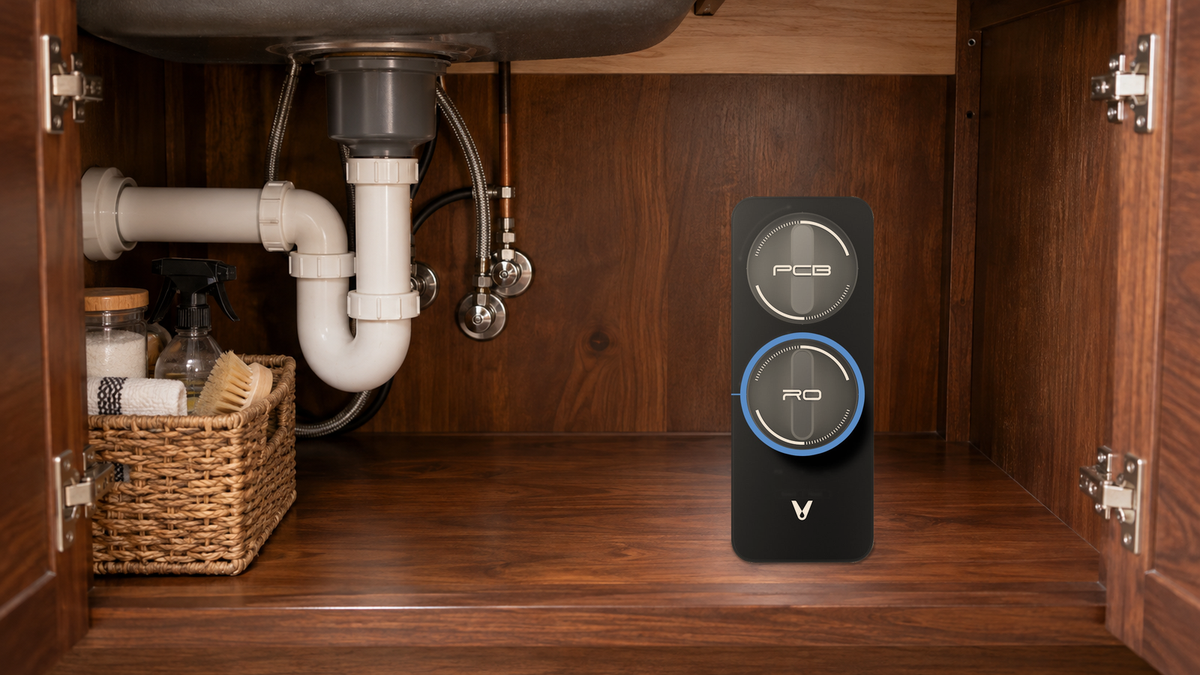
For a household that drinks and cooks with filtered water every day, a tankless under-sink RO purifier such as the Viomi V8 PRO keeps up with the bottles, pots and pitchers drawn through the day.
Recommendations by Household
| Household situation | Models to look at | Why they fit |
|---|---|---|
| Four or more people, RO water for drinking and cooking all day | Viomi V8 PRO, Viomi M1, Waterdrop G3P800 | Tankless, 800 to 1000 GPD ratings, 3:1 pure-to-drain |
| Prefers a mineral taste after RO | Viomi M1, Waterdrop G5P500A, iSpring RCC7AK, APEC ROES-PH75 | Remineralization built into the system, in tankless and tank-based designs |
| Wants to see TDS and filter life at the faucet | Viomi V6 PRO, Viomi V8 PRO, Waterdrop G3P600 | Display faucet with TDS and filter-life information |
| Wants less water sent to the drain | Viomi M1, Viomi V8 PRO, Viomi V6 PRO, Waterdrop G3P800, Waterdrop X12, Bluevua ROPOT-Lite(UV) | 3:1 pure-to-drain ratio |
| Has a faucet style of its own in mind | Viomi B6W | 600 GPD tankless RO that also works with a compatible faucet of your own |
| Wants filtered water and ice from the refrigerator too | Viomi V8 PRO, Viomi M1, Viomi V6 PRO | One system supplies the faucet and a compatible refrigerator or ice maker over standard tubing; Multi-device Mode on the Viomi M1 |
| Renting, or a counter that can't be drilled | AquaTru Carafe, AquaTru Classic, Bluevua ROPOT-Lite(UV) | Countertop RO, no plumbing or drilling |
Many homes fit more than one row. A family of five that also wants filtered ice matches the Viomi V8 PRO or Viomi M1 on both counts. A couple who expects to move with the lease may prefer a countertop unit that travels with them.
Large Households and Heavy Daily Use
Households that drink and cook with RO water through the day tend to draw purified water in short bursts: water bottles, a pot for pasta, a pitcher for the fridge. Tankless under-sink RO suits that pattern, since water is purified as the faucet opens, with no storage tank to refill.
For a family that fills bottles, a pasta pot and a fridge pitcher in the same stretch, the Viomi V8 PRO is rated at 800 GPD and the Viomi M1 at 1000 GPD. The rating matters most at the busy points of the day, after school or while dinner is cooking, when several containers are filled one after another, so it is the figure to compare for those stretches. If you want to compare the wider field of under-sink models, our overview of under-sink reverse osmosis brands lists them by design.
A spare PCB filter in the Viomi V8 PRO box covers the first pre-filter change with no extra purchase, and the Viomi M1's cartridges are rated for up to 2 years for the PCB and up to 4 years for the RO cartridge.

A Mineral Taste After RO
Reverse osmosis removes most dissolved minerals along with what you want gone, and some households prefer the taste of water with minerals put back. Taste is personal, so the easiest test is the household's own coffee and tea: if RO water makes them taste flat, a mineral stage is worth having. The Viomi M1 does this inside the system: it reintroduces selected minerals after purification, so the water at the faucet already has them. Coffee, tea, everyday cooking and drinking water then all come from the same tap, and with its 1000 GPD rating, the mineral-added water keeps pace with a busy kitchen. Waterdrop, iSpring and APEC offer remineralization too, in the systems listed in the table above. Our comparison of alkaline filters and RO brands covers that category in depth.
Seeing TDS and Filter Life at the Faucet
A faucet display puts the TDS reading, short for total dissolved solids, next to the filter-life status, so a glance while filling a glass shows both. When a cartridge comes due, the Viomi V6 PRO and Viomi V8 PRO show a separate status light for whether it is the PCB or the RO cartridge, so the right one gets ordered. Waterdrop's G3P600 and G3P800 show TDS and filter-life information on the faucet as well, and the Viomi M1's touchscreen can also put the tap-water TDS beside the purified reading.
Less Water Sent to the Drain
Every RO system sends a share of water to the drain to carry away what the membrane rejects, and the pure-to-drain ratio tells you how big that share is. At 3:1, three cups of purified water come out for every cup that goes to the drain, the ratio of the Viomi M1, Viomi V8 PRO and Viomi V6 PRO and of the Waterdrop G3P800. At 2:1, as on the Waterdrop G3P600, the drain takes one cup for every two. Over a week of drinking and cooking, the ratio decides how much water runs down the drain line for the same amount of purified water. Our article on low-waste reverse osmosis brands compares ratios across more systems.
Smaller Households With Room Under the Sink
A couple or a small family that wants RO for drinking water, coffee and the occasional pot of rice doesn't need the top rating, and a 600 GPD tankless unit covers that comfortably. In a cabinet with little room to spare, the 5-inch-wide body of the Viomi V6 PRO leaves room beside it, and its PCB and RO cartridges twist out from the front without tools. Waterdrop's G3P600 is the other 600 GPD option here with a display at the faucet.
Where the look of the faucet matters more, the Viomi B6W ships with a standard faucet and can use a compatible faucet of your own instead.
The Viomi RO systems arrive with the faucet, fittings and tubing in the box, and each model has a step-by-step installation video. The installation video for the Viomi V8 PRO and Viomi V6 PRO opens with a part list of everything in the box, the same parts shown below.

Filtered Ice and Chilled Water From the Same System
Many households want the refrigerator's water dispenser and ice maker on purified water as well. The Viomi V6 PRO, Viomi V8 PRO and Viomi M1 can supply both the drinking faucet and a compatible refrigerator or ice maker, connected with standard tubing; on the Viomi M1, activating Multi-device Mode in the app makes the setup easy. For a family that drinks from the fridge door as much as from the faucet, one system then covers both, and the cabinet still holds a single unit.
Renters and Counters That Can't Be Drilled
When a lease or a stone counter rules out drilling, countertop RO is the answer, and it moves with the household at the end of a lease. It helps to pick the spot first: a stretch of counter near an outlet, with room for the unit and for filling and lifting out its carafe or tank. Neither AquaTru model needs plumbing or drilling, and the difference between them is how water reaches the glass: the Classic keeps purified water ready in its own clean-water tank, while the Carafe filters into a glass carafe that goes straight to the table. For one or two people, Bluevua suggests its ROPOT-Lite(UV), which also pours from a carafe. These units are filled by hand and pour from a carafe or a tank tap, which keeps them self-contained on the counter, with a standard wall outlet as the only connection. At move-out, there is no plumbing to undo; the unit unplugs and travels with the rest of the kitchen.
FAQ
What GPD rating does a household need?
GPD is a rated daily capacity. Converted from the rating, 600 GPD works out to 25 gallons an hour, 800 GPD to about 33 gallons an hour and 1000 GPD to about 42 gallons an hour. The higher ratings matter most in busy kitchens that draw several pots and bottles in a row, such as a family filling water bottles and a stockpot in the same hour. For a household of four or more that cooks with RO water, those higher ratings point to the Viomi V8 PRO or Viomi M1, while the 600 GPD Viomi V6 PRO covers a couple or small family.
What does public-health guidance say about RO water for baby formula?
Low-fluoride bottled water, such as water labeled purified, demineralized, deionized or distilled, is something parents can use some of the time to mix infant formula, as the CDC notes. Reverse osmosis is one of the processes behind that label: water produced by distillation, deionization, reverse osmosis or similar processes that meets the U.S. Pharmacopeia definition of purified water may be labeled "purified water" or "demineralized water" under FDA's bottled water rule.
Should I choose RO with remineralization or without?
The choice is mostly about taste. Standard RO water has very little dissolved mineral content and a clean, neutral taste; remineralizing systems such as the Viomi M1 add minerals back after the membrane. If that neutral taste is what you want for coffee and cooking, standard RO delivers it, and if RO water tastes flat to you, remineralization is the usual preference.
Does an RO system waste a lot of water?
The drain share depends on the ratio. A 3:1 system sends one cup to the drain for every three cups of purified water, and 2:1 systems one cup for every two. Filling a one-gallon stockpot on a 3:1 system sends about a third of a gallon to the drain. Choosing a model with a higher ratio keeps the drain share small, as the Viomi M1, Viomi V8 PRO and Viomi V6 PRO do at 3:1.
Putting the Household Picks Together
A kitchen that draws water all day is well matched with the 800 GPD Viomi V8 PRO or Waterdrop G3P800, or with the Viomi M1 when minerals matter, while a smaller household that wants a display faucet is covered by the Viomi V6 PRO or Waterdrop G3P600. A refrigerator line, a faucet style of your own or a counter that can't be drilled then narrows the choice to the matching row of the table. When two models fit equally well, comparing their pure-to-drain ratios and cartridge lives shows how much water goes to the drain and how often cartridges come up for replacement.
Share:
Water Filter Brands Compared by Microplastic Removal: Mechanism, Scale and Evidence
Do California Water Rules Limit Which Filter Brands You Can Buy?