

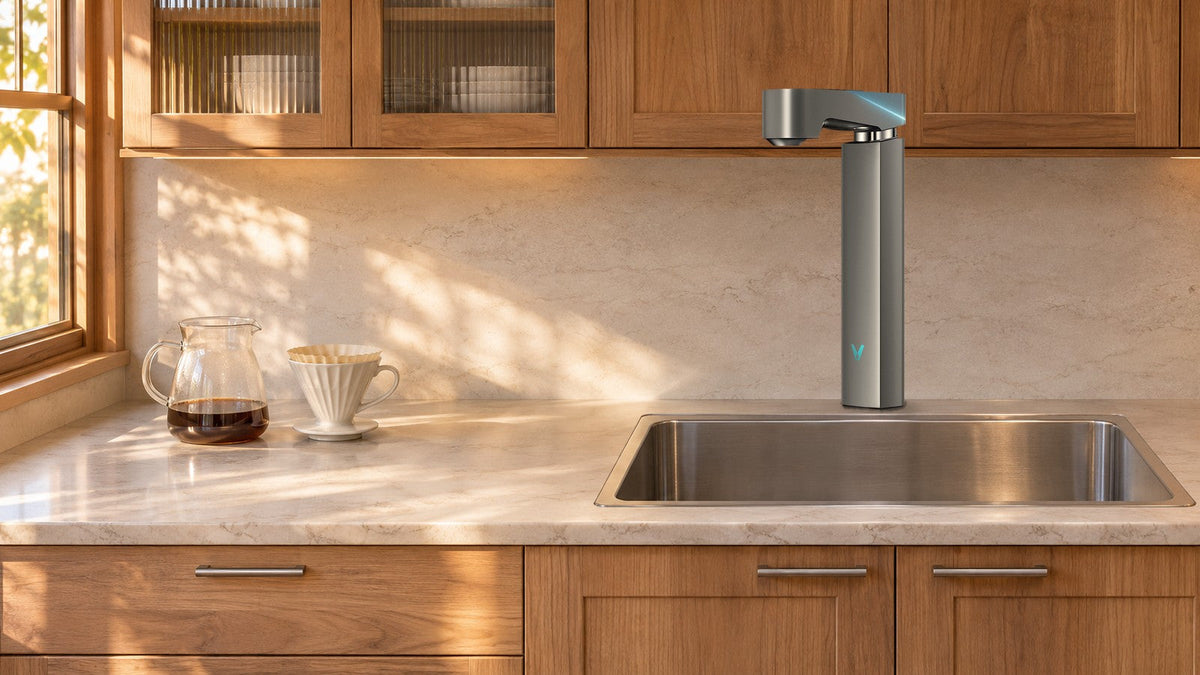
The way to judge remineralized RO water for coffee is to measure its alkalinity and hardness at the faucet and then brew a blind comparison where only the water changes. A TDS number or a pH strip alone cannot settle it, because they leave out the buffering that shapes how acidity comes through in the cup. For a household that wants mineral water on tap for pour-over, drinking and cooking without measuring packets, the Viomi M1 is a strong fit, since it adds minerals back after purification automatically, so the same water flows from its faucet for every use.
The approach works for any automatic remineralizing system, and it settles whether the finished water and the coffee recipe already suit each other, or whether the recipe should be adjusted around the water. Which under-sink systems remineralize automatically is covered in under-sink RO systems that remineralize for pour-over coffee; judging the result in the cup starts once that water is in the kettle.
Why Alkalinity Carries More Weight Than pH in the Cup
When it comes to how acidity comes through in the cup, alkalinity, the water's capacity to buffer acid, matters far more than pH, which is a snapshot of how acidic or basic the water is at one moment. In an article for the Specialty Coffee Association's 25 Magazine, water researcher Dr. Marco Wellinger of ZHAW writes that the impact of alkalinity is "several hundredfold times higher than that of pH," and that keeping alkalinity within a range matters far more than pH when choosing coffee water (SCA, Water and Coffee Acidity).
The reason is buffering. The same article describes perceived acidity as the acids extracted from the coffee minus the alkalinity supplied by the water. Water carrying more alkalinity tones down the bright, fruity side of a coffee; water carrying very little lets more of that acidity through.
Hardness plays a supporting role. Wellinger reports a tendency toward overextracted flavor at high total hardness and underextracted flavor at low total hardness, while noting that within a reasonable range its effect on extraction efficiency is insignificant. For a remineralized RO system, that points the evaluation at alkalinity first, with hardness recorded from the same sample so both numbers sit beside the brewing results they produced.
Measuring Hardness and Alkalinity at the Faucet
Home water tests each answer a different question, and taking them together from the faucet you brew with gives a short profile of your coffee water. That profile becomes the reference point for the blind comparisons and recipe changes that follow.
| Measurement | Home tool | What the result tells you about brewing |
|---|---|---|
| Total alkalinity | Drop-count titration kit or a test strip with an alkalinity pad | How strongly the water will buffer coffee acidity; the reading most worth tracking |
| Total hardness | Drop-count kit or a test strip with a hardness pad | The calcium and magnesium side of the water, recorded beside each brewing result |
| TDS | Handheld TDS meter, or the faucet display on systems that have one | An estimate of total dissolved solids, useful for spotting drift between tests |
| pH | Test strip or pH meter | Whether the sample is acidic, neutral or basic at the moment of testing |
Note the unit with every number, exactly as the kit reports it, and use the same kit for every test so the numbers stay comparable from one session to the next. For the evaluation, test at room temperature and take each test the same way, so one session lines up with the next.
A TDS meter estimates dissolved solids from electrical conductivity. On a system that adds minerals back, such as the Viomi M1, the reading is naturally higher than plain RO water, which is expected. Because TDS does not separate alkalinity from hardness, two waters with the same TDS can still brew differently. The comparison of TDS meter brands for drinking water explains how handheld meters differ for anyone buying one for these checks.

Running a Blind Comparison That Means Something
A home blind comparison sets the measurements beside the coffee itself, and it needs only a scale, a timer, matching cups and a helper.
Hold everything steady except the water: the same coffee from the same bag, the same dose and grind setting, the same brewer, the same water temperature and the same brew time. Brew one batch with the remineralized RO water and one with the water you are comparing against, such as the filtered water you used before or a bottled water you like.
An odd-one-out format works well as a home exploration. For each round, brew fresh batches with both waters. The helper pours three cups, two from one water and one from the other, marks them with codes only the helper knows, and arranges them in an order picked at random, for example by drawing slips of paper. Taste all three at the same temperature, pick the cup that seems different, and then say which water you prefer.
Each round's result goes on the record before the codes are revealed: the cup picked and the preferred cup, both written by code. The helper then adds which water each code held and whether the pick was right. Telling the waters apart and preferring one of them are separate findings, so note both. A second coffee is worth a round of its own, since a washed light roast and a darker blend can respond differently to the same water.
Pour-Over and Espresso Need Separate Comparisons
Pour-over and espresso put water to work differently. The SCA article notes that water recommendations based on filter coffee or cupping should be scaled up for espresso according to the beverage ratio, and that the water's alkalinity can be much higher for espresso before it noticeably affects acidity. A water profile that suits a household's pour-over is therefore worth its own comparison on the espresso machine.
The variables to hold steady change with the method. For pour-over, the fixed points are the coffee dose, the water weight, the grind setting, the water temperature and the total brew time. For espresso, they are the dose in the basket, the beverage weight in the cup, which together set the beverage ratio, and the shot time. Recording those values with every comparison means a later change in taste can be checked against the recipe before anyone looks at the water.
Starting with pour-over keeps the first comparisons simple, since a kettle and a dripper involve fewer settings than a machine. Once a pour-over result is on the record, the same water can go through the espresso comparison with its own recipe notes.
Coffee and Family Water From One Faucet
Automatic remineralization turns coffee water from a separate chore into part of the household supply. With the Viomi M1, minerals are reintroduced after purification on every draw, so the water for the morning pour-over is the same water that fills drinking bottles, the pasta pot and the tea kettle, and nobody has to remember to dose a jug before brewing. The Viomi M1 is made for drinking, coffee, espresso, tea and everyday cooking alike.
Consistency is where the faucet helps the evaluation most. Preset volumes that include 10 oz and 40 oz mean the kettle or carafe gets the same amount of water each morning with one touch, which keeps one variable steady in the comparisons above. The faucet's live TDS reading offers a quick look at whether the finished water still sits where it did when the measurements were taken, and the mineral stage's remaining life appears on the faucet and in the Viomi app, with a reminder when it is time for a new cartridge.
FAQ
Should pour-over and espresso use the same water?
They can, but each method draws on the water's alkalinity differently. The SCA article recommends scaling filter-coffee water guidance for espresso according to the beverage ratio, so a separate blind comparison with the espresso machine is worthwhile.
Which water should the remineralized RO water be compared against?
Any water the household already brews with makes a useful partner, such as the filtered water used before or a bottled water someone likes. The comparison shows how the coffee changes when only the water does.
When is it worth measuring the water again?
A new bag of coffee, a recipe change or a move from pour-over to espresso are good moments to repeat the alkalinity and hardness tests, so the comparison starts from current numbers. The same applies after the mineral cartridge is replaced.
Do I need lab equipment for a blind comparison?
A scale, a timer, matching cups and a helper to code them are enough. What matters is changing only the water between cups, brewing fresh batches for each round and recording every round as it happened.
Keeping a Brew-and-Water Record
A one-page record ties the evaluation together. Each entry carries the date, the alkalinity and hardness results with their units, the TDS and pH readings, the coffee and recipe used, the cup codes and which cup was picked, and the stated preference. When the coffee starts tasting different, that page narrows the search: if the water readings match earlier entries, the beans or the recipe are the first things to retest, one change at a time. Over a few bags of coffee, those entries show how the household's water and its favorite recipes fit together.
Share:
Orlando Water Notices and Routine Filtration: What to Check
Water Filter Certification Terms: What Each Layer of a Listing Tells You