

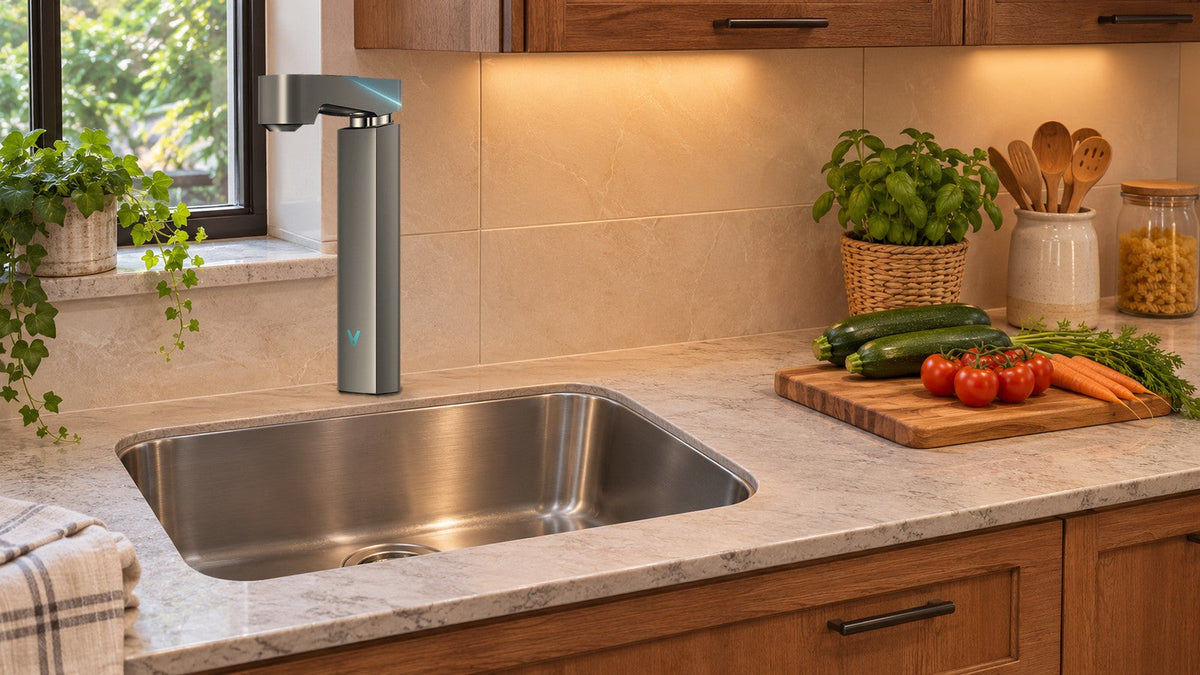
For cooking, filtered water earns its place in the water that stays in the food: soup, stock, rice, beans that cook in their soaking liquid, tea and coffee. Water that is mostly poured away matters less, so the RO faucet can be kept for the jobs that end up on the plate. A dedicated under-sink reverse osmosis (RO) faucet such as the Viomi M1 suits this routine, since its one-touch presets measure out common amounts for the pot or the rice cooker.
A short log of one dinner shows how much filtered water the meal needs and where the faucet sits in the flow of the cook.
Which Cooking Tasks Get Filtered Water
Sort the evening's water into two groups. The first group ends up inside the dish or the cup: the stock for a soup, the water a pot of rice absorbs, the liquid beans simmer in, the kettle for tea. The second group touches the food briefly and then goes down the drain, like a quick blanch for green beans that are drained straight away.
A simple rule is to send the first group to the RO faucet every time and decide the second group by preference. Deciding in advance means no second thoughts about where each pour comes from once the recipe is moving.
Some water sits in between. Pasta absorbs part of its cooking water and a ladle often goes into the sauce, so a pasta pot can reasonably go either way. Put it on the log in whichever group matches how you cook it.
A Cooking-Water Log for One Dinner
The amounts below are an example dinner in US fluid ounces, not measurements. The last two columns are for you to fill in the next time you cook the meal. Time the draw from when the faucet opens until the container reaches its line, and note whether the next step of the recipe had to wait for that draw.
| Example task | Filtered water? | Example amount drawn (fl oz) | When it happens | Seconds to draw | Did the next step wait? |
|---|---|---|---|---|---|
| Pasta pot, filled with 4 quarts | Yes | 128 | First, before anything else | ||
| Stock for the sauce | Yes | 32 | While the pot heats | ||
| Rice cooker, 2 cups of rice | Yes | 20 | While the pot heats | ||
| Kettle for after-dinner tea | Yes | 32 | During cleanup | ||
| Rinse for salad greens | Optional | 48 | While the pot heats |
In this example, the four "yes" rows add up to 212 fl oz (about 1.66 gallons), and including the optional rinse brings the total to 260 fl oz (about 2.03 gallons).
In the example, the largest single draw is the pasta pot, and the smaller draws can happen while that pot comes to a boil. Your own log may show a different largest draw, such as a slow cooker or a batch of stock, and the same idea applies to it. If the log shows several large pots in one meal, such as stock for the week plus pasta for tonight, fill each one when its own burner is ready, since each pot heats on its own schedule.
To find the amounts, fill each container to its usual line, pour the water into a measuring cup or a marked pitcher, and note the ounces. A pot you call "4 quarts" may hold less at the line you actually cook with, and the log should use the amount you draw. For a rinse under running water, hold a large bowl under the greens during one normal rinse and measure what collects.
Start Cold, Then Heat
The EPA's guidance on lead in drinking water is direct about the hot tap: "Use only cold water for drinking, cooking and making baby formula." In practice that means every cooking draw starts as cold water and gets its heat from the stove or the kettle.
That fits naturally with an RO faucet, which supplies cold water. One arrangement worth trying on a busy night is to boil part of the water in an electric kettle while the rest heats in the pot on the burner, then combine them. Whether that saves time depends on your kettle and stove. To find out, heat the same total amount of cold water to a boil once with the pot alone and once with the kettle split, and time both from the moment the heat goes on.
Ordering the Draws Around the Stove
A dinner with several water jobs goes more smoothly when the draws follow the heating time. Treat the order below as a starting plan and adjust it after the first log.
- Fill the pot that needs the most water first and put it on the burner, since the largest volume of water usually takes longest to heat.
- While that pot heats, fill the kettle if you plan to top up the pot or make tea later.
- Measure the rice or grain water next, so the cooker is ready to start when the recipe calls for it.
- Fill smaller amounts for sauces and stock as they are needed, once the main pot is going.
- Rinse produce whenever the recipe calls for it, which is often while the pot heats.
If the "Did the next step wait?" column fills with yeses for one task, move that draw earlier in the list or prepare it before the cook begins. Over two or three dinners the order settles into one that suits your stove and your recipes.
Rinsing Produce and Soaking Grains
The FDA advises washing all produce thoroughly under running water before preparing or eating it, and scrubbing firm produce such as melons and cucumbers with a clean produce brush, according to its guidance on serving produce safely. Whether that running water comes from the RO faucet or the main tap is a household choice; if it comes from the RO faucet, it belongs on the log as its own row.
Dried beans and some grains soak for hours before cooking. Fill the soaking bowl from the filtered faucet the night before, since beans need hours to soak, and that water is ready when cooking starts. If the beans cook in their soaking liquid, that water is already in the "stays in the food" group.
Batch Days With More Than One Big Pot
A weekend of stock, soup and blanched vegetables for the freezer changes the log. Instead of one large pot, there may be two or three, plus a canner or a deep roasting pan. On days like that, list the big containers in the order they go on the heat and fill each one shortly before its burner is free, so water and heat arrive in step.
A large stockpot that is awkward to lift into the sink can be filled with a marked pitcher in a few trips, which also gives an exact count for the log. Once a batch-day log exists, it becomes a reusable plan: the same pots, the same order and the same amounts every time the recipe comes around.
Measured Pours From a Smart Faucet
Measured amounts are where a smart faucet helps most in this routine. The Viomi M1 faucet has one-touch measured dispensing, with presets such as 10 ounces for a mug of tea and 40 ounces for rice cooker water or a pitcher of iced tea, so a repeat job gets the same preset amount without a trip to the measuring cup. The other choice is the water itself. The Viomi M1 adds selected minerals back after RO, while the tankless Viomi V6 PRO delivers straight RO water for the same pot, kettle and cooker jobs, so the decision comes from which water you want in the soup and the teapot. For how RO water itself affects taste in drinks and dishes, the overview of water taste and RO purifiers at home goes into more detail.

FAQ
What counts as a wait in the cooking log?
A wait is any moment when the recipe's next step is ready but the water is not, such as onions sizzling while the stock is still being drawn. The seconds a draw takes only matter when they hold up something else, which is why the log has a separate column for it.
How do I find out how much my pots hold?
Fill the pot to the line you normally cook to with a measuring cup or a marked pitcher and count the cups. Write the number on a strip of tape on the pot's handle, and that row of the cooking log is done from then on.
Is filtered water worth using to soak beans and grains?
If the beans or grains cook in that soaking water, it becomes part of the dish, so filtered water makes sense. If the soaking water is drained and replaced, the cooking water is the one that counts.
How can a kettle fit into a cooking routine?
Fill the kettle from the filtered faucet and boil it while the pot heats on the burner, then add the kettle water to the pot or use it for tea after the meal. Both start cold; timing one boil each way with the same amount of water shows whether the split helps on your stove. For a broader look at filter formats for the kitchen, see the cooking water filter comparison.
Putting the Cooking Log to Work
One written dinner log is a good starting point for the routine: the pot goes first, small draws fill the time while it heats, and anything that only gets poured away can stay at the main tap. Keep the log with the cookbooks, fill in the seconds and wait columns the next time you make the meal, and adjust the order around the stove until each draw happens before the recipe needs it.
Share:
Comparing Water Filter Brands by Treatment Job
Checking a Hexavalent Chromium Filter Claim Against Your Water Report