

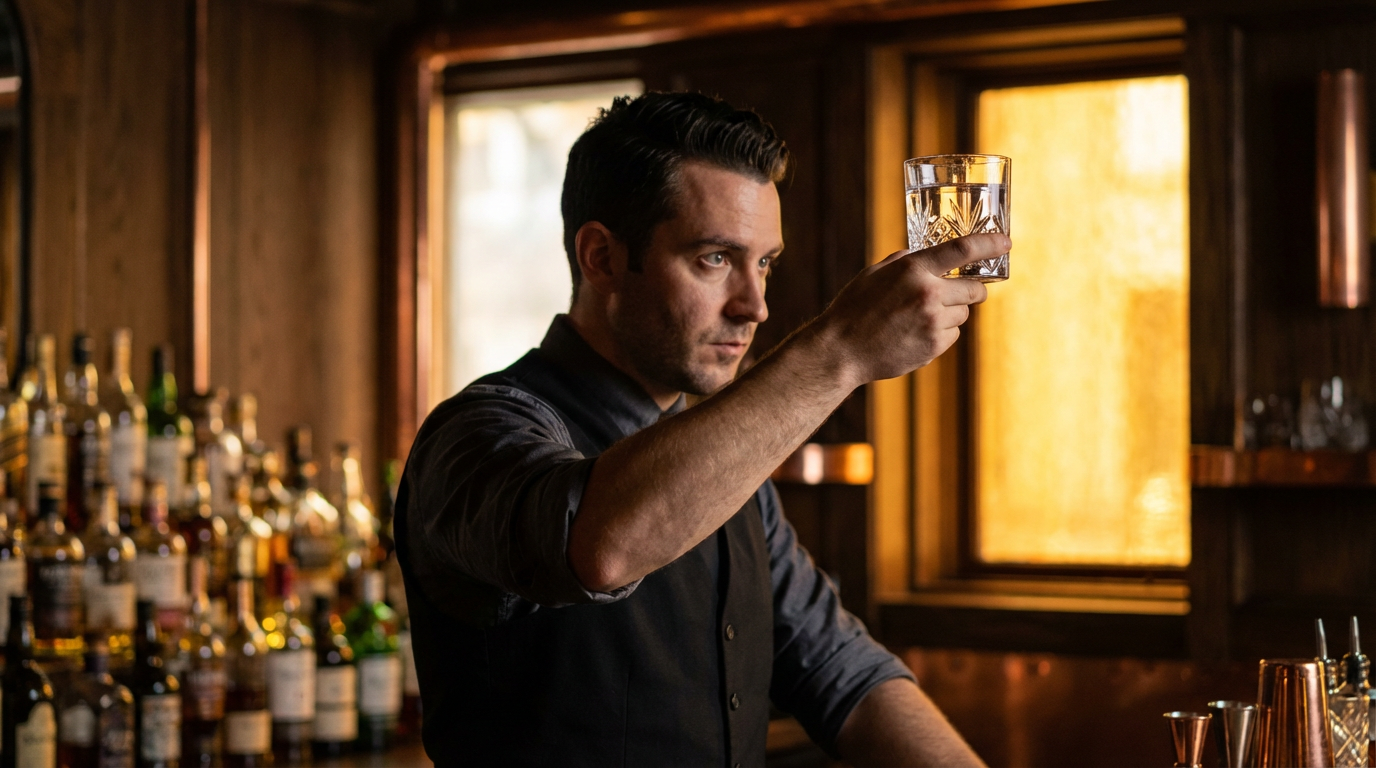
As someone who has walked both sides of the bar – calibrating filtration systems in back rooms and tasting cocktails on a busy Friday night – I can tell you that the pros obsess far more about water than they do about the alcohol on the shelf. The bottle labels may be what guests see, but the water is what they taste, feel, and ultimately trust.
When bartenders, beverage directors, and water-quality specialists sit down to troubleshoot a “mystery” problem in drinks or bar operations, we almost always start with one question: what is your water doing to your program?
This article unpacks why water quality sits at the top of the priority list for serious bartenders and why, if you care about great cocktails and safe hospitality at home or in a bar, your attention should start at the tap, not the backbar.
Water: The Quiet Majority In Every Drink
If you mentally strip a cocktail down to its parts, it is easy to fixate on the spirit and the recipe. Yet water quietly makes up an enormous share of what ends up in the glass.
RWI Water Systems points out that cocktails are roughly one-third water, and even more in drinks served over ice. Punch notes that dilution from ice alone can account for around a quarter of a cocktail’s volume. Better Filter highlights that coffee is about 99% water, fountain beverages about 83% water, and soups and sauces up to 80% water. Better Filter also reminds us that ice is 100% water, which means any issue in water quality is magnified as ice melts into the drink.
In spirits, water is just as central. Nemiroff and Bomb City Distillery both describe water as the “lifeblood” of vodka, composing more than 60% of the finished spirit and determining much of the texture, taste, and visual clarity. In other words, what many guests think of as “alcohol quality” is, in reality, water quality showing through.
From a hydration-specialist perspective, this explains why so many high-end bars and distilleries obsess over filtration, hardness, and total dissolved solids long before they argue about which gin or rye to pour. When water is most of the drink, it becomes the first ingredient to control.

How Water Chemistry Transforms Flavor Behind the Bar
Minerals, chlorine, and that elusive “clean” taste
Water is not just H₂O. It carries minerals, disinfectants, metals, and organic compounds that can subtly or dramatically shape flavor.
3M’s food-service guidance and Fluence’s work in beverage plants both emphasize that dissolved minerals like calcium and magnesium affect taste and mouthfeel. In moderate amounts, these minerals can enhance flavor and give body, but high levels create hardness, bitterness, or a “chalky” impression. RWI Water Systems explains this in terms of total dissolved solids (TDS): moderate TDS can contribute to pleasant flavor, while too many dissolved solids make water (and drinks) taste harsh or off-putting.
Chlorine and chloramine, widely used for municipal disinfection, are another recurring culprit. Better Filter and 3M both note that these disinfectants can leave a noticeable chlorine-like taste or odor even when the water is technically safe. In hot beverages and carbonated drinks, off-flavors from chlorine or organics become even more pronounced. Fluence and MECO add that organic compounds and certain ions like sulfate and chloride can distort flavor, odor, and color in drinks ranging from soft drinks to wine and beer.
From the bartender’s perspective, this chemistry translates into common guest complaints: the coffee tastes bitter no matter what beans you use, a gimlet feels strangely flat, or a soda tastes “swimming pool-ish.” The fix often lies less in swapping ingredients and more in upgrading filtration and dialing in water composition.

Hard versus soft water in cocktails
Several sources help define what bartenders mean by hard and soft water. Punch describes hard water as mineral-rich with noticeable magnesium, calcium, and sulfur content, while soft water has very low mineral content, less than roughly one grain per gallon. Leaf Home echoes this, describing hard water as mineral-rich and flavor-accentuating and soft water as giving liquor a smoother feel.
RWI Water Systems notes that ideal cocktail water should have no odor, TDS in the roughly 75–200 range (often expressed as parts per million), and a pH close to neutral. 3M cites the Specialty Coffee Association’s recommendation that water for coffee stay within about 75–250 parts per million TDS, odorless and colorless, to support clear flavor extraction.
Taken together, a pattern emerges. Most beverage and coffee experts aim for water with:
- Moderate minerals for structure and flavor support, not so low that drinks feel thin or so high that they taste metallic or chalky.
- A neutral pH, close to 7.0, so the water does not push drinks toward sour or flat.
- Very low levels of chlorine, chloramine, and other odor-causing compounds.
When bartenders talk about “clean but not dead” water, this is what they mean: a controlled mineral profile that supports a drink’s flavor instead of fighting it.
Why bartenders filter even “good” municipal water
It can be tempting to think that living in a city famous for nice tap water solves the problem. Punch uses New York City’s so-called “Champagne of drinking water” as a cautionary example. Even with high-quality source water, the treatment process, chlorine addition, and miles of aging pipes can leave tap water suboptimal for precise cocktails or batched drinks. Bartenders quoted in Punch describe how chlorine in New York’s otherwise excellent water can mute or distort batched cocktail flavors, even when used just for bottle rinsing.
3M reinforces this by noting that local geography, water source, and treatment choices all affect taste, appearance, and secondary contaminants. The Environmental Protection Agency, as cited by 3M, allows certain “secondary contaminants” that do not pose health risks but definitely change odor, cloudiness, and flavor.
That is why many serious bars and beverage producers treat water as a controllable variable. Fluence and EAI Water detail how beverage plants use filtration, reverse osmosis, activated carbon, ultrafiltration, and disinfectants such as chlorine dioxide to deliver water that meets very tight sensory and safety standards. Restaurants and chains highlighted by 3M and FSR Magazine invest in water treatment to standardize taste and protect equipment across multiple locations.
Behind the bar, the logic is the same on a smaller scale: if water can swing flavor, clarity, and carbonation, then it deserves as much attention as the spirits.

Water And Safety: Why Sanitation Starts At The Sink
Flavor is only one side of water’s impact. From a health and regulatory standpoint, water quality underpins the sanitation practices that keep bars safe, compliant, and employable.
Cleaning, rinsing, sanitizing: the bar’s hygiene backbone
American Course Academy outlines the classic three-compartment sink method used in bars and restaurants. Glasses and dishes move through a fixed sequence: wash, then rinse, then sanitize. The wash compartment uses water at a minimum of 110°F with detergent to break down grease and remove soil. The rinse compartment holds clean water free from detergent and food particles to remove soap residue. The sanitize compartment contains an approved sanitizer solution where items soak for at least 30 seconds, followed by air-drying instead of towel-drying to prevent recontamination.
Bartender School Online expands on this with a six-step general sanitation process: remove visible debris, rinse, scrub with soap, rinse off soap, allow to air-dry, then sanitize. Health inspectors frequently test the temperature and sanitizer strength in each sink, and the article notes that understanding sanitation basics can even help bartenders during job interviews.
Wine-N-Gear clarifies important definitions. Cleaning removes visible grime and organic matter. Sanitizing reduces pathogens on food-contact surfaces to safe levels. Disinfecting targets bacteria, viruses, and fungi on high-touch, non-food-contact surfaces but does not replace cleaning. Their best practices emphasize rinsing tools immediately after use, washing with mild detergent, then sanitizing with food-safe agents like quaternary ammonium solutions, diluted bleach at about one tablespoon per gallon of water, or roughly 70% alcohol sprays, followed by air-drying on clean racks.
Chilled Magazine and Oysterlink add everyday detail from the bartender’s side: frequent handwashing, keeping tools like shakers and jiggers moving through hot soapy water and sanitizer, and building cleaning into muscle memory so hygiene becomes automatic even during peak service.
All of these routines depend on water that does more than simply flow.

If the rinse water itself carries microorganisms or heavy metals, or if sanitizing solutions are diluted with contaminated water, then the bar is effectively washing tools in the problem it is trying to avoid. Fluence lists pathogens such as E. coli and Salmonella, and heavy metals like lead and arsenic, as risks in poorly treated water, and MECO stresses how industrial purification systems are designed to prevent these very contaminants from entering food and beverage processes.
From a water-wellness standpoint, that is why bartenders and managers care about both the chemistry of the water they serve and the water they clean with. The same water that makes ice cubes is often washing citrus knives or running through dishwashers.
Ice as food, not just “cold stuff”
Bartender School Online treats ice as a critical food item, not just a chilling medium. Health inspectors regularly check ice bins, ice scoops, and soda “cold plates” buried in ice for cleanliness and slime buildup. The article insists that ice bins be used for ice only, never for juice or garnishes, and that ice scoops must never be stored in the ice itself. At the end of each night, all remaining ice should be “burned” (melted), the bin sanitized, and any suspicion of broken glass in the ice requires discarding all of it with no exceptions.
Leaf Home adds another dimension: as ice melts in a spirit served “on the rocks,” water helps aromas open up and reduces alcohol burn, but any sulfides, chlorides, or other contaminants frozen into that ice are released slowly into the drink. Clear, slow-melting specialty ice balls popular in premium cocktails generally require clean, well-filtered, or softened water. Tap water with high mineral content and dissolved gases often produces cloudy ice, a visual cue that impurities are trapped inside.
When you combine these points with Better Filter’s reminder that ice is 100% water, it becomes obvious why bartenders talk about ice quality with almost the same seriousness as they do their spirits list.
Water Service, Perception, And Brand Consistency
Liquor.com describes water as a core expression of hospitality in bars. Greeting guests with a menu and a glass of water sets the tone, and bars like Death & Co treat consistently refilled water glasses as a standard of service. Empty water glasses are considered a service failure; well-managed water service gives bartenders natural, low-pressure check-in moments with guests.
FSR Magazine shows that the guest’s perception of water quality extends beyond the glass. Cloudy ice, streaked glassware, dull utensils, or stained restroom fixtures all send a signal about how seriously the restaurant or bar takes cleanliness and maintenance. Even when water meets safety standards, 3M notes that “secondary contaminants” can affect appearance, odor, and cloudiness, which customers read as quality cues. Better Filter links inconsistent water flavor and appearance directly to inconsistent product quality and brand loyalty.
For multi-location bars or restaurant groups, this becomes a brand protection issue. 3M and Fluence both emphasize that standardizing water quality—especially TDS and chlorine levels—across sites helps keep beverages tasting the same, while FSR Magazine notes that untreated hard water can multiply maintenance and downtime costs across a group of restaurants. This is why bar owners will often budget for filtration systems as a strategic investment rather than a minor expense.
To summarize how different water scenarios affect a bar, it helps to see the contrasts side by side.
Water scenario |
Impact on flavor and appearance |
Impact on operations and safety |
Hard, mineral-rich water |
Can taste metallic or bitter; coffee and cocktails may seem harsh or muddy |
Promotes limescale in machines, higher energy use, more breakdowns |
Very soft, low-mineral water |
Can feel thin; some drinks lose structure |
Reduced scale but may require remineralization for ideal taste |
Chlorinated municipal water |
Adds chlorine-like odor and off-flavors, especially in hot or carbonated drinks |
Can corrode some components; may conflict with beverage flavor goals |
Contaminated or microbially risky water |
Off-smells, cloudiness, or unexpected tastes |
Raises risk of foodborne illness, failed inspections, and recalls |
These patterns are drawn directly from the observations of 3M, Fluence, MECO, Better Filter, RWI Water Systems, and the bar-focused pieces cited earlier. The conclusion is straightforward: bartenders who care about flavor, safety, and consistency cannot afford to treat water as an afterthought.

Water As A Core Spirit Ingredient
Water quality matters long before a bartender opens a bottle. The distilling and brewing worlds treat water as a design variable that defines the final spirit or beer.
Nemiroff explains that in vodka, water is responsible for much of the smoothness, aroma, and texture. Their production relies on deep artesian sources naturally filtered through rock and then passes that water through extensive treatment including an 11-stage purification for dilution and a 13-stage plant system using materials like amber, silver, and platinum. Amber helps gently mineralize and stabilize the water, silver adds antiseptic effects, and platinum provides deep filtration while preserving the natural mineral balance.
Bomb City Distillery shares a similar philosophy, describing water as more than a diluent. Excess chlorine, heavy metals, or microbial contamination can produce harshness, metallic notes, or a burning finish even when the spirit has been fermented and distilled properly. Their solution is advanced multi-stage filtration and continuous testing of softness, pH, and TDS to achieve a consistently smooth profile.
Leaf Home extends this thinking to home-brewed beer. For home brewing, water must be filtered, free of unpleasant odors, and appropriately balanced. Bacteria can spoil an entire batch, sulfur compounds can create rotten-egg aromas, calcium imbalances can deprive yeast of nutrients, and excess magnesium can make beer taste overly dry. The message is that water chemistry is central to beer quality, not a secondary detail behind hops and malt.
Food & Wine’s exploration of whiskey and water shows how even at the final tasting stage, water quality matters. Professional tasters often dilute samples to around 20% alcohol by volume during evaluation to reduce alcohol burn and reveal more nuanced flavors. The experts they interview recommend water that is neutral, low in minerals, and free of contaminants, because highly flavored or strongly mineralized water can change the whiskey’s intended profile. Some distilleries, such as Bowmore, test and control the water used for dilution in blending rooms as carefully as any other ingredient.
What this means for bartenders is clear. When you pour a vodka, whiskey, or beer, you are also pouring the cumulative effect of years of water decisions at distilleries and breweries. Serving those products with poor bar water (for ice, dilution, or mixers) is like putting a high-end photograph under a cloudy plastic sheet.

The underlying quality is there, but the guest cannot fully experience it.
Equipment, Costs, And Operational Headaches
Beyond flavor and safety, water quality has a direct impact on the cost of running a bar.
FSR Magazine explains how hard water brings dissolved calcium and magnesium into kitchen and bar equipment. Over time, these minerals form limescale in steamers, dishwashers, coffee machines, and even on digital sensors that control temperature and flow. This buildup reduces efficiency, causes inaccurate sensor readings, and leads to clogged valves and corroded heating elements. Maintenance becomes more frequent and more expensive, and across a group of restaurants, these headaches multiply into a significant cost burden.
MECO and Fluence both note that poor water quality drives scale, corrosion, and biofilm formation in processing equipment, from heat exchangers to pipelines. These issues cut equipment life short and lower energy efficiency. Better Filter adds that hard water scale increases maintenance costs and energy use in coffee machines, ice makers, and soda fountains. Bartender School Online gives a concrete sense of scale: an average-sized restaurant and bar may use around 5,000 gallons of water per day, compared with roughly 100 gallons for an individual at home, and water plus cleaning supplies and equipment may run about five percent of gross monthly sales.
FSR Magazine and 3M recommend industrial water softeners and appropriate filtration to tackle these problems at the source. Removing hardness before water enters the system keeps machines running more smoothly and reliably. Pressure monitors and leak detection tools help catch water damage early, before hidden leaks or high-mineral spray quietly degrade walls, floors, and fixtures.
From my perspective as a water-wellness advocate, this is one of the most overlooked reasons bartenders and owners prioritize water: it is not just about a better gin and tonic tonight; it is about fewer emergency repairs, lower gas and electric bills, and a longer life for the equipment that keeps the bar open.

Practical Steps To Elevate Water Quality In Any Bar Or Home
The good news is that bartenders and home hosts do not need a full-scale beverage plant to get meaningful improvements. The same principles that guide breweries, restaurants, and distilleries can be scaled down with smart choices.
Understand your baseline
RWI Water Systems recommends learning what kind of water you have before you start batching holiday cocktails or building a house bar. They note that about 85% of households in the United States have hard water that would benefit from treatment. Leaf Home similarly reports that nearly 90% of homes in the United States and Canada live with hard water. Better Filter suggests regular testing to understand hardness, chlorine levels, and other problem areas so you can choose the right treatment.
At the professional level, breweries and bars often use reverse osmosis systems to control taste, as RWI points out. EAI Water and Fluence show how beverage plants run hazard analyses to identify critical control points where water can compromise product quality. Even on a small scale, thinking like this helps: where does water directly touch something a guest will consume?
For a home bar or small venue, practical starting points include reviewing municipal water reports, using simple hardness or TDS tests, and noting any recurring issues such as chlorine smell, cloudy ice, or bitter coffee.
Treat water as a key ingredient, not just a utility
Once you know your baseline, the goal is to treat water with the same intentionality you bring to your spirits selection.
Several sources offer overlapping recommendations:
RWI Water Systems advises using softened, filtered water for both mixing cocktails and making ice. They emphasize that pitcher filters are only an introductory step and do little to reduce TDS or adjust hardness and pH.
3M and Better Filter both highlight activated carbon filtration as a way to reduce chlorine, chloramine, and many taste- and odor-causing compounds. This is often the simplest upgrade that guests can detect immediately in coffee, tea, and batch cocktails.
Aqua Solutions explains how reverse osmosis systems, typically paired with sediment and carbon pre-filters, remove a broad range of dissolved solids, heavy metals, pesticides, and other contaminants, improving both taste and smell. RWI and Fluence note that many breweries and bars rely on reverse osmosis precisely because it allows them to manipulate water chemistry for consistent flavor.
Water softeners, described by Aqua Solutions, MECO, 3M, and FSR Magazine, address hardness by exchanging calcium and magnesium ions for sodium or other ions. This reduces scale, protects equipment, and often makes water feel better in day-to-day use.
For businesses or serious enthusiasts, EAI Water shows how advanced systems such as onsite chlorine dioxide generation can provide targeted microbial control with minimal impact on taste, especially at critical control points in larger beverage operations.
In practice, many of the best programs combine these methods: a softener to protect equipment and reduce hardness, carbon filtration to strip chlorine and improve taste, and reverse osmosis for specific applications like espresso, cocktails, and brewing where tight control of TDS is important.
Build hygiene into every shift
Clean, safe water makes sanitation possible; good habits make it effective.
American Course Academy, Bartender School Online, Wine-N-Gear, Oysterlink, and Chilled Magazine collectively outline a consistent pattern for bar hygiene:
Tools and glasses are rinsed immediately after use, washed in warm or hot soapy water, and then sanitized either in a designated sink or via a dishwasher or glasswasher. Wine-N-Gear recommends ensuring at least about a minute of wet contact time for sanitizing solutions and stresses air-drying on racks instead of towels to avoid reintroducing bacteria. Oysterlink emphasizes acting quickly before residue hardens on tools and differentiating between cleaning methods for metal and wooden implements.
Bartender School Online insists that the three-sink glass washing system be reserved for glassware only and that knives, cutting boards, and bar towels be cleaned and sanitized elsewhere. Ice bins and scoops require special attention, including nightly ice “burning” and bin sanitizing.
Snibbs and Chilled Magazine connect cleanliness to bartender safety and professionalism. Long hours behind the bar, contact with broken glass, and constant handling of money and high-touch surfaces make handwashing, proper footwear, and organized workstations part of a “golden triad” of safety, cleanliness, and responsible engagement with patrons.
Underneath all these practices is a simple idea: if you invest in good water and then use it sloppily, you lose most of the benefit. If you pair clean water with disciplined habits, you protect guests, staff, and your reputation.
Smart upgrades for home hosts and home bartenders
Many of the recommendations aimed at commercial bars apply at home, especially if you enjoy making cocktails or brewing beer.
RWI Water Systems encourages home enthusiasts to move beyond basic pitcher filters, which they note do relatively little to reduce TDS or adjust hardness. They suggest considering a combination of a home water softener and a reverse osmosis system for drinking and cocktail water, particularly if you live in a hard-water region.
Leaf Home advises assessing water quality before diving into home brewing, given that starter kits often cost between about forty and two hundred fifty dollars before ingredients and bottles. They recommend filtered water that is free of unpleasant odors and contaminants, and they explain how specific problems like bacteria, sulfur compounds, and excess magnesium can ruin a batch.
Better Filter outlines simple, scalable steps: test your water, invest in appropriate filtration, and keep filters maintained or replaced on schedule. Aqua Solutions and 3M provide options ranging from UV disinfection for microbiological safety to cartridge filters that remove sediment and iron.
For ice, Leaf Home suggests that if filtered water is not available, boiling water and letting it cool before freezing can improve clarity and reduce some contaminants that cause sour tastes or off-smells. Punch’s coverage of high-end bars that freeze large, clear ice blocks using filtered and softened water offers an aspirational model: start with the best water you can reasonably produce, then turn that into ice you are proud to serve.
Wine-N-Gear cautions against common home mistakes such as soaking tools overnight in acidic liquids like lemon water, which can corrode metal, and relying solely on alcohol wipes instead of thorough washing and sanitizing. Simple habits—rinsing tools promptly, washing with mild soap, sanitizing appropriately, and air-drying—go a long way toward home bar hygiene.
FAQ: Bartenders And Water Quality
If my guests cannot tell what water I use, does water quality really matter?
The short answer from the industry is yes. Punch notes that while many guests may not consciously detect small differences in water quality, top bartenders prioritize purity and consistency out of professional conscience. 3M, Better Filter, and Fluence all show that even when water meets safety standards, secondary contaminants can distort flavor and appearance. Over time, those small differences add up to noticeable patterns: consistently flat sodas, bitter coffee, or cloudy ice. Guests may not diagnose “water quality,” but they do experience the results.
Is bottled water always better than filtered tap water for cocktails?
Not necessarily. 3M points out that bottled waters vary widely in composition, with some having very low TDS and others reaching around 500 parts per million. This makes bottled water inconsistent as a flavor baseline. Punch highlights that some bartenders do choose specific bottled waters for controlled batching, but many serious bars instead filter municipal water to remove chlorine and tune mineral content. In practice, well-filtered tap water designed for your drinks is often more consistent and sustainable than relying on a random bottled brand.
How pure should my cocktail water be?
RWI Water Systems suggests an ideal TDS range of about 75–200 for cocktail water with a pH close to 7.0. 3M cites coffee standards that favor a broadly similar range up to about 250 parts per million. Multiple sources, including Fluence and Aqua Solutions, emphasize that completely stripped water from reverse osmosis is often remineralized or blended back to reach a balanced profile. Extremely pure water can make beverages taste flat, while heavy mineral loads create harshness. The sweet spot is clean, low in chlorine and off-odors, microbially safe, and moderately mineralized.
Closing Thoughts From A Water Wellness Perspective
When I walk into a bar, I watch how they handle water long before I look at the top shelf. Do they respect the ice bin? Are glasses truly air-dried? Does the espresso taste clean? The bartenders and owners who get these details right are almost always the ones who treat water as their primary ingredient and their biggest safety tool, not just something that comes out of a faucet.
If you care about better cocktails, safer hospitality, and smarter hydration at home or in your bar, start where the pros start: with the water. Tune it, test it, and build your beverage program around it, and both your drinks and your guests will feel the difference.
References
- https://www.aquasolutionspa.net/how-water-quality-impacts-the-taste-of-your-food-and-drinks
- https://americancourseacademy.com/three-compartment-sink-rules-every-bartender-should-follow/?srsltid=AfmBOorPON_rvmN2pL9EMcQA3vlKi2bY6RqXySVSQ8dITjsIo-xfEUIf
- https://ayurayorganics.com/how-water-quality-impacts-beverage-manufacturing/
- https://bartenderschoolonline.com/bar-sanitation-for-bartenders/
- https://www.bombcitydistillery.com/blog/why-water-quality-matters-in-the-distilling-process
- https://eaiwater.com/beverage-quality-control/
- https://www.fluencecorp.com/water-treatment-impacts-food-beverage-quality/
- https://www.food-safety.com/articles/10294-dynamics-of-water-quality-for-food-and-beverage-processing
- https://www.meco.com/how-water-purity-impacts-the-food-and-beverage-industry/
- https://www.barebarrel.com/blogs/the-bare-barrel-blog/essential-care-tips-for-bartending-tools?srsltid=AfmBOopnTVMW3lv4SoppSvCOm9sDgE2J6_aJI5a3-7MmBfwfn9jcBoyr

Share:
Understanding the Impact of Alkaline Water on Blood pH Levels
The Unique Benefits of Celebrity Mineral Water Choices