

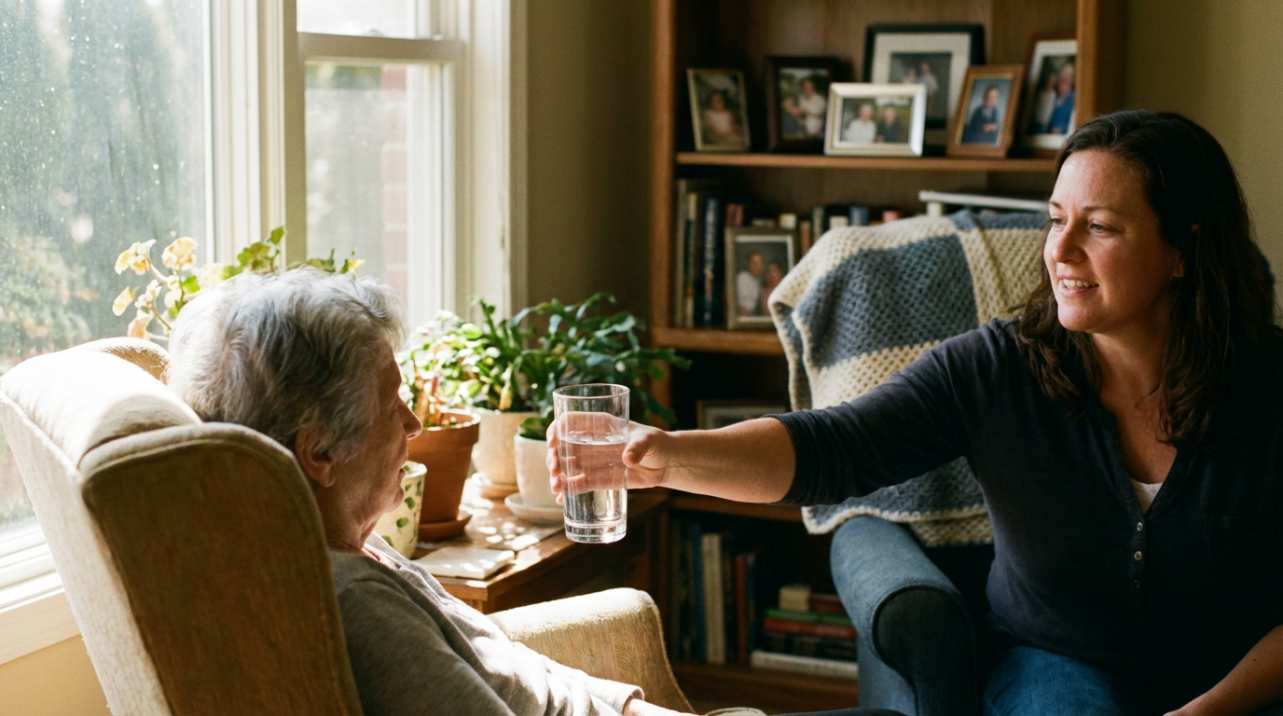
Summary: Dementia patients should avoid drinking water that is contaminated, extremely low in minerals, or heavy in certain metals and chemicals, and caregivers should favor well-filtered, moderate‑mineral water at comfortable room temperature.
1. Poorly Treated or Questionable Tap and Well Water
For a brain already working harder because of dementia, “unsafe” water adds extra stress the body does not need.
Studies summarized by the Alzheimer’s Association and BrightFocus Foundation show that cleaner drinking water is linked with better late‑life cognition, even after accounting for neighborhood and income differences.
At home, higher‑risk water includes:
- Tap water from systems with frequent boil‑water notices or known violations
- Private well water that has never been professionally tested
- Water with visible cloudiness, strange taste, or persistent chlorine/chemical odor
In rural areas, BrightFocus‑funded researchers highlight that well water can carry residues from pesticides and fertilizers when it doesn’t go through any municipal treatment.
For families using a well, a dementia‑friendly routine is:
- Test the well at least once a year for microbes, nitrates, and metals
- Install a certified filtration or purification system if any contaminant is elevated
- Re‑test after flooding, nearby construction, or agricultural spraying

2. Very Soft, Low‑Mineral Water
We often think “soft” water is gentler, but the brain also needs minerals.
A major UK Biobank cohort of almost 400,000 adults found that people drinking very soft to moderately soft tap water (low hardness, roughly 0–120 mg/L as calcium carbonate) had a modestly higher risk of Alzheimer’s disease and vascular dementia than those drinking moderately hard water (120–300 mg/L).
That pattern fits other research showing that:
- Calcium in drinking water sometimes protects cognition
- Magnesium intake is linked with lower dementia risk in population studies
This doesn’t mean soft water causes dementia, and experts quoted in independent reviews warn the effect is small compared with major risks like smoking or high blood pressure.
Still, for someone already living with dementia, it is reasonable to:
- Avoid aggressive in‑home softeners that strip out nearly all calcium and magnesium
- Prefer filtered water that still contains some natural minerals, or remineralized reverse‑osmosis water
- Ask your water utility (or plumber for a softener) what hardness range your home actually receives

Nuance: Scientists do not fully agree on how large the mineral–dementia link is, but choosing a moderate‑mineral source is a low‑cost, low‑risk safeguard for vulnerable brains.
3. Water High in Certain Metals and Pollutants
Several systematic reviews in neurology and aging journals point to specific water‑borne elements that may influence brain health over decades.
Key concerns include:
- Aluminum: French cohort studies found higher dementia risk when aluminum in drinking water was elevated, especially when silica was low and water pH was more acidic.
- Lead and other heavy metals: Neurology experts note that older pipes, solder, and fixtures can leach lead, arsenic, cadmium, and copper into tap water, all of which can harm the brain and blood vessels.
- “Forever chemicals” and pesticides: BrightFocus Foundation experts highlight early but worrying evidence that PFAS and agricultural chemicals in water might contribute to long‑term cognitive risk.
For dementia patients, the practical takeaway is cautious:
- In older homes or areas with industrial or farming runoff, favor a certified under‑sink or countertop system (ideally reverse osmosis plus carbon) for the main drinking tap.
- If you use bottled water as a backup, choose reputable brands and avoid relying on thin plastic bottles stored in hot places, which may leach more microplastics.

4. Extreme Temperatures and “Hydration” Drinks That Backfire
Hydration is not just about what’s in the water, but also how it is delivered.
Animal research in Alzheimer’s models shows that repeated intake of ice‑cold water (around freezing) can worsen cognitive performance and accelerate Alzheimer‑like changes in susceptible mice, likely by disturbing brain energy and insulin signaling.
We do not have human trials yet, but for a fragile, older body it is sensible to:
- Avoid making ice‑cold water the default; aim for cool to room‑temperature drinks
- Reserve very cold beverages as occasional treats, not a main hydration strategy

Caregiver guides from Banner Health, Alzheimer’s Society, and others add that certain “drinks” look like water but work against hydration and brain stability:
- Alcoholic drinks increase confusion, fall risk, and dehydration, and can clash with dementia medications
- Very sugary sodas and “energy” drinks spike blood sugar and add empty calories without brain‑healthy nutrients
For daily sipping, dementia‑friendly choices are:
- Filtered, moderate‑mineral water at comfortable temperature
- Herbal teas, diluted 100% juices, and broths, adjusted for any sodium or fluid limits set by the doctor
5. A Simple Home Water Safety Checklist for Dementia Care
To put this into action without overwhelming your day, focus on a few steady habits rather than constant worry.
Aim for:
- One primary “safe” source: a tested well or a filtered kitchen tap you trust for nearly all drinks
- Moderate minerals: avoid over‑softened water; consider remineralized filtered water if needed
- Extra protection in older or high‑pollution neighborhoods: certified filtration that addresses metals and chemicals highlighted by your local water quality report
- Comfortable temperature: mostly cool or room‑temperature, not extreme ice‑cold
- Clear boundaries: use alcohol and sugary sodas rarely, and never count them toward daily fluids
As a Smart Hydration Specialist, what I see in real homes is that these small upgrades—testing, a good filter, and a thoughtful choice of water source—quietly remove one more burden from a brain already coping with dementia, while giving families peace of mind that every sip is working for, not against, long‑term brain comfort.
References
- https://www.ukbiobank.ac.uk/publications/water-quality-and-neurodegenerative-disease-risk-in-the-middle-aged-and-elderly-population/
- https://pmc.ncbi.nlm.nih.gov/articles/PMC10969896/
- https://www.caregiveraction.org/dehydration-in-dementia/
- https://www.brightfocus.org/resource/environmental-pollution-can-increase-your-alzheimers-risk-say-brightfocus-funded-scientists/
- https://www.dementiauk.org/wp-content/uploads/dementia-uk-hydration-leaflet.pdf

Share:
Hydration Strategies for Long-Term Meal Replacement Users
Guidelines for New Parents Choosing an RO System for Baby Formula