

City water in the U.S. comes from a utility that treats and tests it, and EPA requires community water systems to send customers an annual water quality report, so most city households can choose a filter by reading that report and treating the one or two things they care about most. A private well has no utility and no annual Consumer Confidence Report behind it, so a recent lab result for the well, or a new test, comes before any purchase. From there, the choice narrows by the problem you're solving, by whether one tap or the whole house needs treatment, and by the upkeep your household will keep up with.
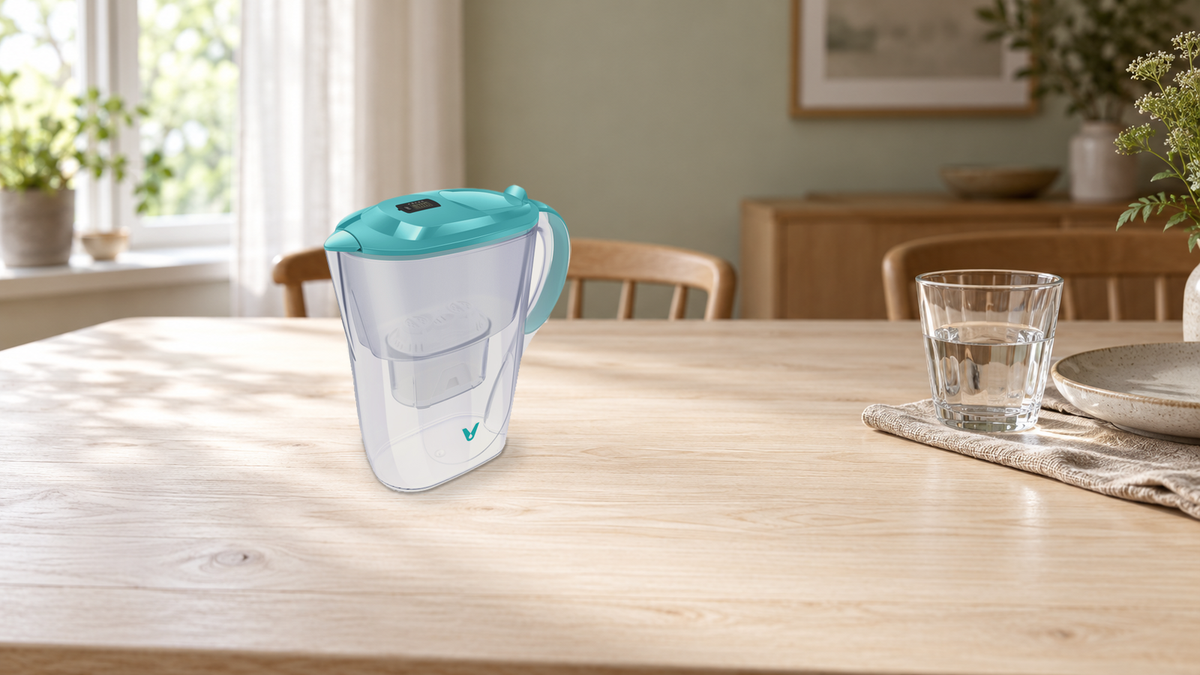
On the city-water branch, a renter whose only complaint is chlorine taste can stop at a pitcher such as the Viomi Inno 13-Cup Water Filter Pitcher, which reduces chlorine by up to 97.2% and counts down its own filter life. A kitchen that wants reverse osmosis (RO) drinking water with minerals added back fits the Viomi M1, a tankless 1000 GPD under-sink system.
The City-Water Branch
Your utility's annual water quality report, often called a Consumer Confidence Report, is the starting document. Three lines in it shape most decisions: the disinfectant (chlorine or chloramine), the table of detected substances with their limits, and hardness, if your utility lists it.
The report describes the water the utility delivers, not what happens inside your building. CDC names lead pipes as the most common source of lead in tap water, so if your home has older plumbing, a tap sample from your own kitchen fills that gap.
With the report in hand, sort your concern into one of these four problems. Each one points to a different kind of equipment.
- Taste and odor, usually chlorine. Activated carbon is the tool: a pitcher, a faucet-mount filter or an under-sink carbon filter. Our article on removing chlorine taste from tap water walks through the options, and if your report lists chloramine, our guide to chloramine filters covers that disinfectant.
- A specific substance you want reduced, such as lead or PFAS. Choose by evidence that names that substance for the exact model, whether a certification listing or a published lab test. See our guides to lead-reduction filters and PFAS in drinking water.
- High dissolved solids or a salty, mineral taste. RO is the technology for this. EPA lists reverse osmosis as effective for removing total dissolved solids and other inorganic substances, and sets a non-mandatory TDS guideline of 500 mg/L for taste and appearance. Our guide to TDS explains the reading.
- Scale on fixtures and appliances. Hardness travels through the plumbing, so it's usually handled at the main line, either by a softener, which removes hardness minerals, or by a salt-free conditioner, which is designed to reduce scale without removing them. Our article on RO systems for hard water covers how drinking-water RO and hardness treatment fit together.
The Private-Well Branch
A private well has no utility behind it, so the owner is the one who tests. CDC recommends testing a private well at least once a year, and the result is what tells you which equipment belongs on the line.
Well results tend to fall into a few groups. Sediment and dissolved minerals such as iron are matched to treatment based on the measured result. For dissolved substances, Clemson Extension lists reverse osmosis among well-water treatments that may reduce arsenic, fluoride, sulfate and nitrate; our article on RO for arsenic in well water explains that pairing. If the test shows bacteria, the equipment class is different again: NSF/ANSI 55 describes Class A ultraviolet systems as ones that "inactivate or kill bacteria, viruses and cysts in contaminated water," and CDC notes that most home filters, like pitcher or fridge filters, are not designed for germs.
A well setup is usually designed as a sequence around the lab report, often with a local water-treatment professional, rather than chosen as a single product.
One Tap or Every Tap
CDC describes the two treatment points this way: "Point-of-use filters usually filter water in batches and deliver it to a single tap, such as your kitchen sink," while "whole-home filters, also called point-of-entry filters, filter water as it comes into your home."
The problem usually decides the point. Drinking and cooking water concerns belong at the kitchen tap, where you can treat a small volume thoroughly. If you want scale or a chlorine smell handled at the shower and appliances as well as the kitchen, treatment at the main line covers all of those points. A home can have one of each: whole-house treatment for the plumbing and a point-of-use filter for the glass.
Where the Filter Will Physically Go
Once you know the treatment point, the location narrows the product type: the fridge (pitcher), the end of the faucet (faucet mount), the cold-water line under the sink feeding your existing faucet (direct-connect carbon), a separate drinking tap through the counter (under-sink carbon or RO), or the main water line (whole-house). Under-sink RO also needs a drain connection and, for powered models such as the Viomi M1, an outlet. Renters should check what their lease allows before choosing anything that changes the plumbing.
Upkeep Is Part of the Choice
Filters with cartridges need new ones on a schedule, and whole-house equipment has its own maintenance routine. CDC lists "regularly changing the filters according to the manufacturer's recommendations" as part of keeping a filter working properly. Before you settle on a product, decide who in the household will change the cartridge and how they'll know it's time.
Built-in reminders help. The Viomi Inno pitcher's electronic indicator shows remaining life as a percentage and days left, and the Viomi M1 shows filter life on its smart faucet and sends replacement reminders through the Viomi app.

Viomi Examples on the City-Water Branch
Chlorine taste, no plumbing changes. The Viomi Inno 13-Cup Water Filter Pitcher suits renters, dorm rooms and small kitchens. Its 4-stage composite filtration reduces chlorine by up to 97.2% and helps improve taste and odor, the 3.2 L (13-cup) body fits most refrigerator doors, and each cartridge lasts up to 2 months under normal use. After a cartridge change, holding the START button for 8 seconds starts a new 60-day countdown.

RO drinking water with minerals added back. The Viomi M1 is a tankless under-sink system for city-water kitchens: 1000 GPD, 9 stages and a 3:1 pure-to-drain ratio, with selected naturally sourced minerals reintroduced after the RO stage. Its touchscreen smart faucet shows live TDS readings and filter life, and its PCB cartridge lasts up to 2 years and its RO cartridge up to 4 years. It was tested by SGS for lead reduction above 99.87%. It needs a standard outlet, a 1" to 1.5" faucet hole and a 1/4" drain hole, and it's designed for municipal tap water. Because the Viomi M1 adds minerals back on purpose, its faucet shows a higher TDS reading than plain RO water, which is expected with the remineralization stage.
Chlorine taste at the existing faucet. The Viomi Under-Sink Water Filtration System (VM-IUO1PCW-L-US) connects to a 3/8" or 1/2" cold-water line so the cold water from the faucet you already have passes through a 0.5-micron PP cotton and carbon rod cartridge, built to reduce chlorine and unpleasant tastes and odors. It runs without power, connects to the cold supply only, and each cartridge lasts up to 12 months.
The Whole Decision Path in Plain Text
-
Where does your water come from?
- City utility: read the annual water quality report, and add a home tap test if lead from older plumbing is a concern.
- Private well: use a recent lab result or have the well tested, and keep testing at least once a year.
-
What problem are you solving?
- Taste or odor: activated carbon.
- A named substance such as lead or PFAS: a model whose certification or lab test names it.
- High dissolved solids: reverse osmosis.
- Scale: a softener to remove hardness minerals, or a salt-free conditioner to reduce scale buildup.
- Bacteria in a well: disinfection such as UV, designed around the lab result.
-
One tap or every tap?
- Drinking and cooking water: point-of-use at the kitchen.
- Every tap, including showers and appliances: point-of-entry at the main line.
- Where will it physically go? Fridge, faucet, under-sink cold line, separate drinking tap, or main line, depending on what your kitchen and lease allow.
- Who keeps it running? Choose a system whose upkeep fits the household, ideally one with a built-in filter-life reminder.
FAQ
Should I test my water before buying a filter?
On a private well, yes, unless you already have a recent lab result, because the owner is responsible for testing and no utility report covers the well. On city water, the utility report is often enough to choose a taste filter. Add your own tap test when the concern is something your building's plumbing can change, such as lead, or when your water looks or smells different from what the report suggests.
Do I need a whole-house system?
When you want the shower, laundry and appliances covered as well as the kitchen. Scale on fixtures and chlorine smell in the shower are the common reasons people choose it. If your concern is the water you drink and cook with, a point-of-use filter at the kitchen sink handles it with far less equipment.
How do I pick between carbon and reverse osmosis?
Carbon targets taste and odor, mainly chlorine, and leaves dissolved minerals in the water. RO goes further by reducing dissolved solids, and it needs a drain connection and, for powered models such as the Viomi M1, an outlet. If your report shows nothing beyond a chlorine taste, carbon covers it; if lower dissolved solids are on your list, RO is the better match, and for one specific substance, pick the model whose certification or lab test names it.
Can I take my water filter with me when I move?
Pitchers and faucet-mount filters move with you. Under-sink systems can be disconnected and reinstalled in the next kitchen when it has what the model needs: a matching cold-water valve for carbon filters, plus a faucet hole for models with their own faucet; a faucet hole and drain for RO, plus an outlet for powered RO such as the Viomi M1; and enough cabinet space and suitable inlet pressure. If you rent, keep the original fittings so the old setup can go back the way it was, and check the new home's water source too, since a move from city water to a well changes the plan.
What to Do Next at Home
- Write down your water source, either the name of the utility on your bill or the fact that you're on a well.
- Get the document that goes with it: the utility's latest water quality report, or the well's most recent lab result, with a test booked if there isn't one.
- Circle the one problem you most want solved, and match it to the technology in the decision path above.
- Decide between one tap and the whole house before comparing any models.
- Name the person who will change the cartridges, and check how the system you choose signals that a change is due.
Share:
Countertop Water Dispensers Compared by Water Source: Avalon, Brio and Waterdrop
How to Choose an Under-Sink Water Filter Brand for Your Home