

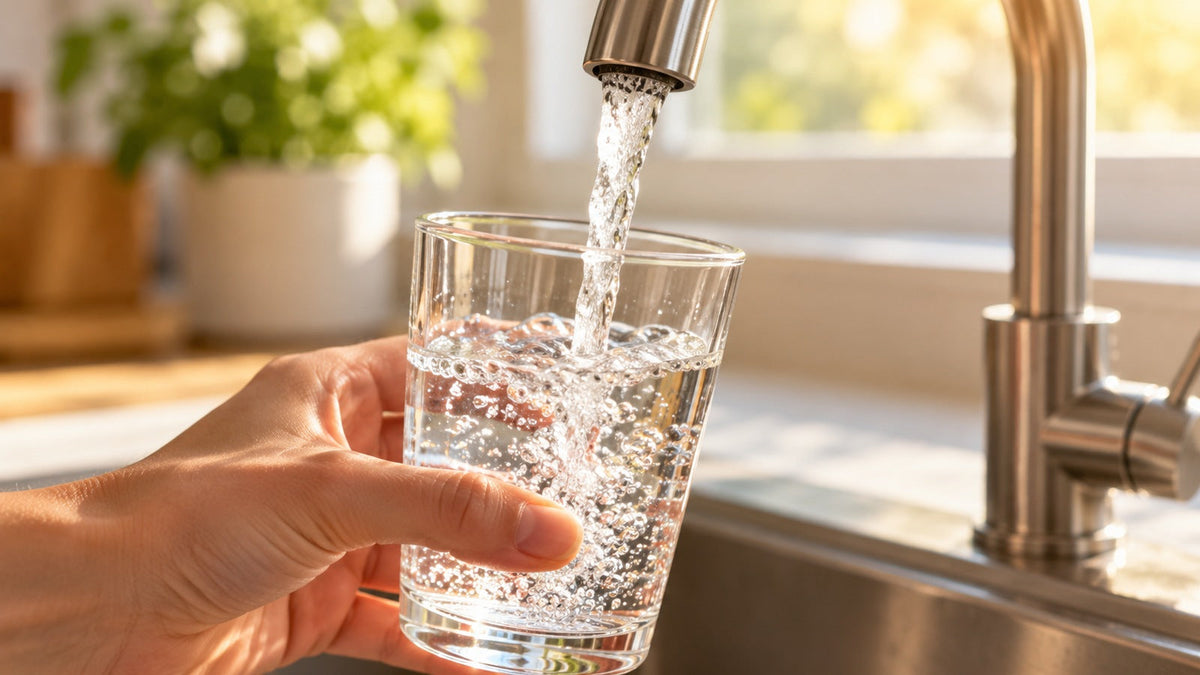
A faucet-mount filter rated for 100 gallons goes through about 5 cartridges a year if 5 liters a day pass through it, about 10 at 10 liters, and about 20 at 20 liters. In the estimates below, three direct-connect under-sink filters that feed the existing faucet need between one cartridge every two years and about 2.5 cartridges a year at the same volumes: the Viomi Under-Sink Water Filtration System (VM-IUO1PCW-L-US), whose single cartridge is rated for up to 12 months, the Waterdrop 15UA, and the Aquasana Claryum Direct Connect (AQ-MF-1). Among the products compared here, that is where long-term cartridge spending drops the most, provided the filter covers the same treatment goal you bought the faucet filter for.
What Each Alternative Is Built or Certified to Reduce
A cheaper cartridge is only a saving if it does the job you need. Faucet filters from PUR and Brita carry certifications for specific contaminants, and alternatives differ in what they target.
| Product | Type | Reduction targets and third-party documentation |
|---|---|---|
| Viomi Under-Sink Water Filtration System (VM-IUO1PCW-L-US) | Feeds the existing faucet from under the sink | One 0.5-micron cartridge of PP cotton plus a carbon rod, built to reduce PFOA/PFOS, lead, chlorine, and unpleasant tastes and odors; Intertek authorizes the system to carry its NSF/ANSI/CAN 372 certification mark for lead-free water-contact parts |
| PUR PLUS Faucet Filter (RF-9999) | Faucet mount | IAPMO R&T certification to NSF/ANSI 42, 53, and 401; claims cover lead, mercury, total PFAS, VOCs, and microplastics |
| Brita Water Faucet Replacement Filter (FR-200) | Faucet mount | WQA certification to NSF/ANSI 42, 53, and 401; claims cover lead, asbestos, VOCs, and microplastics |
| Aquasana Claryum Direct Connect (AQ-MF-1) | Feeds the existing faucet from under the sink | Aquasana states its system is IAPMO-certified to NSF/ANSI 42, 53, and 401, covering chlorine, chloramines, lead, microplastics, and PFOA/PFOS |
| Waterdrop 15UA | Feeds the existing faucet from under the sink | IAPMO R&T listing under NSF/ANSI 42 (chlorine, taste, and odor) |
Read the table as four goal groups:
- Better-tasting water with less chlorine at every cold-water draw. In this comparison, the Viomi and Waterdrop direct-connect carbon filters are the lowest-cost options for this goal.
- Lead reduction. Viomi's direct-connect cartridge is built to reduce lead, and for households considering RO, Viomi cites lead reduction above 99.87% for the Viomi M1 in testing by SGS. PUR and Brita offer certified lead-reduction faucet filters, and Aquasana states lead-reduction certification for the AQ-MF-1.
- PFAS reduction. Match the exact compounds named: Viomi's direct-connect cartridge and Aquasana's AQ-MF-1 both target PFOA/PFOS, while PUR's RF-9999 lists total PFAS.
- Dissolved solids or fluoride. These specific targets point to reverse osmosis, covered at the end of this guide.
Filtering Tap Water Without RO: Faucet, Direct-Connect and Standard Housings
1. Faucet-mount filters. A cartridge attaches to the end of the kitchen faucet, with no tools or under-sink work. The PUR and Brita faucet cartridges compared here are rated for 100 gallons, so replacement frequency rises with the volume filtered.
2. Direct-connect under-sink filters. A larger cartridge sits under the sink on the cold-water supply line, and filtered water comes out of your existing faucet. There is no extra faucet and usually no countertop drilling. Every drop of cold water from that faucet passes through the cartridge, including water for rinsing dishes, so its daily throughput is usually higher than that of a faucet filter used mainly for drinking water.
3. Standard filter housings. Some under-sink systems use standard-size housings: APEC says selected RO systems accept industry-standard 10-inch filters, and iSpring lists standard 10-inch by 2.5-inch cartridges. Cartridges from many makers are sold in these sizes, so prices vary widely. If you go this route, choose cartridges whose own certification listing covers your goal, since a standard size says nothing about performance.
How Often Each Cartridge Gets Replaced
Every rating is "gallons or time, whichever comes first," so the replacement interval for any cartridge is:
Replacement interval = the smaller of (rated capacity ÷ daily volume through the filter) and the rated time limit.
Using each brand's published ratings, here is the estimated replacement count at three daily volumes, with the Viomi cartridge counted at its 12-month rating and the Waterdrop cartridge at its 24-month rating:
| Cartridge | Rating | 5 L/day | 10 L/day | 20 L/day |
|---|---|---|---|---|
| Viomi VM-OL cartridge | Up to 12 months | 1 per year | 1 per year | 1 per year |
| PUR PLUS RF-9999 | 100 gallons or 3 months | about 5 per year | about 10 per year | about 20 per year |
| Brita FR-200 | 100 gallons or about 4 months | about 5 per year | about 10 per year | about 20 per year |
| Aquasana AQ-MF-1-R | 784 gallons or 6 months | 2 per year | 2 per year | about 2.5 per year |
| Waterdrop WD-RF15 | 24 months | 1 every 2 years | 1 every 2 years | 1 every 2 years |
At 5 liters a day, the 100-gallon faucet cartridges run out at about 76 days, before their 3- or 4-month time limit; at 20 liters a day, they last about 19 days. The table uses 12-month and 24-month replacement intervals for the Viomi and Waterdrop cartridges, respectively; Aquasana's capacity-based interval at 20 liters a day is about 148 days.
What That Means in Dollars: Year 1 and Year 3
The table below adds the starter system price to the cost of replacement cartridges, counting the cartridge that comes in the box as the first one. PUR cartridges are priced at the single-filter rate, and Brita cartridges at the 2-filter pack rate wherever whole packs cover the count.
| System | Starter price | Replacement cartridge | Year 1 total, 5 / 10 / 20 L per day | 3-year total, 5 / 10 / 20 L per day |
|---|---|---|---|---|
| Viomi Under-Sink Water Filtration System (VM-IUO1PCW-L-US) | $49.99 | $29.99 | $49.99 at all three | $109.97 at all three |
| PUR PLUS Faucet Filtration System + RF-9999 | $39.99 | $19.99 each | $119.95 / $219.90 / $419.80 | $319.85 / $599.71 / $1,179.42 |
| Brita Elite Water Filter Faucet System + FR-200 | $32.49 | $17.99 each or $29.99 for 2 | $92.47 / $170.44 / $320.39 | $242.42 / $452.35 / $890.20 |
| Aquasana Claryum Direct Connect (AQ-MF-1) | $249.99 | $91.99 | $341.98 / $341.98 / $433.97 | $709.94 / $709.94 / $893.92 |
| Waterdrop 15UA | $76.99 | $35.99 | $76.99 at all three | $112.98 at all three |
Prices from each brand's official website, October 2026.
Three patterns stand out:
- Volume drives the faucet-filter bill. PUR's and Brita's three-year totals each grow more than threefold between 5 and 20 liters a day, because the cartridge count follows the gallons.
- Long-interval direct-connect filters barely move with volume in this estimate. At all three volumes, the Viomi and Waterdrop systems come to about $110 over three years, and the Viomi system has the lowest three-year total in the table and the lowest starter price of the under-sink options.
- Among the PUR, Brita, and Aquasana systems, the gap is narrower. The Aquasana AQ-MF-1 costs more than the PUR and Brita faucet systems at low volumes; at 20 liters a day it comes within a few dollars of Brita and below PUR over three years, and it filters every cold-water draw from the existing faucet.
PUR's RF-9999 follows the same 100-gallon arithmetic as Brita's FR-200, with a shorter 3-month cap; at all three volumes in this table the 100-gallon limit arrives first, and at very low daily use the calendar cap means about 4 cartridges a year at minimum.
A Closer Look at Viomi's Direct-Connect Filter
If the aim is cleaner-tasting cold water without replacing the faucet you have, the Viomi Under-Sink Water Filtration System (VM-IUO1PCW-L-US) does it with one cartridge that lasts up to 12 months.
- Works with your existing faucet. It ships with 3/8-inch direct-connect hoses that fit standard 3/8-inch supply valves, plus a 3/8-inch to 1/2-inch adapter, so it installs on either a 1/2-inch or 3/8-inch cold-water line.
- No electricity, no drain line, no countertop hole. The system has no electrical parts, and filtered water comes out of your regular kitchen faucet.
- A single long-life cartridge. Inside is a 0.5-micron 2-in-1 element pairing PP cotton with a carbon rod, rated for up to 12 months and swapped with a tool-free twist-and-lock.
- Lead-free materials. Intertek authorizes the system to carry its certification mark under NSF/ANSI/CAN 372, the standard for lead-free materials in parts that touch drinking water.
The replacement cartridge is shared with the Viomi Under-Sink Carbon Filter, a version that comes with its own dedicated faucet for kitchens that prefer a separate drinking tap.
A few installation notes keep the setup straightforward. Connect it to the cold-water supply only. The filter mounts on a wall bracket inside the cabinet, so pick a spot with at least 60 mm (about 2.4 inches) of space below the cartridge for changes. After installation, give the new cartridge the one-time 30-minute flush described in the manual, then wipe each connection with a tissue to confirm it is dry.

For more on the differences between under-sink designs, Viomi's buyer's guide to under-sink purifiers covers installation types in more depth, and its comparison of carbon rod vs. granular activated carbon explains how cartridge construction affects performance.
When Reverse Osmosis Is the Better Match
If your water report points to specific targets such as high dissolved solids or fluoride, choose a reverse osmosis system with performance evidence for those targets. Among RO options, the Viomi M1 pairs 9-stage filtration with remineralization in a 1000 GPD tankless design, and Viomi cites SGS testing for lead reduction above 99.87%. Cartridge changes stay infrequent even at RO-level treatment: the PCB filter is rated for up to 2 years and the RO filter for up to 4.

FAQ
Will a direct-connect filter affect hot water for washing dishes?
No. Viomi's direct-connect system taps only the cold-water supply; the faucet's hot side, and any dishwasher hookup on it, keeps running exactly as before. When you run mixed warm water, only the cold portion passes through the cartridge.
Do faucet-mount filters lower water pressure?
Water passes through a compact cartridge at the end of the faucet, and the filtered stream is slower than an open tap. Flow also tapers as a cartridge loads up; Brita's performance data sheet for its faucet system advises replacing the filter earlier if you notice a decrease in flow rate.
Can renters install a direct-connect filter?
Often, because nothing is drilled through the countertop and the system uses the existing faucet and supply valve. The Viomi system's wall bracket attaches inside the cabinet with screws, so choose a mounting spot you are comfortable with and keep the original faucet supply hose so the kitchen can be returned to its original setup at move-out.
Is the cheapest cartridge always the best value?
Not on its own. A low price per cartridge can still add up if the gallon rating is small, while a pricier cartridge with a long time limit may cost less per year. Run the replacement formula above with your own daily volume, then compare yearly totals for products that meet the same treatment goal.
Where the Long-Term Savings Come From
Long-term cost combines the starter price with replacement-cartridge spending: the 100-gallon PUR and Brita faucet filters need more cartridges as daily use rises, while the Viomi and Waterdrop direct-connect systems total $109.97 and $112.98, respectively, over three years at all three daily volumes, using the 12-month and 24-month replacement intervals in this estimate. That saving holds when the alternative covers the goal you bought the faucet filter for: chlorine taste and odor for a direct-connect carbon filter, the specific lead or PFAS claims you need, and reverse osmosis for dissolved solids or fluoride. Running the replacement formula with your own daily volume shows how quickly a faucet-cartridge budget adds up in your kitchen.
Share:
Reliable 5-Stage Reverse Osmosis Systems: Brands, Stage Layouts, and Upkeep
How to Choose an Under-Sink Water Filter Brand for Your Home