

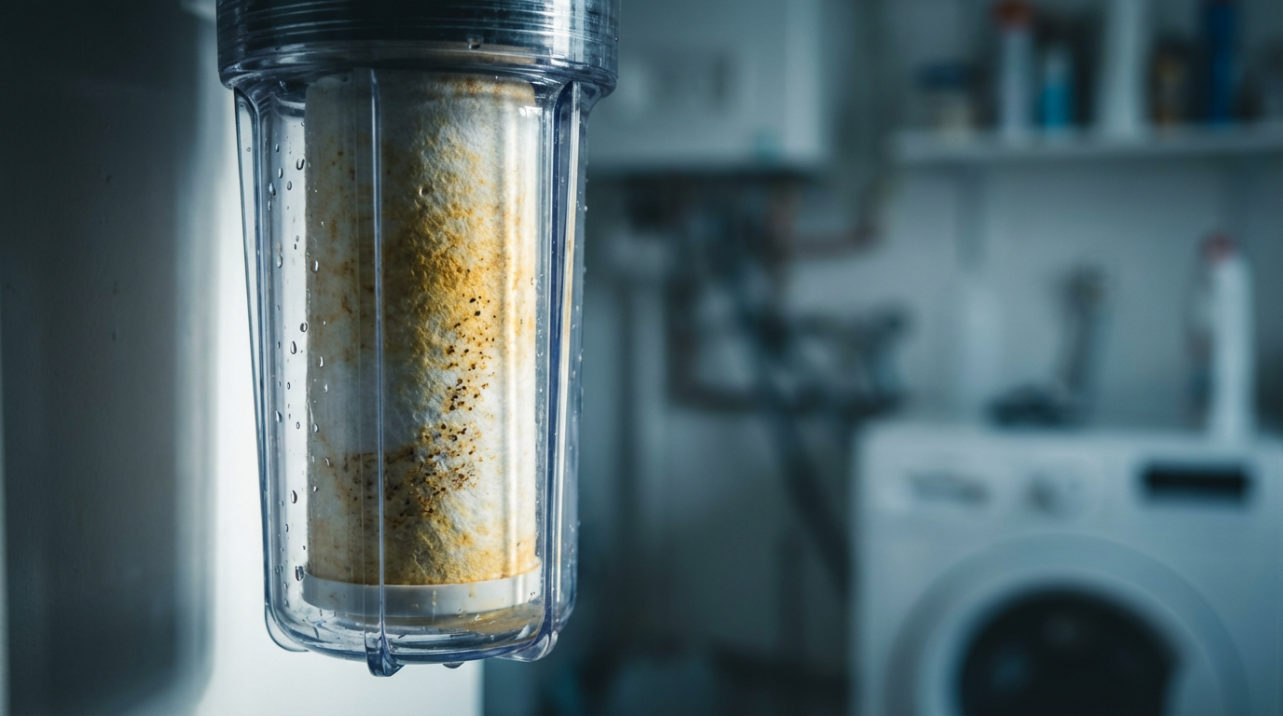
If you have ever opened a clear filter housing, expecting to see a clean white cartridge and instead found a yellow or yellow‑brown pre-filter, you are not alone. As a smart hydration specialist, I see this scenario constantly in homes on both well water and city supplies. The first reaction is usually the same: “Is my filter defective, or is something seriously wrong with my water?”
Rapid yellowing almost never means the filter itself is breaking down. It usually means the cartridge is doing its job and capturing what your eyes could not see in the water. The real question is whether that yellowing is normal for your water conditions or a warning that you need to test, treat, or reconfigure your system.
In this article, we will unpack what a yellow pre-filter really means, the science behind the discoloration, how to tell normal yellowing from concerning patterns, and the practical steps you can take to protect both your water quality and your filtration equipment.
What Pre-Filters Actually Do (And Why They Change Color)
A pre-filter is the first line of defense in many home water systems. It might sit at the point where water enters your home as a whole‑house sediment filter, or just ahead of a reverse osmosis (RO) unit or softener. Most pre-filters are designed to trap visible and microscopic particles before they reach more sensitive or expensive components downstream.
Common pre-filter roles include intercepting sand, silt, rust flakes, and other sediment; catching oxidized iron and manganese particles; and protecting carbon blocks, RO membranes, and softener resin from clogging and fouling. Some specialized pre-filters also contain activated carbon or other media to reduce chlorine, organic matter, or specific metals.
Because they are designed to accumulate contaminants, pre-filters almost never stay white for long. Fine particles, oxidized metals, and organic compounds lodge in the filter media and stain it yellow, tan, brown, or even black. A changing filter color is therefore expected; the important nuance is how fast that change happens and what else you see in your water.
Consider a simple example. A family on municipal water installs a whole‑house sediment pre-filter. The cartridge is bright white on day one. After three months, it is light tan with a faint yellow band near the inlet, but water pressure is still good and the taps run clear. In this case, the change in color is a visual record of what the filter has removed and aligns well with typical replacement intervals.
Rapid yellowing that appears in a matter of weeks or days, especially if paired with pressure loss, staining, or odd tastes, deserves closer attention.

When Rapid Yellowing Is Normal Versus a Warning Sign
Manufacturers and service providers commonly design whole‑house sediment pre-filters to last roughly three to six months under average conditions, according to maintenance guidance from several plumbing and filtration specialists. Some high‑capacity cartridges in relatively clean city water can last closer to a year, while more heavily loaded systems can exhaust a pre-filter in as little as one to two months.
From a practical standpoint, light yellowing within a few weeks can still be normal if all of the following are true: water at the tap looks clear and does not take on a yellow or brown tint; there is no noticeable drop in water pressure; fixtures, laundry, and dishes are not developing new stains; and the filter still reaches something close to its expected service life, perhaps three months, before you replace it.
By contrast, rapid yellowing becomes a warning sign when cartridges turn deep yellow, orange, or brown very quickly, often in less than a month, and are accompanied by complaints about color, metallic taste, staining, or pressure problems. Manufacturer guidance and service articles point out that pre-filters in such conditions may clog enough to require replacement every one to two months or even more frequently. When that happens, the issue is rarely the cartridge itself; it is almost always a symptom of elevated contaminant loads or an undersized treatment configuration.
Imagine a home on an older city main that undergoes a period of utility repairs. A new pre-filter turns from white to dirty yellow within two weeks, and the homeowner starts noticing faint rust stains in sinks and fluctuating pressure. That pattern suggests disturbed rust and sediment in the distribution lines rather than a defective filter, and it is time to investigate further.
The Main Culprits Behind Yellow Pre-Filters
Several types of contaminants can stain pre-filters yellow or yellow‑brown. The visual clues on the cartridge, combined with what you see at the tap, help narrow down the cause.
Dissolved Iron and Rust from Pipes
Iron is one of the most common reasons for yellow or orange discoloration in both tap water and filter cartridges. University and extension sources explain that iron occurs naturally in groundwater and also comes from corroded steel or iron pipes. In deep, low‑oxygen wells, iron may be dissolved and invisible at first, but as soon as it encounters air or chlorine, it oxidizes and forms colored particles.
One water‑quality guide notes that “clear water” ferrous iron can leave the tap looking normal but then turns yellow or orange over time, while “red water” ferric iron appears rusty at the tap itself. When a pre-filter sits upstream of your fixtures, it becomes the place where much of that oxidized iron collects.

Over time, the filter surface develops yellow to reddish‑brown bands, usually darkest near the inlet.
An article from a filter manufacturer and a consumer guide on yellow filters both emphasize that a yellow cartridge often means it is trapping iron, rust, and other sediments from either your water source or your plumbing. Old galvanized or iron pipes can shed corrosion products continuously, and rust inside an overhead storage tank can do the same.
From a health perspective, iron in drinking water is generally considered more of an aesthetic issue than a toxic one. A university extension publication notes that iron is not classified as a health hazard at the concentrations that cause yellowish color and staining. However, iron-rich water can taste metallic, stain fixtures and laundry, shorten filter life, and support the growth of iron‑related bacteria.
Picture a private well with 0.3 to 0.5 milligrams per liter of dissolved iron, which is around the level where most people start noticing color and staining, according to extension guidance. A whole‑house sediment pre-filter may go from white to orange‑yellow in a month and require replacement every two months, even though household water remains clear at the tap. In that case, the cartridge is acting as an iron trap, but a dedicated iron‑treatment stage would usually be more efficient.
Manganese and Iron Bacteria
Manganese frequently travels with iron in groundwater. Like iron, it can be dissolved and invisible at first, then oxidize into dark particles. A Midwest extension publication reports that most people notice manganese issues around 0.05 milligrams per liter, with aesthetic staining and taste concerns, and higher concentrations can pose neurological risks, especially for infants and at levels above about 0.3 to 1.0 milligrams per liter.
On pre-filters, manganese often appears as darker brown or blackish staining, but mixed iron and manganese can create yellow‑brown tones. If iron and manganese bacteria are also present, they may form slimy films on filters, in toilet tanks, and inside plumbing. These bacteria are not considered a direct health hazard, yet they generate foul odors and clog components.
In one do‑it‑yourself forum discussion summarized in the research notes, a specialist explains that iron‑reducing bacteria can colonize resin beds and filters, leading to slimy brown deposits and poor performance. In such cases, oxidizers in the water convert dissolved iron into ferric rust, which then loads the pre-filter and contributes to the yellow‑brown coloration.
A real‑world pattern might look like this: a well owner finds that pre-filters turn yellow‑brown and slimy within a month, and the inside of toilet tanks shows reddish or black slime. That combination points strongly toward iron and manganese bacteria.

The literature and a commercial yellow‑water guide describe using shock chlorination, such as adding a measured amount of bleach to the well, letting it sit, and then flushing until the chlorine smell is gone, along with follow‑up testing. Local extension or health departments can provide well‑specific disinfection protocols.
Tannins and Natural Organic Matter
Tannins are natural organic compounds released as vegetation and plant material decompose in soils, wetlands, and surface waters. Several technical and commercial sources agree that tannins can give water a faint yellow to tea‑like color and an earthy or musty taste. They are especially common in shallow wells or surface‑influenced groundwater near marshy or peaty areas.
While tannins are not classified as a direct health hazard, they make water visually unappealing and can cause yellow staining on fixtures, laundry, and filter cartridges. They are also highly soluble and can be challenging to remove without specific treatment. A specialty tannin filter provider notes that tannins are best addressed with dedicated tannin cartridges, activated carbon, or reverse osmosis systems designed for organic removal.
An important nuance from one tannin specialist is that not all yellow or brown water contains significant tannins. That company estimates that only a small fraction of discolored wells are truly tannin-dominated; many others are driven by iron, manganese, or sediment. They caution against salespeople who diagnose “tannins” without testing and recommend simple checks and tannin-specific lab tests.
On a pre-filter, tannin staining tends to look like a uniform yellow or yellow‑brown wash over the cartridge, especially in systems that also include activated carbon. If the water in a clear housing looks like weak tea even after the filter, or if yellow staining appears on white fixtures and laundry without obvious rust, tannins are a strong suspect.
Sediment, Construction, and Infrastructure Disturbances
Sometimes the simplest explanation is the correct one: dirt. Several articles from filter manufacturers explain that a whole‑house pre-filter turning brown or yellow often means it is capturing sediment, including fine sand, silt, and rust flakes, particularly after line breaks, utility flushing, or nearby construction.
One guide notes that right after installing a filter, brown or cloudy water usually reflects existing water‑quality issues rather than a defective cartridge. If a pre-filter designed to last three to six months browns and clogs much faster, especially in homes with high water use or older plumbing, that is a strong signal of elevated sediment load or corroded pipes.
An Australian whole‑house filter article points out that aging municipal infrastructure, construction activity, heavy rainfall in catchment areas, and disturbances in main water lines all increase sediment and rust in tap water. In wells, pump problems or screen damage can similarly increase sand and silt. A pre-filter in these scenarios may show dark yellow to brown bands near the inlet where particles impact first.
Imagine a neighborhood where the water utility replaces a nearby main. Residents who recently installed clear‑housing pre-filters notice that their cartridges turn dirty yellow‑brown within a few weeks, and the housings collect visible grit. Flushing lines and using a higher‑capacity sediment stage can stabilize the system, but the discoloration is a clue about what was previously traveling straight to their fixtures.
Algae in Clear Filter Housings
While algae usually produce green rather than yellow staining, the mechanism is closely related and worth mentioning because it involves the filter housing rather than the water source alone.
A homeowner with a well reported that a clear whole‑house sediment filter housing turned green after new windows were added, allowing direct sunlight into the well shed. A technical discussion traced the cause to algae growth inside the transparent housing. Algae are ubiquitous in the environment, and given moisture and sunlight, they can grow on filter surfaces even if the water at the tap looks clear and has no noticeable taste or odor.
Experts in that discussion recommend eliminating light exposure rather than repeatedly shocking the well. They suggest cleaning or replacing the filter, then permanently covering the clear housing with an opaque wrap or replacing it with an opaque housing altogether. Once the housing stays dark, algae lose their energy source and growth stops.
If you see greenish slime or discoloration on a pre-filter that sits in a bright location, the fix is as much about light control as it is about water chemistry.
Health Considerations: Is Yellowing Dangerous?
Most causes of yellow filter discoloration are aesthetic or operational concerns rather than immediate health threats, but they should not be ignored.
Multiple extension bulletins emphasize that iron itself is not considered a health hazard at the levels that cause color and staining. Manganese is different: while low levels mainly stain fixtures, concentrations above about 0.3 milligrams per liter can pose neurological risks for infants when that water is used to mix certain formulas, and water above about 1.0 milligram per liter may be unsuitable for drinking for older children and adults. That is why some health agencies advise consumers to seek alternative sources or treatment when manganese tests above those thresholds.
Organic tannins are generally described as not harmful to humans, animals, or plants. However, their presence often means surface‑influenced water is reaching your supply, which could also carry other contaminants such as pesticides or pathogens, especially after heavy rain or flooding. One yellow‑water guide notes that surface runoff entering a well can bring pesticides, animal waste, and other harmful substances, and recommends consulting a water specialist if you notice color changes after storms.
More broadly, a University of Georgia Extension summary of a U.S. Geological Survey study found that about one in five private wells in major aquifers exceeded a human‑health benchmark for at least one contaminant, and roughly half had at least one water‑quality problem. Many of these contaminants are not visible, so relying on color alone is not sufficient to judge safety.
There is also the issue of what happens inside the filter over time. Maintenance specialists warn that saturated or overdue cartridges can become breeding grounds for bacteria, especially in warm environments and low‑flow conditions. Instead of capturing contaminants, an overused filter can start releasing trapped material or supporting biofilms that slough downstream. That is one reason routine replacement, even when water still looks “fine,” is strongly recommended.
A practical way to think about it is this: a yellow pre-filter is a signal that your system is intercepting something. On its own, yellowness does not prove the water is unsafe, but it does justify a closer look at your water chemistry, especially if you rely on a private well, notice new odors, or have vulnerable family members such as infants, older adults, or people with compromised immune systems.
Reading the Clues: What Your Yellow Pre-Filter Is Telling You
You can learn a surprising amount about your water by combining visual clues on the cartridge, what you observe at the tap, and basic background about your supply.
The following table summarizes typical patterns drawn from extension bulletins and technical articles.
Likely cause |
What you see on the cartridge |
What you notice in water |
Health notes and implications |
Typical next step |
Iron and rust |
Yellow to orange bands, often darker near the inlet |
Yellow or orange tint, metallic taste, rust stains on fixtures or laundry |
Mostly aesthetic at common levels; can support iron bacteria growth |
Test for iron and manganese; consider iron treatment or pipe inspection |
Manganese and iron bacteria |
Yellow‑brown to dark brown or black, sometimes slimy |
Black or brown stains, slime in toilet tanks, rotten or musty odors |
High manganese can pose health risks at elevated concentrations; bacteria are nuisance rather than direct health threat |
Test for manganese and iron bacteria; consider disinfection and manganese treatment |
Tannins and organic matter |
Uniform yellow or tea‑stained look, especially in carbon stages |
Yellow, tea‑like water, earthy or musty taste, yellow staining without rust specks |
Tannins themselves are not usually harmful but signal surface‑influenced water and possible co‑contaminants |
Perform tannin‑specific testing; evaluate tannin‑targeted treatment such as carbon or RO |
Sediment and construction debris |
Yellow‑brown to gray‑brown bands, visible grit trapped |
Cloudy or murky water during disturbances, sand or silt in strainers |
Primarily operational; can harbor microbes if left unchecked |
Add or upgrade sediment pre-treatment; investigate source (utility notices, well issues) |
Algae in clear housings |
Greenish film or patches on cartridge or housing |
Often no change at tap; discoloration visible only in housing |
Indicates organic content and light exposure; not necessarily immediate health threat but suggests need for better treatment or protection |
Clean and sanitize housing; block light or switch to opaque housing; consider extra drinking‑water purification |
As a simple example, imagine two homes using similar whole‑house pre-filters. In the first, the homeowner sees a cartridge with orange bands and notices rust‑colored stains in the bathtub and metallic‑tasting water. Testing confirms iron above secondary standards for aesthetic quality. In the second, the cartridge is yellow and slimy, and toilet tanks have dark slime; tests reveal manganese and iron‑related bacteria. The filters look superficially “yellow” in both cases, but the underlying problems and solutions are different.
How to Diagnose Rapid Yellowing Without Guesswork
Trying to treat yellow filters without understanding the cause is a recipe for wasted money. Accurate diagnosis starts with a structured look at your system.
First, pay attention to where and when you see discoloration. If the yellowing is confined to the pre-filter and your tap water runs clear with no change in taste or smell, the filter may simply be intercepting nuisance levels of iron, manganese, or tannins before they reach you. If the water itself is yellow at the tap, turn a glass of water and note whether the color clears after running the tap for a bit, whether it appears only in cold or hot water, and whether it affects all faucets or just some. A tap‑water color guide explains that yellow or orange water that clears after a “first draw” often originates inside the house piping or water heater, while system‑wide discoloration suggests issues upstream in the supply.
Second, consider whether you are on municipal water or a private well. On city systems, yellow episodes often follow utility repairs or main flushing. Utilities may increase flow to scour lines, which dislodges rust and sediment that then load your pre-filter. In these events, utilities typically advise customers to run taps until clear and avoid drinking discolored water until it settles. If your water remains discolored or your filters clog extremely fast, contacting the utility is appropriate.
On private wells, you are your own water company. Extension services recommend routine testing, at least annually, for bacteria, nitrates, total dissolved solids, and pH, along with metals such as iron and manganese when stains or color changes occur. A fact sheet from a southern extension service notes that roughly one third of wells tested showed microbial contamination and that appearance alone is not a reliable health indicator.
Third, obtain targeted testing instead of relying on appearance. Based on the patterns above, tests to consider with your lab or local health department include iron, manganese, pH, tannins (when yellow color is tea‑like with musty taste), total coliform bacteria, and, when slimy films are present, iron/manganese bacteria. Some laboratories and companies also offer specialized panels for pesticides or petroleum products when surface contamination or spills are suspected.
Finally, review any recent changes around your water system. New windows or lights near a clear filter housing, heavy rains and flooding, drilling or blasting near your well, plumbing repairs, or replacements of mains in the street are all events that can suddenly change what hits your pre-filter. Documenting these changes in a simple log, along with filter replacement dates and photos of cartridges, can reveal patterns over time and support good decisions.

To see how this plays out in practice, imagine a rural household whose pre-filter turned yellow‑brown within three weeks after heavy rain, and whose well is shallow and near a livestock area. Water testing shows moderate iron, measurable nitrates, and trace pesticides. Without testing, the homeowner might have blamed tannins alone. With data, they can pursue targeted treatment and consider whether well construction changes are also needed.
Solutions: How to Slow Yellowing and Protect Your System
Once you know what is driving rapid yellowing, you can match solutions to causes instead of swapping cartridges endlessly.
Improve Pre-Treatment for Sediment and Iron
If tests or visual evidence point to high sediment or oxidized iron, a stronger pre-treatment stage can dramatically extend cartridge life. Technical guides recommend using dedicated sediment pre-filters such as spin‑down or backwashing filters upstream of fine cartridges. These devices handle larger particle loads and can be flushed or backwashed rather than replaced frequently.
One experienced water‑treatment professional warns that restrictive cartridge pre-filters installed ahead of electric softeners can actually harm softener performance by starving them of flow during regeneration. In such setups, non‑restrictive, self‑cleaning sediment devices are preferred. For homes without softeners, higher‑capacity pleated or multi‑stage sediment filters can still reduce how often you need to change pre-filters.
Consider a simple calculation. If your current sediment pre-filter costs $20 and clogs every month, you spend about $240 per year on cartridges alone. If a $150 spin‑down filter plus a higher‑capacity cartridge allows you to change the cartridge every three months instead of every month, annual cartridge cost drops to around $80, and the pre-treatment pays for itself in about one to two years.
Target Iron and Manganese with Appropriate Treatment
When dissolved iron and manganese are the main culprits, removing them before they oxidize or stain filters is more efficient. Extension publications describe several whole‑house options: ion‑exchange water softeners (effective for moderate levels), oxidizing filters, aeration followed by filtration, and chemical oxidation with chlorine or permanganate followed by filtration. Phosphate treatment can sometimes control staining without full removal.
At the tap, point‑of‑use devices such as reverse osmosis units, distillers, and certain carbon filters can remove dissolved manganese and often iron from drinking water, though high manganese levels can shorten filter life. Guidance from university and extension sources emphasizes selecting equipment certified by reputable organizations and working with experienced water professionals to size and configure systems properly.
In practice, a homeowner who sees yellow filters and rusty stains might test and discover iron just above aesthetic thresholds but very little manganese. A softener plus a pre-filter could be sufficient. Another homeowner with high manganese and slime might need a more robust oxidizing or aeration‑plus‑filtration system, possibly combined with periodic disinfection to control bacteria.
Address Tannins and Organic Matter
If testing confirms that tannins, rather than metals, dominate the yellow color, treatment shifts toward organic‑removal technologies. Several sources explain that activated carbon filters can adsorb tannins and improve taste and clarity when levels are modest. For heavier tannin loads, reverse osmosis systems with tannin‑selective cartridges or resins provide more thorough removal.
Households must also decide whether they want point‑of‑entry treatment for all water or point‑of‑use treatment at specific taps. Articles on tannin removal note that whole‑house backwashing filters can handle large volumes with minimal maintenance, while smaller cartridge systems at a kitchen sink or fridge are less expensive but protect only drinking and cooking water.
To put numbers on the decision, one vendor describes a typical tannin cartridge that fits a standard 10‑inch housing and may cost around the same as a quality sediment cartridge. If tannin levels cause visible yellowing, you might pair a sediment pre-filter with a carbon or tannin cartridge ahead of your RO system or as a stand‑alone drinking‑water filter, replacing it every few months based on water quality and usage.
Block Light to Stop Algae
When algae grow inside clear housings, the remedy is straightforward: remove light. After cleaning or replacing the cartridge, covering the housing with an opaque jacket or replacing it with an opaque model keeps sunlight from reaching the moist surfaces. A home‑improvement discussion suggests using doubled opaque plastic or insulated “boots” as a practical cover; once you know how long your cartridges usually last, you no longer need to see them directly to know when to replace them.
Blocking light does not replace the need for good disinfection or final filtration, but it prevents the housing itself from becoming a miniature algae incubator.
Maintain and Clean Housings Safely
No matter what is causing yellowing, proper filter maintenance is essential. Plumbing and filtration professionals outline several key practices: replacing sediment pre-filters every three to six months in typical whole‑house systems, or more often in high‑sediment situations; paying attention to warning signs such as pressure drops, unusual tastes or odors, and visible particles in water; and cleaning housings during each cartridge change.
Safe housing cleaning typically involves disassembling the housing, washing it with a mild, unscented dish soap and a soft brush, rinsing thoroughly, and optionally sanitizing with a dilute bleach solution, such as about one tablespoon of unscented bleach per gallon of water with an adequate contact time, followed by thorough rinsing. This removes biofilm, retained sediment, and any residual contaminants so the new cartridge starts fresh.
Some specialists recommend building a simple maintenance calendar with filter‑change dates, checklist notes, and periodic inspections for leaks or odd colors. Others suggest setting reminders on your cell phone or using auto‑ship programs so replacement cartridges arrive before you are overdue. A maintenance log with photos of used cartridges can also help you track whether yellowing is getting better or worse after you make system changes.
A Smart Maintenance Schedule for “Difficult” Water
Filter cartridge lifespan is not fixed; it depends heavily on water quality, usage, and system configuration. A cartridge that lasts six months in one home might last two months in another.
Several sources converge on a basic range: many sediment and carbon cartridges perform best when replaced every two to six months, with whole‑house sediment pre-filters often designed for three to six months under moderate loads. In high‑sediment or high‑iron environments, manufacturers and service articles acknowledge that pre-filters may need replacement every one to two months. Reverse osmosis pre-filters are often changed yearly, while RO membranes can last two to five years when properly protected.
A concise way to think about it for pre-filters is shown below.
Water condition |
Typical pre-filter life (approximate) |
Notes |
Clean municipal water with low sediment |
Around 6 months, sometimes up to 12 months |
Yellowing usually slow and mild; follow manufacturer guidelines |
Moderate iron or sediment, older city mains |
Around 3 to 6 months |
Yellow to brown bands common; monitor pressure and stains |
High sediment, rust, or disturbed infrastructure |
Around 1 to 3 months |
Rapid yellowing; consider additional pre-treatment |
Private well with iron, manganese, or tannins |
Around 1 to 3 months without upstream treatment; longer with targeted treatment |
Test water and design treatment; pre-filters alone may be overloaded |
These ranges are not prescriptions, but they help set expectations. If you are replacing a pre-filter monthly with no upstream treatment on a problem well, that may be the system’s way of telling you that a more comprehensive solution, such as iron removal, tannin filtration, or better sediment control, will be both healthier and more cost‑effective in the long run.
When to Call a Professional
Many troubleshooting steps around yellow pre-filters are do‑it‑yourself friendly: observing patterns, scheduling testing, replacing cartridges, and cleaning housings. However, there are times when professional help is wise.
Persistent rapid yellowing combined with staining, odors, or pressure problems despite regular filter changes suggests a deeper issue with either the water source or the plumbing system. Wells that show sudden changes after flooding, construction, or land‑use changes should always trigger more thorough evaluation and testing. High manganese levels, evidence of surface contamination, or recurring bacterial problems in wells are also reasons to involve water specialists, local health departments, or extension agents.
On the plumbing side, old galvanized lines or corroded steel mains can continuously feed rust into your system, and only a licensed plumber or utility can address those sources effectively. If cloudy or discolored water persists after flushing and filter changes, especially in city systems, service visits and utility coordination are essential.
Remember that testing and expert advice are far less expensive than repeated guesswork with cartridges and hardware.
Short FAQ: Yellow Pre-Filters and Your Home Water
If my pre-filter turns yellow in a week, is my water unsafe to drink?
A cartridge that yellows in a week indicates a high load of something, usually iron, manganese, tannins, or sediment. That alone does not prove the water is unsafe, but given how common undetected contaminants are in private wells and how color changes can accompany distribution issues in city systems, you should avoid guessing. Use an alternative safe source for drinking and cooking until you have at least basic testing for iron, manganese, bacteria, and, when appropriate, tannins. For public systems, contact your utility; for wells, work with a certified lab and local health or extension experts.
Can I just ignore the filter color and change it when the flow slows down?
Relying only on flow as a cue usually leads to overdue filter changes. By the time flow drops noticeably, cartridges may already be saturated, supporting bacterial growth and allowing some contaminants to break through. Maintenance guidance from multiple sources recommends proactive replacement based on time or gallons, even if flow still seems acceptable. Use both visual cues and a calendar, not color alone, to decide when to change pre-filters.
Will installing more filters always solve rapid yellowing?
Adding more cartridges in series without understanding the cause can actually make things worse by increasing pressure drop and maintenance costs. Instead, use testing to identify what is loading the filter, then choose the right type of treatment. For sediment, that might mean a flushable pre-filter. For iron and manganese, it might mean an oxidizing or softening system. For tannins, it could be carbon or reverse osmosis. Thoughtful system design almost always beats simply stacking more cartridges.
As a smart hydration specialist and water‑wellness advocate, my goal is not just to keep your cartridges looking cleaner but to turn that yellow pre-filter into an early‑warning tool you understand and trust. When you combine careful observation, solid testing, and targeted treatment, a rapidly yellowing pre-filter becomes a story about your water that you can read clearly—and then rewrite in your favor.
References
- https://digitalcommons.usf.edu/cgi/viewcontent.cgi?article=9485&context=etd
- https://www.canr.msu.edu/uploads/resources/pdfs/e-3342_wcag_2.0.pdf
- https://www.nap.edu/read/11262/chapter/6
- https://www.ndsu.edu/agriculture/extension/publications/drinking-water-quality-testing-and-interpreting-your-results
- https://fieldreport.caes.uga.edu/publications/C858-2/testing-for-water-quality-3/
- https://www.epa.gov/sites/default/files/2015-10/documents/guidance_manual_for_compliance_with_the_filtration_and_disinfection_requirements.pdf
- https://www.maryvillecollege.edu/wp-content/uploads/Faculty/NaturalSciences/dcrain/undergraduate-research/JusticeWilliams.pdf
- https://web.mit.edu/watsan/Docs/Student%20Theses/Nepal/Sagara2000.pdf
- https://hammer.purdue.edu/articles/thesis/Water_Quality_Implications_of_Contaminated_Plumbing_Systems_Softeners_Wildfires_Hydrocarbons/20405343/1/files/36483228.pdf
- https://extensionpubs.unl.edu/publication/g1714/na/html/view

Share:
Understanding Valve Failure Indicators in Smart Home Water Systems
Three Early Signs of Wastewater Pipe Blockage to Watch For