

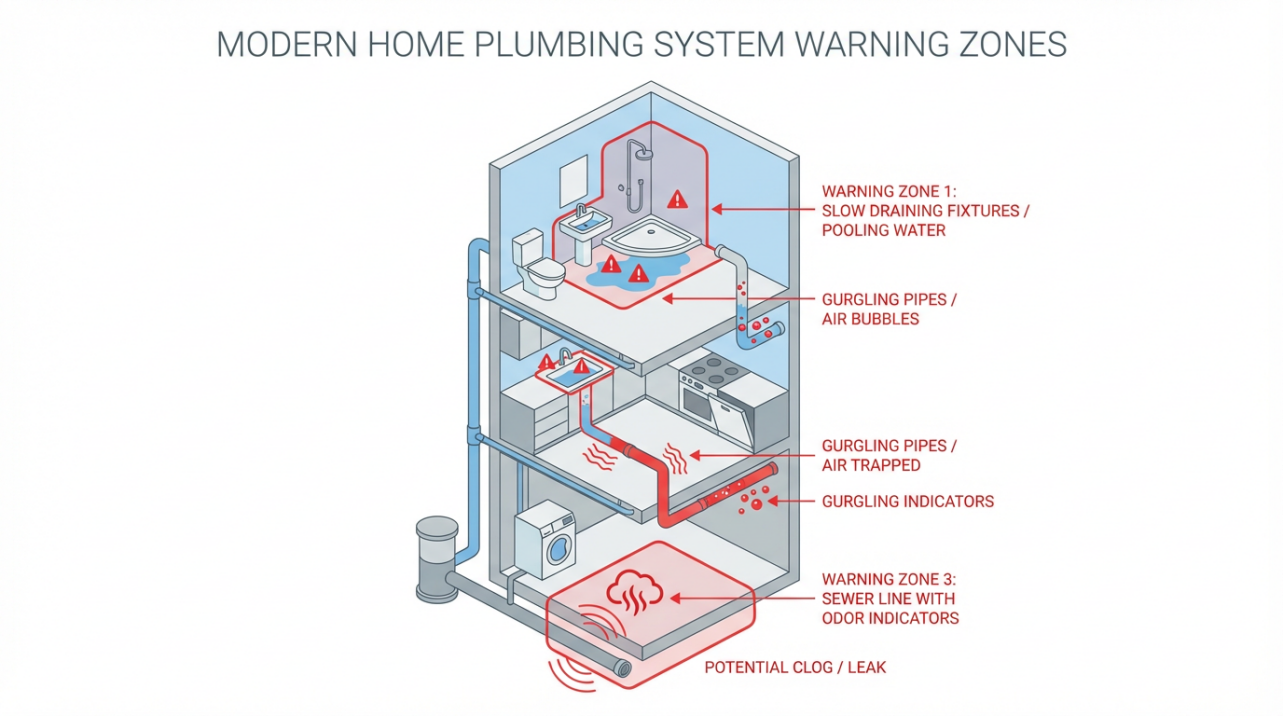
Summary: The earliest signs of a wastewater pipe blockage are slow drains in more than one fixture, gurgling or bubbling sounds when water moves through your system, and sewer-like odors or soggy spots around drains or in your yard. Catching these clues early protects your home, your health, and the quality of the water you live with every day.
1. Slow, Stubborn Drains in More Than One Fixture
A single slow sink often means a simple hair or soap clog. But when several fixtures start draining slowly, your wastewater pipe is likely starting to block.
Plumbing specialists like Fletcher Sewer & Drain and Splash Plumbing consistently rank slow drains across sinks, tubs, or showers as one of the first red flags for main-line trouble. If you clear one drain and another slows down, that’s your system telling you the obstruction lives deeper, not just in a single trap.
From a health and water-wellness perspective, slow drains matter because they allow dirty water to sit longer in pipes and fixtures. That standing water becomes a breeding ground for bacteria and biofilm that can aerosolize every time you run a tap, flush a toilet, or take a shower.
A practical home check: fill a bathroom sink halfway, pull the stopper, and watch.

If the water still hasn’t cleared after about 30–40 seconds—and other fixtures are acting up too—it’s time to treat this as more than a minor nuisance.
2. Gurgling, Bubbling, and Cross‑Fixture Weirdness
If your toilet burps when you run the shower, or you hear glug-glug sounds from a nearby drain when the washing machine discharges, don’t ignore it.
Experts at Oatey, Ranck Plumbing, and Young Plumbing all point to gurgling as a sign of trapped air caused by a developing blockage. Wastewater tries to move past a partial clog, pulls air with it, and that air escapes back through fixtures as bubbling or gurgling. The noisier your drains get, the harder your system is working.
Cross-fixture behavior—like water backing up in a tub when you flush, or toilets bubbling while a nearby sink drains—is especially telling. It means your main wastewater pipe or a key branch is struggling, not just a single bathroom.
Think of this as your home’s “circulatory system” for dirty water. When it wheezes and burbles, pressure can build behind the clog, increasing the risk of a sudden sewage backup into your lowest shower, floor drain, or basement.
Note: isolated gurgling in one rarely used drain can sometimes be a venting or dry-trap issue, but consistent noises across fixtures should be treated as a blockage warning, not background noise.
3. Sewer Odors, Wet Spots, and Extra‑Green Grass
Sewer gas smells, indoors or out, are never normal. Hydromax Plumbing and Young Plumbing stress that persistent sewer-like odors almost always mean waste is not moving the way it should.
Indoors, pay attention to:
- A rotten-egg or sewage smell near floor drains, basement bathrooms, or laundry areas
- Odors that show up when multiple fixtures are in use
- Smells that linger even after cleaning
Outdoors, several wastewater specialists (including ServiceChannel and Splash Plumbing) flag these early surface clues:
- Soggy, always-wet patches in the yard, even during dry weather
- Narrow bands of unusually lush, bright-green grass along the sewer line route
- Small sinkholes or depressions where soil may be washing away
Those symptoms suggest leaks or overflows from a stressed or partially blocked wastewater pipe.

Besides structural risk, leaking sewage can attract pests and potentially contaminate nearby soil and, in some cases, shallow groundwater.
What To Do When You Notice These Signs
When I work with homeowners on water wellness, I treat these early signs as “yellow lights”—not a reason to panic, but a strong signal to act before your home faces a full red-light shutdown.
Quick, safe steps:
- Stop using nonessential water (dishwasher, washing machine) if multiple drains are slow or backing up.
- Note patterns: which fixtures are affected, when gurgling happens, and where odors appear; this helps your plumber pinpoint the problem faster.
- Skip chemical drain cleaners; as A&L Cesspool and HK Solutions Group point out, they can damage pipes and don’t fix deeper sewer issues.
- Call a licensed plumber and ask specifically about a sewer camera inspection or main-line evaluation rather than just “clearing a clog.”
- Adjust daily habits—no grease, wipes, or “flushable” products down drains—to reduce the chance that a mild blockage turns into a complete shutdown.
Staying hydrated isn’t just about the glass of water in your hand; it’s also about the hidden systems that safely carry used water away. If your drains are slow, noisy, or smelly, your wastewater pipe is asking for attention—listening early is the simplest way to protect your home, your health, and your everyday water quality.
References
- https://pods.okstate.edu/fact-sheets/homsyst3.pdf
- https://ephidsweb.web.illinois.edu/files/pwc/OWTS_Final_Septic_System_Users_Guide2.pdf
- https://northbranfordct.gov/DocumentCenter/View/156/Homeowner-Facts-About-Sewer-Backups-PDF
- https://efc.syr.edu/wp-content/uploads/2015/04/WastewaterMgmtHandbook.pdf
- https://extensionpubs.unl.edu/publication/g1424/na/pdf/view

Share:
Understanding Valve Failure Indicators in Smart Home Water Systems
Key Signs Your Booster Pump Needs Replacement (Plus Essential Maintenance Tips)