

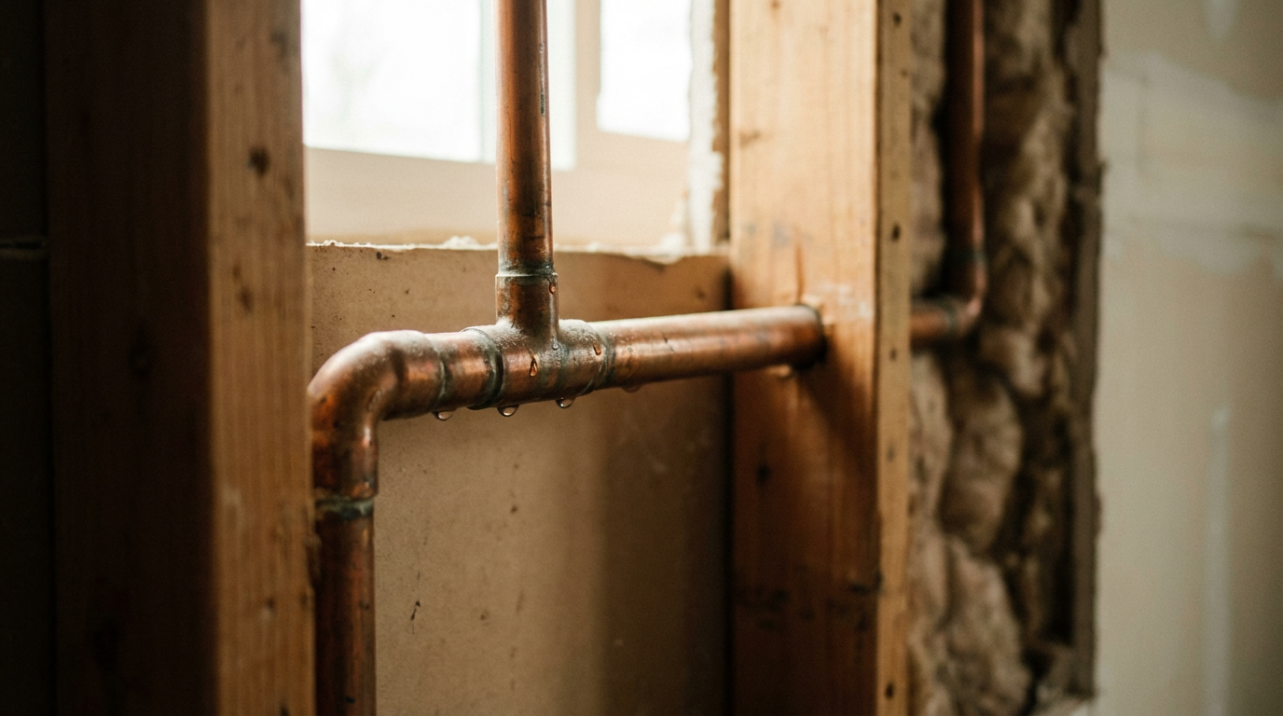
As a smart hydration specialist, I spend a lot of time inside mechanical rooms, under kitchen sinks, and behind fridges with built‑in dispensers. One pattern shows up again and again: long before a leak soaks the cabinet under a filter or a smart faucet fails, the plumbing starts talking. It hisses, gurgles, or slams with a frightening bang.
Those sounds are not just an annoyance. They are early warning signs that either trapped air or pressure surges (water hammer) are stressing your plumbing, including the lines that feed your filtration and home hydration systems. Understanding the difference is one of the most useful skills a homeowner can build for protecting both water quality and the safety of the home.
In this guide, I will walk you through what the science says, what plumbers and engineers see in the field, and how I’d approach diagnosis in a typical home where people care deeply about their drinking water.
How Water Normally Moves – And Why It Sometimes “Hammers”
Before we decode pipe noises, it helps to understand the basic physics. Water in your home is usually under steady pressure, often in the range plumbers at Benjamin Franklin Plumbing and other pros call reasonable: roughly 40–60 pounds per square inch at fixtures, with many codes allowing up to about 80 psi. In a quiet, healthy system, water starts and stops smoothly when you open or close fixtures.
What Water Hammer Really Is
Engineering firms and valve manufacturers such as DFT Valves describe water hammer (also called hydraulic shock) as a pressure surge or shockwave that happens when moving water is forced to stop or change direction suddenly. This often occurs when:
- a fast‑closing valve in a dishwasher or washing machine snaps shut,
- a faucet is closed abruptly, or
- a pump shuts off and flow reverses.
In that instant, the water’s momentum has nowhere to go. Because water is essentially incompressible, the momentum turns into a pressure spike that travels along the piping at roughly the speed of sound in water. DFT Valves notes that pressure spikes from hammer can reach more than ten times the normal working pressure of the system.
For a typical home with 60 psi static pressure, that means a brief spike that can approach the kind of force you would see at 600 psi. Even if your copper or PEX pipe does not rupture immediately, repeated hits like this fatigue joints, damage valve internals, and accelerate wear on connected equipment such as water heaters, washing machines, and yes, filtration systems and refrigerator solenoids.
MIT researchers studying “hammering droplets” in power plants have observed similar spikes on a tiny scale when individual droplets slam into turbine blades. That research helps explain why utilities and industry treat water hammer as a serious mechanical threat, not just a noise problem.
A Simple Real‑World Example
Imagine a washing machine on the second floor. It draws water rapidly through a half‑inch line. The cycle ends and an internal solenoid slams shut in a fraction of a second. The moving column of water between the main and the washer has to stop almost instantly.
If the house pressure is 70 psi instead of 50 psi, that stream is already hitting harder. When the valve snaps closed, the surge is larger, the pipes move more, and the bang gets louder. If those pipes are loosely strapped, they may slam against studs or subflooring, amplifying the sound so you hear it across the house.
Multiply that event by dozens of loads a month, and you begin to see why plumbers and inspectors take hammer seriously.

Air in Pipes versus Water Hammer: Same Noise, Different Physics
Not every noisy pipe is a hammer problem. Sometimes the culprit is ordinary air. This distinction matters, because the remedies and risks are different.
What Trapped Air Does in a Home System
Drawing on practical guidance from This Old House and several plumbing service companies, trapped air in water lines typically appears after:
- the main has been shut off for work,
- a new home is first pressurized, or
- well or pump issues introduce air into the lines.
Air behaves very differently from water. It is compressible, so when an air pocket moves through a pipe, it can cause:
- sputtering or “spitting” at faucets,
- irregular flow that alternates between air and water, and
- light knocking or vibrating sounds as pockets move through elbows or valves.
There can be some banging, but it tends to be more rattly and irregular compared with the sharp, gun‑shot‑like bang that follows a sudden valve closure in water hammer. Air problems are typically cleared with controlled flushing and venting, whereas hammer issues often require changes to pressure, supports, or hardware such as arrestors.
Another Concrete Example
Picture returning from a long vacation. The city has worked on the street main while you were away. When you open the kitchen faucet, it coughs and spits; the water looks cloudy and then clears. You may hear clanks in the line that feeds your fridge filter.
In this scenario, the most likely issue is air and stirred‑up minerals, not water hammer. Carefully running each faucet until flow is steady often resolves the noise, and the risk of catastrophic damage from that temporary air is far lower than from chronic hammer.

How to Tell If It’s Air or Water Hammer
From a homeowner’s perspective, the key questions are simple. What exactly am I hearing, when does it happen, and how urgent is it?
Comparing Symptoms at a Glance
Here is a practical side‑by‑side comparison based on field experience and patterns reported by plumbers at Pure Plumbing & Air, Splash Plumbing, and others, along with diagnostic observations from forums and inspection communities.
Issue type |
What it sounds like |
When it happens |
Common triggers |
Main risks |
Water hammer |
Sharp bang or series of bangs; sometimes echoes |
Right when a valve or appliance shuts off |
Fast‑closing valves, high pressure, loose pipes |
Pipe and fitting fatigue, leaks, appliance damage, occasional pipe rupture |
Trapped air |
Sputtering, gurgling, occasional light knocking |
When fixtures are first used after a shutdown |
Recent plumbing work, well or pump issues |
Minor in most homes; can mask leaks or cause nuisance noise |
Other pipe noise |
Continuous rumble, hiss, or squeal; drain gurgling |
During prolonged flow or heater operation |
Sediment in heaters, clogged drains, bad PRV, vents |
Heater damage, sewer issues, or pressure problems needing professional care |
No table can capture every nuance, but it gives you a starting point for conversations with a plumber.
Case Study: The “Whole‑House Thunk”
A homeowner in a newly built house reported a single “thunk” that gradually turned into whole‑house banging whenever any water was used, even after a toilet gasket was replaced. Their main pressure‑reducing valve had already been swapped, and arrestors were installed only at the washing machine.
This kind of pattern, discussed in professional forums, points toward a systemic water hammer issue rather than trapped air. Because nearly every fixture could trigger the noise, experts recommended a holistic review: confirming pressure, checking pipe strapping, and installing properly sized arrestors at main branches instead of assuming a washing machine fix would protect the whole house.
It is a good illustration that water hammer can persist even in brand‑new homes and that a localized fix may not be enough.
Why These Noises Matter for Your Home and Hydration Systems
You might reasonably ask: if the bang lasts only a split second, how much harm can it really do? Industry research and field experience suggest the answer is “more than you’d think.”
Long‑Term Stress on Pipes and Equipment
Valve manufacturers and engineering firms such as Measure Monitor Control emphasize that repeated hammer events can:
- loosen joints and fittings,
- damage pumps, valves, and instruments,
- cause gasketed joints to start seeping, and
- eventually rupture pipes, especially at weak spots.
DFT Valves highlights that spikes can rise to more than ten times the normal operating pressure. If your system normally runs at 70 psi and a shock wave peaks at 700 psi, every elbow and threaded connection in that path is being asked to do a job it was never designed for. The damage may start as a barely visible weep that slowly corrodes metal, soaks framing, and, in extreme cases, compromises nearby electrical systems.
At larger scales, utilities exploit water‑hammer behavior to locate underground leaks. Researchers at Stanford have refined leak‑detection methods that analyze pressure waves from controlled “water hammer tests” to narrow leak locations down from something like a football‑field‑length of pipe to a zone on the order of tens of feet. That only works because hammer waves are energetic and well defined.
In homes, those same waves slam against the internal components of appliances and devices: the check valves in a tankless heater, the plastic fittings of a reverse‑osmosis system, or the feed lines to a smart fridge. Plumbing services from Pure Plumbing & Air and Splash Plumbing both stress that unmanaged hammer shortens the life of connected equipment and can lead to expensive water‑damage repairs.
Pumps That Run on Water Hammer
To appreciate how much power is hiding in that bang, consider the hydraulic ram pump studied in academic work on water hammer. This clever device uses the momentum of flowing water and the shock of suddenly closing a “waste valve” to lift a portion of the water to a higher elevation without electricity.
In one experimental setup, a pump with an inlet pipe around thirteen feet long and a lightweight waste valve achieved its best performance lifting water roughly ten feet higher. The most efficient configuration delivered on the order of several gallons per minute with overall efficiencies over fifty percent.
In other words, controlled water hammer can literally pump water uphill for free.

That same principle, when uncontrolled inside your walls, can drive leaks and failures uphill in your repair budget.
Practical Ways to Diagnose Noisy Pipes at Home
Now let’s turn to what you can realistically do as a homeowner who cares about water quality, quiet, and safety, without trying to become a master plumber overnight.
The goal is to gather simple, safe observations you can share with a professional or use for straightforward DIY adjustments.
Step 1: Listen for Patterns
Home inspectors and service plumbers often start by simply reproducing the noise. From case discussions on Terry Love’s plumbing forum and inspection communities, a few questions matter a lot. Does the bang happen the instant a faucet or appliance shuts off, or does it continue as a sustained vibration for many seconds or even minutes? Does opening another faucet make the noise better or worse?
If a sharp bang occurs right at shutoff and then stops, especially near quick‑closing valves, water hammer is the prime suspect. If the noise continues for many seconds or becomes louder when another faucet opens, there may be resonance, trapped air, or pressure issues layered on top.
In one reported case, a basement faucet made hammer worse instead of relieving it. That surprised the homeowner, who assumed opening a valve would “let air out.” Experienced plumbers pointed out that water hammer is not primarily an air issue; it is a pressure‑wave issue. Depending on how the branches are routed, the extra flow can actually feed the oscillation rather than calm it.
Step 2: Check Water Pressure
Many pros, including Benjamin Franklin Plumbing and Splash Plumbing, emphasize that no water hammer conversation is complete without measuring pressure. You can buy an inexpensive gauge that screws onto a hose bib; with all fixtures off, open that bib fully and read the gauge.
If your reading is in the ballpark of 40–60 psi, you are in the comfort zone most residential systems are designed for. Readings creeping toward 80 psi are pushing the upper limit many codes allow. If you see something near 100 psi, you are in a range where hammer events get much harsher and even normal operation puts higher stress on everything.
As a rough way to visualize this: jumping from 50 psi to 100 psi doubles the static pressure. If hammer spikes are on the order of ten times static, the difference in the worst‑case spike is like going from an equivalent of 500 psi to 1,000 psi. The exact numbers vary with the system, but the concept is simple: higher baseline pressure makes every bang more punishing.
If you find high pressure, a pressure‑reducing valve at the main is often part of the solution. Many plumbers recommend a sweet spot around the middle of that safe range to balance good shower performance with lower stress on the plumbing.
Step 3: Look at Pipe Support and Accessibility
Multiple sources, including Anchor Pumps and Measure Monitor Control, agree on one basic, low‑tech mitigation: keep pipes firmly supported. When a pressure wave travels through poorly strapped lines, the pipe itself becomes a hammer, slamming against wood or metal.
Under sinks, near water heaters, and around laundry equipment, you can often see and gently move pipes. If a simple touch makes them swing freely, there is room for improvement. Adding or tightening straps and using foam insulation sleeves to cushion pipes not only quiets hammer, it also helps with freeze protection and friction noise.
In homes with finished basements or tight framing, you will not see everything, but the zones you can reach still matter, especially around quick‑closing fixtures and near your drinking water systems.
Solutions: Air Chambers, Arrestors, Expansion Tanks, and Behavior
Once you have a sense of timing, pressure, and supports, it becomes easier to choose appropriate remedies. The right answer is often a combination of mechanical devices and gentler operating habits.
How Air Chambers and Arrestors Work
Traditional air chambers are short vertical stubs of pipe installed just beyond a valve. Benjamin Franklin Plumbing describes them as shock absorbers: because the chamber rises above the valve, it traps an air pocket rather than filling completely with water. When a valve slams shut, the water column compresses that air pocket instead of slamming against a dead end.
Over time, air chambers can become waterlogged. A common maintenance technique is to shut off the main, open a faucet at the highest and lowest points in the house, and let the system drain so air can re‑enter those chambers. When you restore pressure slowly, the air pockets are re‑established. This is one of the few water‑hammer‑related steps that many homeowners can safely attempt with basic care.
Water hammer arrestors take the idea a step further. As described by Measure Monitor Control and others, these devices contain a sealed air or gas cushion, often with an internal piston and spring. They are installed near problem valves or branch lines and are designed not to fill with water, so they do not need the periodic draining that air chambers do. The trade‑off is that, like any mechanical device with moving parts and seals, they will eventually wear and may need replacement years down the line.
Home inspectors on InterNACHI’s forums sometimes recommend a different approach altogether: adding a thermal expansion tank at the water heater instead of many small arrestors. An expansion tank acts like a big shock absorber for the entire hot‑water side, taking up the volume change when water heats and helping to soften pressure spikes. In many markets, a single expansion tank is cheaper and more straightforward to install than arrestors at every branch, though it does not directly address fast‑closing valves on distant cold‑water lines.
Comparing Options
Here is a concise comparison to frame the conversation with your plumber.
Device type |
How it helps |
Pros for homeowners |
Trade‑offs |
Air chamber |
Trapped air pocket compresses during a surge |
Inexpensive, passive, can last decades with maintenance |
Can waterlog; may need periodic draining to stay effective |
Hammer arrestor |
Sealed air or gas cushion with piston/spring absorbs shock |
Very effective near quick‑closing valves, low maintenance |
Higher upfront cost; eventual replacement needed |
Expansion tank |
Provides system‑wide buffer for thermal and pressure changes |
Protects heaters and hot‑water side, cost‑effective upgrade |
Mainly helps hot side; still may need local arrestors |
The best choice depends on your specific layout, pressure, and which fixtures are causing trouble. In my work with hydration‑focused homeowners, a common pattern is a combination: an expansion tank on the heater, plus small arrestors at critical quick‑closing valves such as washing machines and some refrigerator or filter feeds.
The Role of Human Habits and Controls
Industrial articles from Central States Industrial remind engineers that water hammer is not only about hardware; it is also about how pumps and valves are operated. In large plants, programming pumps to ramp up and down gradually, rather than snapping on and off, dramatically reduces hammer risk. Standardized startup and shutdown procedures matter.
The same principle applies at home on a smaller scale. Slamming manual valves closed, especially at outdoor spigots or under sinks, can create or worsen hammer. Training yourself and your family to close valves deliberately, instead of snapping them shut, is a low‑cost habit with real impact.
If you manage a well or booster pump, ask your plumber how its controls handle starting and stopping. Adding soft‑start features or adjusting existing settings can often make hammer less frequent and severe.
Special Considerations for Smart Filtration and Hydration Systems
As more homes adopt under‑sink filtration, UV disinfection, smart faucets, and chilled or sparkling water taps, the stakes around quiet and stable plumbing rise.
Every one of those components sits at the end of a small branch line. Each usually contains solenoid valves, regulators, and housings designed primarily around water quality and convenience, not extreme pressure spikes. The same water hammer that rattles a basement pipe can put disproportionate stress on a plastic filter head or a compression fitting hidden behind a kitchen panel.
In practice, when I am called to look at a “mysterious leak” under a filtered tap or behind a fridge, the sequence often goes like this. For months, the family hears a light bang when they draw filtered water but ignore it. One day, they notice dampness in the cabinet or a musty smell around the fridge. A closer look reveals a tiny crack in a filter housing or a slow seep at a push‑fit connector, right where hammer waves have been reflecting for years.
From a wellness standpoint, the goal is not only to stop the noise but to create a gentle hydraulic environment for your drinking water path. That usually means: keeping house pressure in the healthy midrange, ensuring the small lines that feed filters are properly supported and not kinked, and, when necessary, placing a compact arrestor close to particularly sensitive equipment.
If you are planning a new smart hydration installation, involve a plumber who understands water hammer and make pressure and support part of the design conversation, not just an afterthought.
Where Air Problems Fit In – And When They Matter
Air in lines is usually more of a comfort and annoyance issue than a structural hazard, but it still deserves attention.
According to general guidance from This Old House and various plumbing services, basic air‑clearing steps often include turning off the main, opening several fixtures to let water and air escape, and then refilling the system slowly while letting each faucet run until flow is smooth. In systems with wells and pressure tanks, any persistent air may signal a tank or pump issue that needs professional diagnosis.
The main connection to your hydration setup is simple: repeated bursts of air and water can disturb carbon filters, stir up trapped sediment, and lead to temporary cloudiness. While that is not usually dangerous, it can affect taste and clarity. If you notice prolonged sputtering or milky water specifically on the filtered side after a major plumbing event, it is reasonable to follow manufacturer guidance on flushing or replacing cartridges once the mechanical issue is resolved.
When to Call a Professional
Several sources, including Dhamer Plumbing and regional firms like General Plumbing and Splash Plumbing, share a consistent theme: noisy plumbing is your early warning system. If you hear new or worsening bangs, rumbles, or gurgles and do nothing, the odds of facing a much more expensive problem later go up.
If any of the following are true, it is wise to bring in a licensed plumber rather than rely on DIY alone:
You measure consistently high pressure at an outdoor bib or laundry sink, especially near or above 80 psi. You hear repeated, sharp bangs when fixtures shut off, particularly near your water heater, washing machine, or filtration equipment. You see signs of leaks, staining, or dampness around piping, filter housings, or the back of appliances. Your attempt to bleed air from the system does not improve sputtering or noise, or the problem returns quickly.
A good plumber will not only chase the noise; they will check pressure, supports, device placement, and, when necessary, valve types and pump behavior. For homeowners who value high‑quality drinking water and a calm home, that professional assessment is part of a long‑term wellness plan for the house itself.
FAQ: Common Questions from Hydration‑Focused Homeowners
Is water hammer dangerous, or just annoying?
From a safety and property‑protection standpoint, it is more than a nuisance. Industry data from DFT Valves and Measure Monitor Control show that pressure spikes from hammer can far exceed normal design pressures and damage pipes, valves, and joints. Over time, that translates into leaks, equipment failures, and potentially costly water damage. For homeowners with filtration and hydration systems, those failures often appear first at weak fittings or housings in small‑diameter branches.
Can trapped air damage my pipes or water filter?
Occasional air after a shutdown is not usually catastrophic. It mostly causes sputtering, gurgling, and temporary cloudiness. However, chronic air issues may signal underlying problems with wells, pumps, or valves, and the repeated surges of mixed air and water can stir up sediment and put minor stress on fittings. Clearing the air and addressing the root cause is important for consistent water quality and peace of mind, but the long‑term structural risk is typically lower than with chronic water hammer.
What should I do first if I suddenly start hearing bangs in the pipes?
If you ever hear a bang accompanied by visible leaks, immediately shut off the main water supply and, if safe, power to electric water heaters. Otherwise, a good first step is to note exactly which fixture was operating when the noise occurred and whether it coincided with shutoff. Check pressure with a simple gauge if you can do so safely. Then call a plumber and share those observations. This kind of basic “noise diary” can save time on site and lead to a more precise, cost‑effective fix.
Quiet, well‑behaved plumbing is one of the best foundations you can give a smart hydration setup. By learning to distinguish between harmless air burps and true water hammer, and by treating your pressure and support hardware as essential wellness tools for your home, you protect not only your pipes but also the water you and your family drink every day.
References
- https://pirt.asu.edu/demos/1F30.21
- https://sustainability.stanford.edu/news/better-way-detect-underground-water-leaks
- https://www.academia.edu/Documents/in/Water_Hammer
- https://epubl.ktu.edu/object/elaba:181984254/181984254.pdf
- https://energy.mit.edu/news/how-to-tame-hammering-droplets/
- https://engineering.purdue.edu/PlumbingSafety/project/WHO-Safe-Aspects-of-Plumbing-2006.pdf
- https://fccchr.usc.edu/_downloads/Cross%20Talk%20Archives/2016.34.4.pdf
- https://www.cfm.va.gov/til/dmanual/dmplbg.pdf
- https://homes.cs.washington.edu/~jfogarty/publications/pmc2012.pdf
- https://shepherd.caltech.edu/EDL/publications/reprints/WaterHammerIgnitionEDL2019-001.pdf

Share:
Understanding Valve Failure Indicators in Smart Home Water Systems
Three Early Signs of Wastewater Pipe Blockage to Watch For