

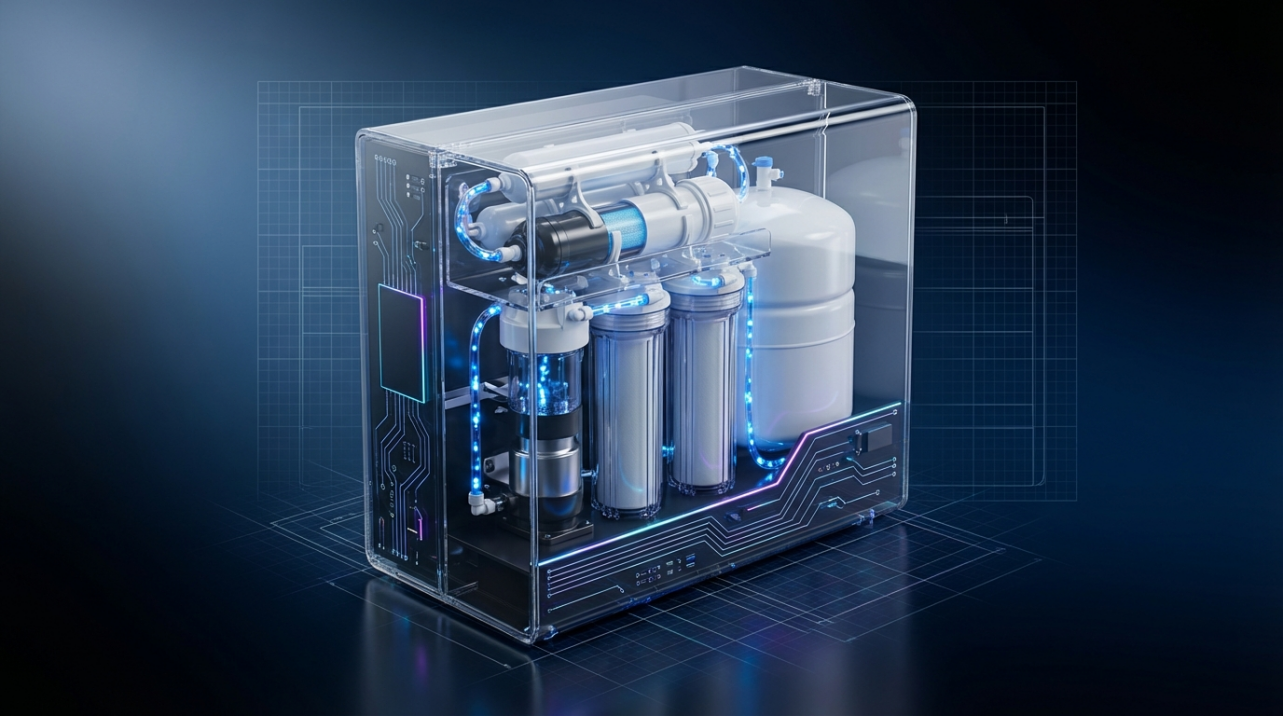
Summary: An RO system that “trips” the moment it starts is usually reacting to a sudden electrical surge, pressure fault, or blocked flow. The good news: most causes are simple to diagnose with a few safe checks, and a bit of maintenance can keep your drinking water flowing reliably.
What “Tripping” Really Means in an RO System
When homeowners say the RO “trips,” they usually mean one of two things:
- The home’s breaker or GFCI outlet shuts off as soon as the RO pump starts.
- The RO starts briefly, then shuts itself down via internal safety controls.
Understanding which is happening is the first step.
If lights on the RO go dark and the outlet button or panel breaker has flipped, that’s an electrical trip. If power stays on but flow stops after a few seconds, the automatic shut‑off (ASO) valve, pressure switch, or tank may be forcing the system off, as described by Fresh Water Systems and Viomi.
Take 10 seconds to note: Did a breaker or GFCI click off, or did only the RO stop? That single observation guides everything that follows.

Electrical Startup Surges: When Breakers and Fuses Trip
RO systems with pumps draw the most power in the first second or two of startup. WaterLux and other experts note that most units run on 110–120 V AC and aim for pre‑membrane pressures around 40–80 psi; to get there, the pump can pull a brief “inrush” of current.
Common electrical causes of startup trips:
- Overloaded circuit: The RO shares a circuit with the fridge, dishwasher, or garbage disposal, and the combined current exceeds what the breaker can safely handle.
- Weak or unstable voltage: Low voltage makes motors pull more current, which can trip overload protection and degrade filtration.
- Failing pump or transformer: A worn motor or transformer can hum loudly, run hot, and draw excessive current right at startup.
- Moisture or bad wiring: Damp junction boxes, loose terminals, or nicked insulation can create short or ground faults.
Practical, safety‑first checks (no tools inside the unit):
- Plug the RO into a different, lightly loaded outlet (not a power strip) and see if it still trips.
- Look and feel for obvious issues: warm, buzzing transformer; scorch marks; damp outlets or cords.
- If the breaker trips again immediately, stop and call a licensed electrician or service pro. Guides from WaterLux and JustAnswer stress that repeated trips are a safety signal, not something to “work around” by upsizing a breaker.
Pressure & Flow Problems That Make the System “Trip Off”
Sometimes “tripping” is hydraulic, not electrical: the RO starts, then shuts itself down.
Key pressure and flow culprits:
- Low inlet pressure: Residential RO units are designed for roughly 40–60 psi. Below that, the membrane under‑produces, the tank never reaches proper pressure, and the ASO valve may keep cycling on and off.
- Clogged prefilters or membrane: Ecosoft and Viomi note that overdue sediment and carbon filters, or a fouled membrane, choke flow and force the pump to work harder from the first second of startup.
- Mis‑set or failing tank: The storage tank air pre‑charge should be about 5–7 psi when empty. A ruptured bladder or wrong pre‑charge causes short, rapid cycles that are hard on the pump.
- Bad flow restrictor or check valve: As Fresh Water Systems explains, a missing/failed flow restrictor or leaking check valve can prevent the ASO valve from seeing proper pressure and make the system “run, stop, run” in very short bursts.
These faults won’t flip your house breaker, but they will make the RO seem skittish and unreliable every time it tries to start.
A Simple Checklist to Calm a “Jumpy” RO Startup
Use this quick, user‑safe sequence before calling in a pro:
- Identify the trip: breaker/GFCI, or just the RO? Reset once only and watch closely.
- Isolate the outlet: move the RO to a different, lightly loaded outlet; avoid sharing with large appliances.
- Check filters and age: if prefilters are past 6–12 months or the membrane is older than 2–3 years (per Fresh Water Systems and Ecosoft), replace them; clogged media is a top cause of hard starts.
- Verify pressure basics: make sure the feed valve is fully open, there are no obvious kinks, and the tank valve is open; if you have a gauge, confirm house pressure is near 40–60 psi.
- Observe startup behavior: loud humming, clicking relays, or immediate breaker trips point to electrical issues; rapid on/off cycling with power still on points to ASO, tank, or flow‑control faults that a water treatment specialist should evaluate.
For longer shutdowns (six weeks or more), 3M recommends replacing cartridges and fully flushing and sanitizing on restart; trying to “wake” a stagnant system without that prep is a recipe for rough startups.
A well‑designed, well‑maintained RO should start quietly, stay on steadily, and give your family a calm, dependable stream of low‑TDS drinking water. When it doesn’t, treating startup “trips” as early warning signs—not annoyances—protects both your hydration routine and your home’s safety.
References
- https://emsg.mit.edu/wp-content/uploads/2016/07/50_2_shipboard_fluid_system_diagnostic.pdf
- https://extensionpublications.unl.edu/assets/html/g1490/build/g1490.htm
- https://wqa.org/wp-content/uploads/2022/09/2019_RO.pdf
- https://www.researchgate.net/post/What_factors_cause_my_Reverse_Osmosis_problems
- https://www.totalwaterllc.com/hidden-dangers-with-your-reverse-osmosis-system

Share:
Key Differences Between Membrane Blockage and Insufficient Pump Pressure
Strategies for Calibrating Drift in Smart Sensors Effectively in Home Water Systems