

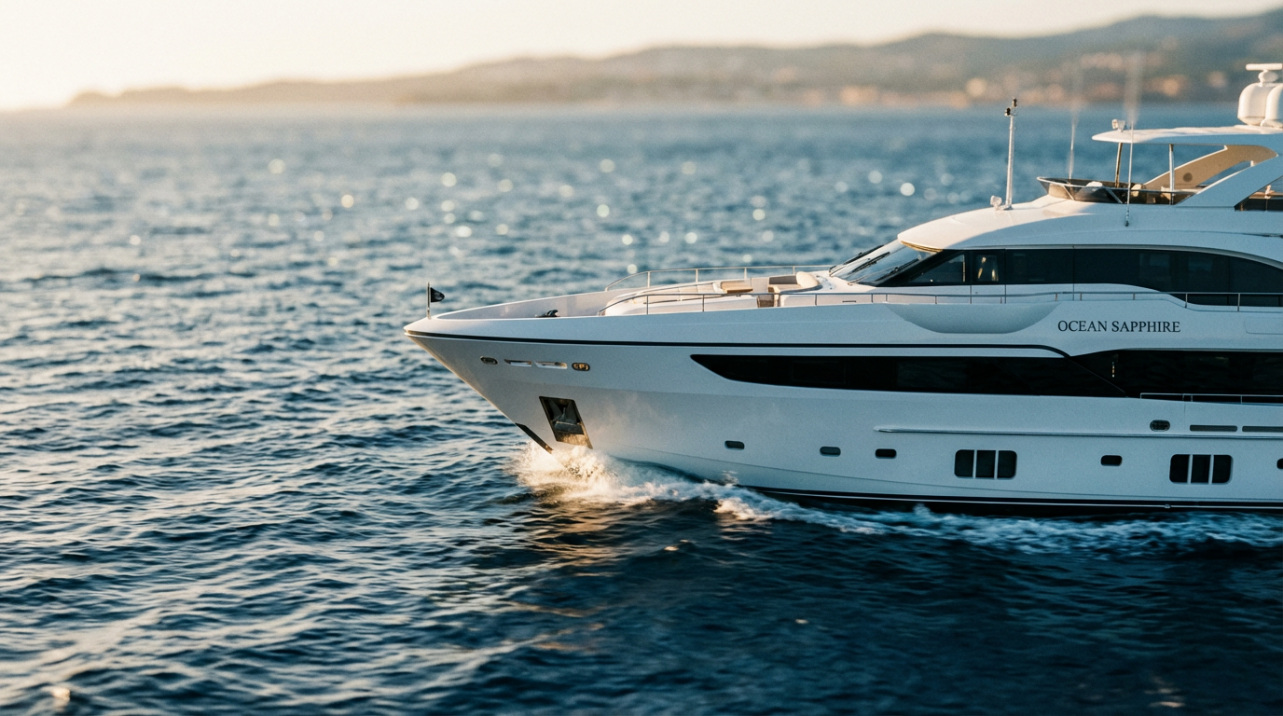
As a smart hydration specialist who has worked with yacht owners, captains, and shipyards, I see the same pattern over and over: the watermaker is either the quiet hero of every passage or the single system that causes the most stress. The difference usually comes down to how carefully the reverse osmosis (RO) plant was chosen and integrated, not just which brand name is on the front panel.
This guide will walk you through the key decisions in choosing a seawater RO system for a yacht, using science-backed guidance from membrane manufacturers, marine desalination experts, and engineering references. The focus is practical: what will actually matter once you are days from shore, the tanks are low, and the crew is depending on that water for both safety and everyday comfort.
RO Desalination on Yachts: Why It Matters for Health and Safety
On land, you can often treat your RO system as a convenience. On a cruising yacht or offshore vessel, it becomes a primary health system. You are taking corrosive seawater, pushing it at very high pressure through delicate membranes, and then trusting that water to keep everyone hydrated, clean, and safe.
Marine and offshore specialists writing in Navalshore describe these units as mechanical systems that pump highly corrosive seawater at high pressure through membranes and emphasize that they will inevitably need maintenance. They also warn that not all RO systems are certified or configured to produce safe drinking water and that some units are explicitly labeled “utility water only.” On a yacht with no quick alternative water source, that is not a detail you can ignore.
From a wellness perspective, this means your desalination system must do three things consistently:
- Produce enough water to match your real-world use, without forcing you into rationing unless you choose to.
- Deliver water that is microbiologically safe and pleasant to drink, even after storage in tanks.
- Operate reliably within your yacht’s power, space, and crew-maintenance constraints.
The RO technology behind this is mature and very well studied, from residential systems described by home improvement experts to large seawater plants documented by companies like IDE Technologies and Pure Aqua. The goal on a yacht is to scale that know-how down into a compact, robust, and serviceable package.
RO Basics in Plain Language
Reverse osmosis is a pressure-driven membrane process. Water is fed at high pressure into a semi-permeable membrane. The membrane is designed so that water molecules pass through much more easily than dissolved salts and other contaminants. The stream that passes through the membrane is called permeate (your product water). The stream that is rejected is the concentrate or brine.
Technical references from Puretec and Suez describe RO performance with a few simple concepts:
- Salt rejection: typically around 95–99 percent for well-designed systems, meaning most dissolved salts stay in the brine.
- Recovery: the fraction of feedwater that becomes product water. If 80 gallons of permeate and 20 gallons of brine come from 100 gallons of seawater, recovery is 80 percent.
- Concentration factor: how much more concentrated the brine becomes compared with feedwater. At 80 percent recovery, the brine can be about five times more concentrated.
For yachts, the key takeaway is that pushing recovery too high dramatically increases brine salinity and scaling risk. Marine specialists warn that some manufacturers reduce the number of membranes and run them at very high recovery to cut upfront cost, which shortens membrane life and drives up operating cost. That matters when your “service call” might mean diverting hundreds of miles or flying a technician to a remote marina.
A simple way to think about it is that you are paying for three things: the membranes themselves, the energy needed to run the high-pressure pump, and the crew or service effort required to keep it all running. A good yacht RO design balances all three rather than chasing maximum liters or gallons per hour at all costs.
Clarify Your Yacht’s Water Profile Before You Shop
Before you look at model numbers, it helps to define how your yacht actually uses water. Industrial RO buying guides emphasize that getting the flow rate right is the first design step, and that lesson applies afloat too.
On a yacht, total demand comes from drinking and cooking, dishwashing and laundry, showers, deck washdowns, and sometimes dedicated uses such as a spa, tender fueling rinse, or wash water for sensitive equipment. Long-range cruisers often see usage spike in hot climates where showers are more frequent and dehydration risk is higher.
You also need to decide what fraction of that water should truly be potable. As the marine article in Navalshore notes, some RO systems are only rated for “utility” water, such as washing and general cleaning. If you intend to drink from the same tanks you fill with RO water, that expectation must be explicit in the system specification, and you should ask for real references where crews have been consuming that water safely.
Finally, think about your operating pattern. A yacht that spends most nights in marinas with shore water and runs shorter legs will use an RO plant differently from a bluewater vessel crossing oceans. Continuous, steady use at sea is generally easier on membranes than occasional, short bursts with long idle periods, provided the system has appropriate flushing and preservation routines.
Choosing the Right Membrane for Seawater Conditions
RO membranes are not one-size-fits-all. Manufacturers like Axeon classify membranes broadly into tap water, brackish water, and seawater membranes based on the total dissolved solids (TDS) level they can handle and the pressure they require.
Tap water membranes are designed for municipal feeds up to roughly 2,000 parts per million TDS at relatively low pressures. Brackish water membranes handle up to around 10,000 ppm TDS at moderate pressures. Seawater membranes are built for feedwaters above about 10,000 ppm TDS, including open ocean salinities, and run at much higher pressures, often up to roughly 800–1,200 psi in larger plants.
On an ocean-going yacht, you are firmly in seawater territory. That means your system must use true seawater RO membranes and a high-pressure pump that can comfortably deliver the required pressures. Using tap-water or brackish-water membranes to treat seawater is not a viable shortcut; it will result in poor salt rejection, rapid fouling, and likely membrane failure.
A compact way to visualize the membrane choice is shown below.
Water source |
Typical TDS range (ppm) |
Appropriate membrane type |
Typical application context |
Municipal tap water |
Up to ~2,000 |
Tap water / residential |
Homes, light commercial |
Brackish water |
Up to ~10,000 |
Brackish water |
Inland wells, some industrial sources |
Open seawater |
Above ~10,000 |
Seawater (SWRO) |
Yachts, ships, coastal plants, islands |
For a yacht, it is sensible to confirm in writing that the supplied membranes are seawater-rated and that the system is configured around the expected salinity and temperature of your cruising grounds.

Tropical waters, for example, tend to be warmer and can increase scaling tendencies; some membrane suppliers and design tools account for this directly.
Pre-Treatment: Protecting the Membranes from the Ocean’s “Soup”
A recurring theme in both marine and industrial literature is that membranes are an expensive way to remove dirt. Navalshore notes that before you remove salt, you must remove suspended solids like sand, mud, and algae, and that typical practice is to filter out particles larger than about 1 to 5 microns. For context, the human eye only sees particles larger than about 50 microns.
Seawater pre-treatment for a yacht RO system typically includes:
- An intake strainer to capture larger debris such as seaweed and jellyfish.
- One or more sediment filters, often cartridge or bag type, to remove fine particles down to the 1–5 micron range.
- Optional carbon or media filters if you regularly draw from polluted harbors or marinas where hydrocarbons or other organics are a concern.
Industrial design references from KYsearo, Suez, and others describe multi-stage pre-treatment with multimedia filters and even ultrafiltration for large plants to achieve a low silt density index (SDI). While yachts will use smaller hardware, the underlying principle is the same: pre-treatment must be sized so that filters do not clog daily and membranes are protected from rapid fouling.
A small but important selection detail is pre-filter surface area. Navalshore points out that pre-filter lifetime is directly related to surface area; a larger filter housing generally means longer intervals between changes. Overly compact filter housings may look attractive on a brochure but can create constant maintenance burden in practice.

Sizing the RO System: Flow, Storage, and Safety Margin
Industrial RO guides recommend sizing systems by product flow and then pairing them with sufficient storage to cover peak draw periods. On yachts, you have storage tanks already, so the challenge is matching RO output to daily demand and your battery or generator schedule.
Commercial seawater RO product lines described by Pure Aqua include compact units producing on the order of 380 gallons per day up to around 10,000 gallons per day, explicitly marketed as suitable watermakers for boats and yachts. Larger industrial units can run from about 8,000 gallons per day up to several hundred thousand gallons per day for municipal or offshore platforms.
For most private yachts, the sweet spot will be toward the lower end of that commercial range, with some safety margin. Design guidance from Puretec emphasizes that rated flows assume about 70°F feedwater and that production drops roughly 1.5 percent for every 1°F decrease. In their example, a system designed to produce 100 gallons per minute at 70°F might only produce about 85 gallons per minute at 60°F as the water gets colder, even before accounting for membrane fouling and aging. The same principle applies at yacht scale: colder cruising grounds and older membranes mean less output than the nameplate suggests.
This is why industrial designers often oversize systems somewhat above the calculated minimum and why they stress pairing an RO unit with adequate storage. On a yacht, that can mean specifying a plant with enough capacity to refill tanks during generator runs or sailing periods when power is available, without running at maximum rated capacity constantly.
Another nuance is recovery rate. Technical documents from Puretec and the US Department of Energy’s Federal Energy Management Program explain that recovery is the ratio of permeate to feed flow, and that higher recovery reduces brine volume but increases concentrate salinity and scaling risk. Navalshore cautions against systems that promise unusually high recovery because they often sacrifice membrane life. For yachts, moderate recovery rates that keep concentrate chemistry within safe limits are a healthier long-term choice than pushing recovery to extremes just to save a few gallons of brine.
Materials, Build Quality, and Serviceability in Tight Spaces
Onshore, a plant can sprawl across a room. On yachts, space is unforgiving. That often tempts manufacturers to pack components into a very tight footprint. As the marine article by Marcos Godoy Perez emphasizes, “smaller” does not automatically mean “better” when it comes to desalination systems.
An overly compact layout can make simple tasks such as tightening a leaking fitting difficult or even impossible without partial disassembly. Owners and crew then find themselves dismantling pumps and piping just to access a small leak or replace a membrane, turning what should be a short job into a boatyard project.
From a design perspective, you want a marine RO package that balances compactness with clear access to:
- Pre-filters and cartridges.
- High-pressure pump and motor.
- Pressure vessels and membrane housings.
- Key valves and instruments.
Materials of construction are equally critical. Seawater is highly corrosive. Pure Aqua stresses the importance of corrosion-resistant alloys such as duplex stainless steels (for example, 2205 and related grades), Monel, and high-alloy stainless steels like 904. These materials increase upfront cost but significantly extend service life and reduce the risk of catastrophic corrosion failures in high-pressure components.
Polymer components have a place (for example, PVC or similar for low-pressure lines), but relying heavily on low-cost plastics in structural, high-pressure, or safety-critical components is a red flag in a seawater environment.
Automation and Controls: Smart Enough, Not Fragile
In the era of touchscreens and cell phone apps, it is tempting to specify the most automated RO panel available. Navalshore notes that many manufacturers now offer highly automated systems with elaborate touch interfaces that monitor every parameter. While this sounds attractive, there is a trade-off: every additional sensor, actuator, and control board is another potential point of failure.
Industrial optimization guidance from the US Department of Energy shows the value of good instrumentation for trend tracking and energy efficiency, but also highlights that long-term reliability depends on simplicity and robust hardware. For yachts, a balanced approach works best.
A well-chosen yacht RO system typically includes:
- Clear, analog or digital readouts for feed pressure, permeate flow, and product conductivity.
- Basic automation for safe start-up, shut-down, and tank level control.
- Simple alarm logic for high salinity, over-pressure, or low feed conditions.
Advanced integrations, such as remote monitoring or integration with a yacht’s central monitoring system, can be valuable, particularly for larger vessels with professional crew. However, the core desalination process should remain understandable and operable even if a display fails. When comparing systems, it is reasonable to ask which functions still operate if a control board or screen goes offline and whether manual overrides are possible.
Power, Efficiency, and Energy Recovery at Sea
High-pressure pumps are energy-intensive by nature, especially when treating seawater. That is why so much engineering literature on seawater RO focuses on energy optimization. Industrial references from companies like DuPont describe closed-circuit RO processes and advanced energy recovery devices that capture pressure energy from the brine stream and return it to the feed, significantly reducing pump power.
Large coastal plants described by Morui and others report modern seawater RO energy consumption on the order of 3 to 4 kilowatt-hours per cubic meter of product water. Converted, that is roughly 11 to 15 kilowatt-hours per 1,000 gallons of water. While yacht-scale systems are smaller and may not use identical technology, the same physics applies: feed pressure, recovery, and energy recovery devices directly impact how hard your generator or alternator must work.
On a yacht, this means checking:
- Whether the high-pressure pump motor is appropriately sized and compatible with your AC or DC power system.
- Whether the system includes an energy recovery device and, if so, how it is maintained.
- Whether variable-frequency drives are used to match pump speed to actual operating conditions, which DOE guidance notes can cut energy use significantly compared with constant-speed, throttled operation.
It also means planning how and when you will run the RO plant. Many yachts choose to operate watermakers mainly when the generator is already running or when solar and alternator output is high. This reduces cycling, improves efficiency, and ensures membranes see sufficiently long runs between start and stop, which is better for their health.
Potability, Remineralization, and Tank Hygiene
For yacht hydration, water quality is not just about salt removal. It is about microbiological safety, taste, and mineral balance.
Marine experts warn that RO water alone does not automatically meet drinking-water standards such as those set by the World Health Organization. RO permeate is very low in minerals and lacks residual disinfectant. Once stored in tanks, it can be re-contaminated if tanks or plumbing harbor biofilm or if the system lacks an appropriate post-treatment step.
Some large desalination reviews in the scientific literature highlight post-treatment steps such as reintroducing calcium and magnesium to desalinated water, particularly for irrigation, but also as part of a broader sustainability and health discussion. Home and commercial drinking-water references, such as those from Make It Right and Newater, also discuss optional remineralization cartridges that add back small amounts of calcium and magnesium for taste and to soften what many people perceive as “flat” water.
On a yacht, a practical, health-focused configuration often includes:
- A seawater RO unit producing low-TDS permeate.
- A small post-treatment module for drinking water that may combine carbon polishing with ultraviolet disinfection or another germicidal method.
- Optional remineralization for the drinking tap, depending on crew preference.
It is also important to treat tank hygiene as part of your hydration system. This can include periodic sanitization of tanks and lines, maintaining secure venting to avoid contamination, and, where appropriate, managing residual disinfectant levels if you blend RO water with bunkered municipal water. Guidance from agencies such as EPA emphasizes that while public water supplies are generally safe, additional treatment steps may be appropriate in some settings; on a yacht where tanks and plumbing are part of your “distribution system,” that logic certainly applies.
Maintenance and Support Reality at Sea
RO membranes and pumps do not maintain themselves. Several technical references converge on the same rough pattern: membranes often last on the order of two to five years, depending on feedwater quality, operating pressure, and fouling, while pre-filters and carbon cartridges are replaced more frequently.
Residential and small commercial RO guidance from Saltsep suggests replacing sediment and carbon pre-filters every six to twelve months and membranes every two to three years, along with annual sanitization and periodic tank draining. Newater similarly notes membrane lifetimes in the rough two to five year range, with faster wear in harsher conditions or heavier use. While yacht usage patterns differ from a typical house, the principles carry across: protect the membrane with good pre-treatment, monitor performance, and budget for regular consumables.
In practice, a good yacht RO maintenance program includes:
- Monitoring product flow and product conductivity. A noticeable drop in flow or rise in TDS is a classic early warning of fouling or membrane degradation.
- Tracking pressure differential across pre-filters and the membrane. References from DOE and Suez explain that a rising differential pressure is often the first sign of fouling.
- Flushing the system with fresh water after use, especially before longer idle periods, to reduce biological growth and scaling inside the membrane housings.
- Planning and stocking spare pre-filters, critical O-rings, and at least one spare high-pressure pump seal kit or equivalent, depending on the system.
The human factor matters just as much. Navalshore cautions that many manufacturers outsource service to minimally trained agents who act mainly as parts intermediaries. For a yacht that may be far from the original selling dealer, choosing a manufacturer with a strong track record in marine or offshore desalination and demonstrably trained service technicians can save significant time and money.
When you evaluate vendors, it is worth asking not just about warranty length, but about:
- Availability of remote technical support when you are abroad.
- Access to original spare parts in the regions where you cruise.
- Whether the model you are considering has been installed on comparable vessels and for how long.
This is not just a technical question; it is about the psychological assurance that your crew will not be left improvising repairs on a critical system without expert backing.
Matching RO Choices to Yacht Profiles
Every yacht is a compromise between space, power, range, and comfort. Thinking about your vessel’s profile can clarify what you must optimize.
A smaller coastal cruiser that occasionally makes overnight trips may prioritize a compact, relatively low-output system that tops up tanks during generator runs, with emphasis on simple operation and minimal maintenance. A bluewater sailing yacht with long ocean passages will care more about redundancy, manual overrides, and the ability to service pre-filters and membranes at sea. A larger crewed charter yacht may treat onboard water as a hospitality element and thus invest in higher capacity, greater automation, and more sophisticated post-treatment for taste and consistency.
The technical building blocks are the same—seawater membranes, high-pressure pumps, pre-filters, and post-treatment—but their configuration and sizing should be tuned to the vessel’s mission.
The table below summarizes how priorities can shift.
Yacht profile |
Main priorities |
RO system focus |
Coastal cruiser |
Space, simplicity, low running cost |
Compact seawater RO, modest output, straightforward controls |
Bluewater private yacht |
Reliability, maintainability, moderate efficiency |
Robust SWRO with good access, moderate automation, spare capacity |
Crewed charter or expedition yacht |
Capacity, comfort, automation with backup |
Higher-output SWRO, strong post-treatment, monitoring plus manual overrides |
How to Evaluate a Specific RO Package or Quote
Once you have a couple of candidate systems, it helps to walk through them with a structured set of questions. Instead of treating the spec sheet as a wall of jargon, ask how each parameter translates to life on board. For example, you can ask what membrane type and TDS range the unit is designed for, what recovery rate it runs at and why, how it handles pre-treatment and what micron rating and surface area the pre-filters have, what materials are used in the high-pressure circuit and how they stand up to seawater, and how easily you can access filters, membranes, and pump components for service in your specific installation space.
You can also ask about power requirements and starting currents relative to your generator or inverter, what kind of instrumentation and alarms are provided and whether data such as product conductivity and flow are easy to read at a glance, what the manufacturer recommends for routine maintenance intervals and what consumables cost over, say, three to five years, and what real-world references exist for similar boats, including how long those systems have been operating.
Answers that rely on vague assurances rather than concrete, engineering-backed explanations are a signal to dig deeper. Conversely, when a vendor is willing to walk you through trade-offs—such as why they chose a certain recovery rate to keep scaling risk in check or why they prefer a slightly larger pre-filter housing—it is often a sign of design maturity rather than just marketing.
Short FAQ
Q: Is RO water from a yacht watermaker safe to drink as-is?
It can be, but not automatically. Marine experts point out that some desalination systems are designed only for utility water and even state in writing that their output should not be connected to potable lines. To use RO water as drinking water, the system must be configured and certified for that purpose, including appropriate post-treatment to control bacteria during storage. It is sensible to ask for evidence that crews are consuming water from the same model you are considering and to ensure the overall system meets recognized drinking-water guidelines.
Q: Does very “pure” RO water pose any health risks for long-term hydration?
Desalinated water is very low in minerals like calcium and magnesium, but large scientific reviews position this primarily as a quality and agronomic consideration rather than an inherent hazard, provided overall diet is adequate. Some plants deliberately reintroduce calcium and magnesium in post-treatment to improve water quality. On yachts, many owners choose small remineralization cartridges for taste and to better match what the crew is accustomed to, but staying well hydrated with microbiologically safe water remains the primary health goal.
Q: How often should membranes and filters be changed on a yacht RO system?
Exact intervals depend on how many hours you operate the system, the cleanliness of your feedwater, and how well pre-treatment is sized. Residential and small commercial guidance suggests pre-filters are often changed every six to twelve months and membranes every two to five years. In practice, it is better to monitor product flow, product TDS, and pressure differentials and use those trends to decide when service is needed, rather than relying on calendar time alone.
Clean, dependable water on a yacht is not a luxury; it is a core wellness and safety system. When you choose an RO desalination plant with the same care you apply to engines and navigation, you protect your crew’s hydration, reduce reliance on bottled water, and turn every passage into a healthier, more self-sufficient experience.
References
- https://www.epa.gov/watersense/point-use-reverse-osmosis-systems
- https://www.energy.gov/femp/articles/reverse-osmosis-optimization
- https://pmc.ncbi.nlm.nih.gov/articles/PMC10698098/
- https://www.sfwmd.gov/sites/default/files/documents/criicalassessmentimplemdesaltech.pdf
- https://forum.growersnetwork.org/t/best-reverse-osmosis-system-experts-guide-2025/59152
- https://saltsep.co.uk/your-complete-guide-to-reverse-osmosis-from-selection-to-performance
- https://www.chunkerowaterplant.com/news/which-reverse-osmosis-system-is-best-for-salt-water
- https://en.navalshore.com.br/todas-as-noticias/124-seis-fatores-chaves-a-considerar-na-escolha-de-um-sistema-de-osmose-reversa
- https://www.dupont.com/knowledge/industrial-ro-systems-configurations.html
- https://kysearo.com/how-to-design-seawater-reverse-osmosis-systems/

Share:
Maintenance Frequency for RO Systems in Dust Storm Areas
Wastewater Reduction Techniques Using Concentrated Water Circulation Technology