

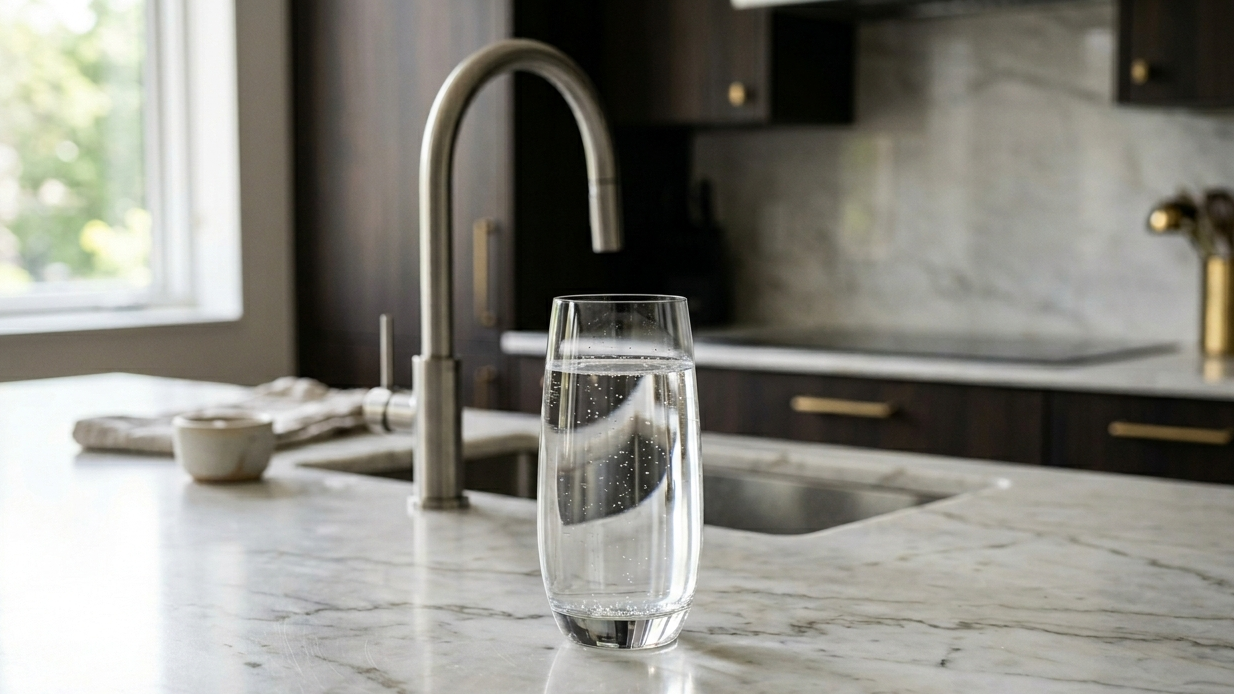
If your tap water has a metallic or bitter taste, copper could be the culprit. In many homes, the source isn't the municipal water supply itself—it's the aging plumbing system hidden behind the walls. While copper is a naturally occurring mineral and an essential nutrient in trace amounts, elevated levels can compromise both water taste and your family's health. In this guide, we will explore how copper enters your tap, the risks of overexposure, and the most effective ways to secure your drinking water.
How Does Copper Get Into Your Tap Water?
While natural surface water rarely contains high levels of copper, the water in your home likely picks up this metal on its journey to your glass. The primary source is corrosion.

For decades, homes across North America and municipal Public Water Systems (PWS) have utilized copper pipes and brass fixtures. When water sits in these pipes—especially overnight or while you are at work—it can slowly dissolve the metal. This leaching process is accelerated if your local water supply is acidic (low pH), has high mineral hardness, or contains elevated levels of dissolved oxygen.
Why Does Tap Water Taste Metallic?
A metallic taste in tap water can come from several sources, including copper, iron, zinc, or aging plumbing materials. Among these, copper is one of the most common causes in homes with copper pipes or brass fixtures.
When water remains in plumbing for extended periods, small amounts of copper can dissolve into the water. Although the water may still appear clear, the resulting metallic or bitter taste is often one of the first signs homeowners notice.
The Double-Edged Sword: When Does Copper Become Dangerous?
Biologically speaking, copper is a double-edged sword. Most people obtain sufficient copper through a normal diet (it is naturally abundant in everyday foods like dark chocolate, leafy greens, and nuts). However, when plumbing corrosion adds unregulated copper into your drinking water, it tips this delicate balance.
At elevated concentrations, copper becomes a health concern. The Environmental Protection Agency (EPA) has set a strict Action Level of 1.3 mg/L (ppm) for copper in drinking water. Consuming water that exceeds these guidelines may cause gastrointestinal symptoms such as nausea or stomach discomfort—issues that are particularly severe for infants. Over long periods, chronic copper exposure may even contribute to liver or kidney problems in sensitive populations.
2 Common Signs of Copper in Tap Water
Because dissolved copper is invisible, identifying elevated levels often starts with noticing signs of plumbing corrosion around your home.

1. Blue-Green Stains
If you notice persistent blue-green or teal-colored stains around sink drains, bathtubs, faucets, or other plumbing fixtures, copper corrosion may be occurring inside your pipes. As copper dissolves into water, it can leave behind distinctive blue-green deposits that are often one of the earliest visible signs of a plumbing issue.
2. A Metallic Taste
Elevated copper levels can sometimes give water a bitter, metallic, or slightly astringent taste. While taste alone cannot determine the exact concentration of copper in your water, a noticeable metallic flavor may indicate that copper is leaching from household plumbing.
The Only Reliable Way to Confirm Copper Levels
While stains and taste can provide useful clues, neither can accurately measure how much copper is present in your water. The only reliable way to determine whether copper levels are elevated is through certified water testing.
The Common Misconception: Why Boiling Your Water Isn't Enough
Once you notice that strange metallic taste or suspect plumbing issues, your immediate instinct as a homeowner is to protect your family. Naturally, you head to the kitchen to boil your water.
While boiling is highly effective at killing biological contaminants like bacteria and viruses, it is entirely ineffective against inorganic heavy metals. In fact, as water heats up and evaporates into steam, the volume of water decreases while the physical amount of copper remains exactly the same—meaning the actual concentration of metals can end up slightly higher than before.
In short, the traditional "boiled water" rule is perfect for microbial safety, but it leaves chemical threats like copper completely untouched.
Similarly, while running your kitchen tap for a few minutes every morning can help flush out stagnant water, it is an inconvenient and wasteful band-aid. To truly secure your home's water quality against microscopic heavy metals, you need an advanced, point-of-use filtration system right under your sink.
A Practical Way to Reduce Copper in Drinking Water
For homeowners looking to reduce copper, lead, PFAS, and other dissolved contaminants, a Reverse Osmosis (RO) system can provide an additional layer of protection at the point of use.
The Viomi Master M1 Tankless Under Sink RO Purifier combines multi-stage reverse osmosis filtration with remineralization technology while maintaining a perfectly balanced drinking experience.

- High-Precision Purification: Its SGS-tested, 9-stage filtration uses a 0.0001-micron precision membrane to eliminate over 99.87% of heavy metals and 99% of PFAS.
- Healthy Remineralization: Through industry-leading technology, the M1 simulates volcanic ion exchange to restore essential minerals harvested from deep underground, improving taste and creating crisp, alkaline water.
- Certified Safety: Engineered for absolute peace of mind, the Viomi M1 is fully tested and certified against rigorous NSF/ANSI 58, 42, and 372 standards, guaranteeing lead-free material safety and proven contaminant reduction.
Whether you are dealing with metallic-tasting water or simply demanding absolute confidence in your family's hydration, upgrading your filtration system makes a meaningful difference.
Share:
Home Drinking Water Safety Ultimate Guide: How to Protect Your Family's Health?
Which Water Filter Brands Can You Install in a New York City Apartment?