

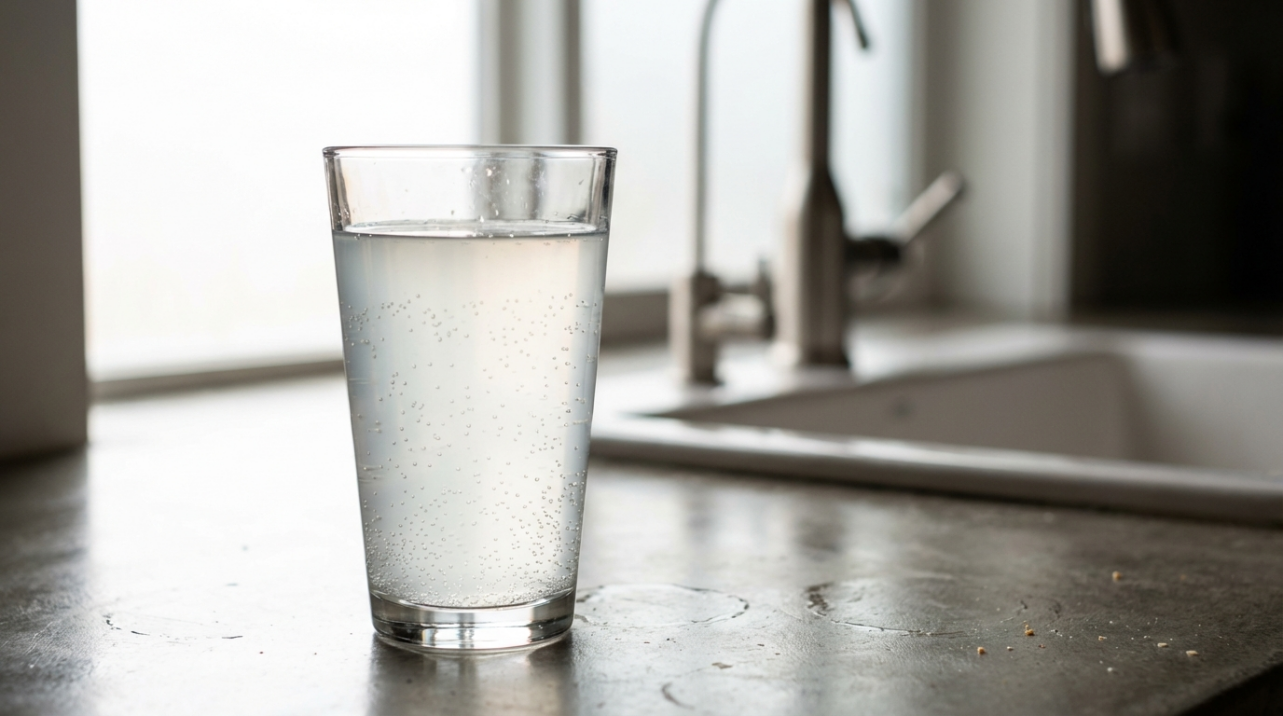
If you own a reverse osmosis (RO) system and suddenly see cloudy, milky water or white residue on glassware and fixtures, it can be unsettling. As someone who spends a lot of time in kitchens, mechanical rooms, and under-sink cabinets, I can tell you this is one of the most common questions I get from health‑conscious homeowners: “What are these white particles, and is my water still safe?”
The good news, supported by multiple RO manufacturers and water‑treatment guides, is that most white precipitation in RO systems is either harmless air or relatively benign mineral residue. The challenge is knowing when it is simply cosmetic and when it signals a maintenance, performance, or hygiene problem.
This article walks you through what white precipitation actually is, what it means for your health, and how to troubleshoot and manage it while keeping your hydration both safe and enjoyable.
What “White Precipitation” Looks Like In Real Life
“White precipitation” is a broad description that homeowners use for a few different things that look similar but have different causes.
Sometimes the water coming out of the RO faucet looks milky or cloudy, then slowly clears in the glass. Manufacturers such as Frizzlife and Nuaqua describe this as the classic pattern of tiny air bubbles: the glass clears from the bottom upward within about thirty to one hundred twenty seconds as bubbles rise and pop.
Other times the water looks clear, but after it dries you see:
- A fine white ring or dust at the bottom of a glass or kettle.
- Chalky white spots on faucets, shower glass, or around an RO spout, similar to hard‑water scale.
- A filmy residue that wipes off easily after you installed a water softener.
Community forums and troubleshooting guides from companies that work with softeners and RO systems explain that these residues are typically minerals such as calcium and magnesium, or sodium if a softener is involved, that were dissolved in the water and then left behind when the water evaporated.
In less common cases, cloudy water stays cloudy even after ten minutes, has a grayish tint or visible specks, or leaves slime or colored film. Research briefs from RO brands and industrial membrane specialists attribute these patterns to particulate fines from filters, very high dissolved solids, or microbial growth inside the system rather than simple air or light mineral haze.
Understanding which of these you are seeing is the first step toward a safe and sensible response.

Is White Precipitation A Health Hazard Or Just Aesthetic?
From a health perspective, the key question is not “Is my water perfectly clear?” but “What is causing the cloudiness or residue?”
Support and troubleshooting data from Frizzlife show that about ninety to ninety‑five percent of “cloudy RO water” complaints turn out to be air-related. Nuaqua echoes this: trapped air or tiny bubbles after installation or filter changes usually clear on their own within a week or two as the system flushes. When cloudiness behaves this way and there is no strange taste or odor, the water is generally considered safe to drink.
Mineral haze and light white residue are also usually more of an aesthetic and maintenance issue than an acute health threat. Guides from SimPure and home‑plumbing forums describe these residues as:
- Calcium or magnesium carbonate flakes or dust when hardness leaks through a tired membrane or when a remineralization cartridge adds hardness back.
- Sodium residue from a softener, which looks like white spots but wipes off much more easily than hard‑water scale.
On the other hand, several sources emphasize that certain patterns should be treated as warning signs rather than cosmetic annoyances. When cloudiness persists longer than about ten minutes, or when you see slime, greenish or brownish color, or smell musty or sulfur‑like odors, RO manufacturers and service guides recommend treating the water as unsafe until the system is sanitized and the cause is corrected. Frizzlife and SimPure both link these symptoms to possible microbial growth or serious performance issues.
The bottom line for everyday hydration is straightforward.

Fast‑clearing milkiness is usually just air. A light powdery ring from minerals is mostly a maintenance and taste issue. Persistent haze, off‑color or slime, or a noticeable odor is a safety concern that deserves prompt action.
A Simple Glass Test You Can Do At Home
One of the most practical, science‑backed tools for understanding white precipitation is a clear‑glass test described by Frizzlife and echoed in multiple RO manuals.
Fill a clear glass with water directly from your RO faucet. Set it on the counter and watch it closely for up to two minutes, then again after ten minutes.
If the water clears from the bottom toward the top within thirty to one hundred twenty seconds, and you do not see specks settling, that pattern points very strongly to trapped air or dissolved gas coming out of solution. Frizzlife calls this the signature of air‑related cloudiness, not contamination.
If the water remains cloudy after ten minutes, or you see a light white haze that starts to drift downward, leaving a powdery ring as it dries, manufacturers describe that as more consistent with mineral precipitation. If you see gray or black particles after a recent filter change, that usually indicates harmless carbon fines from a new carbon filter that need to be flushed out.
If you notice slime on the side of the glass, stringy material, or green, brown, or other color tints, and especially if there is a musty or sulfur smell, RO service guides recommend not drinking the water. Those signs are consistent with biofilm or microbial growth in the system, which calls for sanitizing and filter replacement.
This simple observation exercise gives you an evidence‑based starting point before you pick up a tool or call a technician.
Root Causes Of White Precipitation In RO Systems
Once you know what pattern you are seeing, it helps to understand the mechanisms behind it. Multiple independent sources converge on a short list of primary causes.
Dissolved Air And Microbubbles
Frizzlife explains cloudy RO water by drawing on Henry’s Law: cold water under pressure can hold more dissolved gas than warm water at normal pressure. Inside an RO system and storage tank, water is relatively cold and pressurized. When you open the faucet, pressure drops and the water begins to warm; dissolved air is suddenly less soluble, so it comes out as microscopic bubbles.
These bubbles scatter light, making the water appear milky. Because the bubbles are lighter than water, they rise, giving the bottom‑to‑top clearing pattern you saw in the glass test. Nuaqua notes that this effect is especially pronounced right after installation or filter and membrane changes, when air has been trapped in housings, tubing, and the tank.
In support logs summarized by Frizzlife, around ninety to ninety‑five percent of milky‑water complaints resolve after four to ten full tank flushes, with no parts replaced. In my own field visits, I see the same thing: once the system has cycled several tanks and the air has been purged, the water runs visibly clearer even though the chemistry has not changed.
Mineral Precipitation And Scale
White precipitation can also be genuine mineral scale rather than air. Several lines of evidence from SimPure, Watersparks, and technical RO troubleshooting references point to residual hardness or re‑added minerals as the culprits.
Even a well‑designed household RO membrane typically removes about ninety‑five to ninety‑nine percent of dissolved salts and minerals, as described in Nebraska Extension materials and Puretec’s technical overview. That means a small amount of calcium and magnesium can still get through, especially if the membrane is aging or if prefilters are overdue and water pressure is marginal.
Some homeowners also intentionally add hardness back with remineralization cartridges. Gordon Water, for example, describes cartridges that add calcium and magnesium or multiple minerals to improve taste and create slightly alkaline water.
Whether hardness leaks through an older membrane or is added deliberately after RO, those minerals are dissolved in the water. When the water is heated in a kettle or evaporates on a surface, the solubility of minerals like calcium carbonate drops and they come out of solution as a fine white powder or coating. SimPure notes that in very hard‑water regions or when pH shifts, this sort of “mineral haze” can leave a powdery ring as the water dries.
There is another twist: if your RO is fed by softened water, the softener will have removed most calcium and magnesium and replaced them with sodium, as explained in discussions on Terry Love’s plumbing forum. Softened water does not form the same hard crust but can still leave a light sodium residue when it evaporates. Forum users report that these white spots are much easier to wipe off than classic scale.
Carbon Fines, KDF, And Filter Media
Cloudiness is not always about minerals at all. SimPure and Frizzlife both explain that new carbon filters can release tiny black or gray particles called carbon fines. These fines are food‑grade and harmless but can make water look cloudy or speckled until the system is flushed for several tank cycles.
Filters containing KDF media, which is a specialized copper‑zinc alloy used for heavy‑metal reduction, can also release a temporary milky white suspension, noted by SimPure as a zinc‑related effect that decreases with normal use.
In both cases, the remedy is straightforward: proper flushing according to the manufacturer’s instructions until the water runs visually clear.
High TDS And Poor Membrane Rejection
Cloudiness that does not clear and is not just fines can point to high total dissolved solids (TDS), especially when a membrane has lost performance. Frizzlife recommends using a simple TDS meter to compare tap water and RO water; this is also a core monitoring tool in technical documents from Nebraska Extension and industrial membrane suppliers.
When an RO membrane is healthy, it typically achieves about ninety to ninety‑eight percent rejection of dissolved salts, depending on the model and conditions. The rejection percentage is calculated as:
Rejection (%) = (TDS of tap water – TDS of RO water) ÷ TDS of tap water × 100
If your tap water reads three hundred parts per million and your RO water reads fifteen, the rejection is about ninety‑five percent, which is normal. If the RO water has risen to one hundred parts per million, rejection has dropped to about sixty‑seven percent, which is more consistent with a worn or damaged membrane, inadequate pressure, or a faulty flow restrictor.
Frizzlife and SimPure both note that when hardness is high and membrane rejection is low, minerals are more likely to precipitate out as the water warms, creating a persistent haze rather than fast‑clearing bubbles.
Microbial Growth And Biofilm
Finally, cloudy water combined with odor, slime, or color is often a hygiene problem rather than an air or mineral issue. Frizzlife, SimPure, and technical troubleshooting guides from Watertech and others point to biofilms on membranes, in tubing, or in the storage tank as a source of such symptoms.
RO membranes are delicate and cannot tolerate continuous disinfection with chlorine, which is why many systems rely on carbon prefilters that deliberately strip chlorine before the membrane. Industrial RO references explain that this makes biofouling one of the most common and difficult forms of fouling. In a household system that has not been sanitized on schedule, that same principle applies on a smaller scale.
In this situation, the priority shifts from aesthetics to safety: filters should be replaced and the system, including the storage tank, needs to be sanitized with an approved disinfectant following the manufacturer’s process before you resume drinking from it.
How To Diagnose The Cause In Your Own System
You do not need lab equipment to make a good first‑pass diagnosis. A combination of simple observation, a low‑cost TDS meter, and basic system history will usually get you ninety percent of the way there.
Start With Visual Patterns
Begin with the clear‑glass test described earlier. Watch how the water behaves over two minutes and again at ten minutes, and note whether you see air‑like clearing, fine mineral rings, specks, or slime.
Next, pay attention to where residue appears. Powdery rings at the bottom of a glass, chalky spots on fixtures, and a light film inside kettles all suggest mineral precipitation. Easy‑to‑wipe spots that appear after installing a softener are more consistent with sodium residue, as discussed in real‑world softener case reports.
If cloudy water shows color, forms slime, or smells off, that visual pattern alone is enough to justify treating the water as unsafe until addressed.
Use A TDS Meter To Check Rejection
A handheld TDS meter is one of the simplest tools you can add to your water‑wellness toolkit. Guidance from Nebraska Extension, Puretec’s RO fundamentals, and multiple RO maintenance guides all rely on TDS as a quick reality check on membrane performance.
Measure your cold tap water first, then your RO water. Calculate the rejection percentage using the formula above. In the field, I like to see household systems consistently in the ninety to ninety‑five percent rejection range; this aligns with the ranges cited in technical references from Puretec and Watertech for properly functioning membranes.
If your rejection has dropped below about eighty‑five to ninety percent, Frizzlife recommends inspecting prefilters, verifying that feed pressure is in the typical fifty to eighty pounds per square inch range, and checking membrane age. Persistent high TDS in the RO water makes mineral precipitation more likely and is often the underlying reason white residue suddenly becomes noticeable.
Consider System Age And Maintenance History
Multiple consumer and professional guides, including ESP Water, Culligan, Fresh Water Systems, Affordable Water, and SpringWell, converge on similar lifespans:
Sediment and carbon prefilters are usually replaced every six to twelve months, depending on use and local water quality. Post‑carbon “polishing” filters are often changed annually. RO membranes typically last about two to five years in home systems, assuming prefilters are changed on time and feed water is not extremely harsh.
If you cannot remember when filters were last changed, or your membrane is older than these ranges, that alone makes membrane performance and mineral breakthrough much more likely. Several sources also recommend annual sanitization of the system and storage tank to control microbial growth.
Check Surfaces And Fixtures
Lastly, take a look at how easy residues are to clean. The Terry Love community explains that sodium films from softened water and residue from low‑mineral water are generally easy to wipe away. Hard scale, in contrast, tends to be rough, chalky, and stubborn. Summaries from Watersparks and SimPure suggest that regular wiping and the occasional use of a mild acidic cleaner, such as diluted vinegar or a purpose‑made descaler, can keep fixtures clear without heavy scrubbing.
Quick Comparison Of Symptoms And Likely Causes
The following table pulls together patterns described in the research and troubleshooting notes to give you a side‑by‑side view of what you are seeing, what it probably is, and what to do first.
What you see in the glass or on surfaces |
Most likely cause based on research |
Short‑term health concern |
First practical step |
Milky water that clears bottom‑to‑top in under two minutes |
Dissolved air or trapped air bubbles after install or filter change (Frizzlife, Nuaqua) |
Low, generally safe if no odor or taste change |
Flush several full tanks and recheck; expect improvement after four to ten cycles |
Fine white ring or dust after drying, especially in hard‑water areas |
Calcium or magnesium precipitating as hardness; or minerals added by remineralization cartridges (SimPure, Frizzlife, Gordon Water) |
Mostly aesthetic; may indicate membrane performance drift |
Check TDS rejection; review membrane age and prefilter schedule; clean residue with mild acid if desired |
Easy‑to‑wipe white spots after adding a softener |
Sodium residue and dissolving old hardness scale (Terry Love forum examples) |
Low; residue is easier to clean than previous scale |
Continue softener use; wipe surfaces after use; consider a water‑repellent coating on glass and chrome |
Gray or black cloudiness or specks, especially right after filter change |
Carbon fines or media particles from new filters (Frizzlife, SimPure) |
Low; fines are food‑grade but unsightly |
Follow manufacturer flush procedure until water runs clear |
Cloudiness that does not clear after ten minutes, with powdery ring or haze |
High TDS from worn membrane or low pressure; mineral precipitation in hard‑water regions (Frizzlife, SimPure) |
Moderate; indicates performance problem |
Measure TDS and rejection; inspect prefilters, feed pressure, flow restrictor, and membrane condition |
Slime, off‑color (greenish, brownish), or musty/sulfur odor |
Microbial growth and biofilm in tank or lines (Frizzlife, SimPure, Watertech) |
High; treat as unsafe |
Replace filters, sanitize tank and lines according to system manual, and do not drink until the issue is resolved |
Managing White Precipitation Without Sacrificing Water Quality
Once you have a working hypothesis about the cause, you can choose interventions that address the root issue without undermining your overall hydration goals.
When Air‑Related Cloudiness Is Acceptable
If your glass test shows classic air behavior and your TDS rejection is healthy, you are dealing with physics, not pollution. According to Frizzlife’s support data, most of these cases resolve after several complete tank flushes. Nuaqua suggests flushing and draining the storage tank three times after installation and ensuring all filters are seated correctly to purge air.
In practice, this means opening the RO faucet, draining the tank completely, letting it refill over several hours, and repeating. It is a minor inconvenience, but it prevents unnecessary part replacement and aligns with what both field experience and manufacturer data say solves the majority of cloudy‑water complaints.
Reducing Mineral Haze And Spots
If mineral precipitation is your main concern, you have a few levers to pull.
First, confirm that your membrane and prefilters are in good shape so you maintain high rejection and avoid unnecessary hardness breakthrough. Nebraska Extension’s RO guide shows that higher recovery and lower pressure both increase the risk of scaling in membranes. For a homeowner, you do not need to redesign the system, but you can avoid running it with very low feed pressure and you can make sure prefilters are not starving the membrane of flow.
Second, consider the hardness of your incoming water. SimPure notes that in very hard‑water regions, a softener upstream of the RO can reduce stress on the membrane and lower the risk of mineral haze and scale. Technical guides from SpringWell and others also recommend pairing softeners with RO to extend membrane life. You may still see very light residue from sodium or small residual hardness, but plumbing and appliances will be far better protected.
Third, use surface‑care strategies for fixtures and glass. Watersparks summaries and user experiences show that regular wiping after use and periodic mild descaling with diluted vinegar or designated cleaners are usually enough to keep bathrooms and kitchens visually clean without overcorrecting your water chemistry.
It is worth noting that some white spots are an acceptable trade‑off for having a bit of calcium and magnesium in your water. Reviews compiled by Atla Water from World Health Organization documents and numerous epidemiological studies suggest that very low‑mineral, very soft water may not be ideal for long‑term health, particularly with respect to cardiovascular outcomes and certain developmental parameters. While diet is your primary source of minerals, maintaining at least modest hardness in drinking water is not necessarily a bad thing.
Keeping RO Water Safe, Clear, And Health‑Supporting
A science‑backed approach to clear, healthy RO water blends good maintenance with thoughtful mineral management.
Maintenance schedules from ESP Water Products, Culligan, Fresh Water Systems, Affordable Water, and SpringWell are remarkably consistent. Sediment and carbon prefilters should be changed every six to twelve months, depending on usage and water quality. RO membranes often last two to three years when protected by timely prefilter changes, and some references note longer lifespans in softer water. Annual sanitization of the system and storage tank is widely recommended to prevent microbial growth.
Routine TDS checks, suggested by Frizzlife and other RO specialists, give you an early warning when membrane rejection starts to drift down, well before you see obvious haze. Measuring both tap and RO water monthly or quarterly and recording the values lets you spot trends instead of waiting for visible residue.
From a health standpoint, publications summarized by Atla Water and commentary from Leaf Home emphasize that RO and other demineralization methods remove not only contaminants but also beneficial minerals such as calcium and magnesium. World Health Organization documents from the late 1970s through the 1990s highlighted concerns about completely demineralized water and recommended remineralization of very low‑mineral water.
Consumer‑facing articles from Gordon Water and SoftPro echo this by pairing high‑rejection RO membranes with remineralization cartridges that add back calcium, magnesium, and other electrolytes. In my work with wellness‑focused clients, this combination—strong contaminant reduction plus measured remineralization—often strikes the best balance between purity, taste, and support for hydration habits.
If you choose to remineralize, understand that a small amount of white residue over time is a natural side effect of having minerals in your water. For most households, that is a better trade‑off than chasing perfectly “spotless” but completely demineralized water.
Real‑World Scenarios
To make this more concrete, it helps to walk through a couple of common situations.
Imagine you installed a new under‑sink RO unit last weekend. The first glass of water looks very milky. You fill a clear glass, set it down, and watch it clear from the bottom upward within about a minute. There is no unusual odor. Over the next few days you flush several full tanks. By day five, the water is visibly clearer, although you still see a faint milky hue right after the tank refills. This pattern is precisely what Frizzlife and Nuaqua describe for trapped air after installation and is not a reason to panic or replace the membrane.
Now consider a different kitchen. The RO system is five years old, and filters have not been changed “for a while.” You start noticing a fine white powder at the bottom of a glass that was left to dry overnight. A TDS meter shows your tap water at three hundred parts per million and your RO water at one hundred. That corresponds to only about sixty‑seven percent rejection, far below the ninety‑plus percent expected in Nebraska Extension and Puretec examples. In this case, white precipitation is your early warning that the membrane is underperforming and probably overdue for replacement, and that prefilters and system sanitization also need attention.
These scenarios are not theoretical; they match patterns technicians and support teams see every day.
Frequently Asked Questions
Does white residue mean my RO is not working?
Not necessarily. If your TDS readings show good rejection and the residue is a light, powdery ring or easy‑to‑wipe spots, it can simply reflect small amounts of hardness or minerals added by a remineralization filter. However, if TDS rejection has dropped noticeably or if residue suddenly appears after years of spotless glassware, it is wise to treat that as a performance cue and review filter and membrane maintenance.
Can RO water still cause limescale?
Yes, although typically much less than untreated hard water. Household RO membranes remove most but not all dissolved minerals, and some systems intentionally add minerals back for taste and health. If your feed water is very hard, or if the membrane is aging, enough calcium and magnesium can remain to create a light scale in kettles or humidifiers over time. Research summaries from SimPure and Frizzlife also note that when hardness is high and membrane rejection is low, minerals are more likely to precipitate as water warms, producing visible haze and residue.
Should I aim for zero TDS to eliminate white precipitation completely?
Chasing zero TDS is neither necessary nor always desirable. Technical resources from Puretec and Nebraska Extension work with realistic rejection ranges rather than zero, and health‑focused reviews synthesized by Atla Water and others highlight that very low‑mineral water may not be optimal for long‑term use. Aiming for strong but not absolute rejection, combined with a healthy diet and, when appropriate, gentle remineralization, supports both water quality and wellness. A small amount of benign white residue can be an acceptable sign that your water still contains some beneficial minerals.
References (Selected)
Source or publisher |
Relevance to white precipitation and RO water |
Nebraska Extension NebGuide on reverse osmosis |
Explains how RO works, typical recovery and rejection, and how feedwater hardness and operating conditions influence scaling risk |
Puretec Industrial Water technical overview |
Defines RO performance metrics such as salt rejection, recovery, and concentration factor that underlie mineral precipitation behavior |
Frizzlife and Nuaqua troubleshooting articles |
Detail causes of cloudy RO water, the bottom‑to‑top clearing test, and support data showing most cases are air‑related |
SimPure and SimPure‑cited filtration guides |
Describe cloudy water causes including KDF, carbon fines, hard water, and microbial growth, with practical mitigation steps |
Watertech USA and DuPont industrial RO maintenance notes |
Analyze fouling and scaling mechanisms, including carbonate scaling and biofouling, and emphasize monitoring and cleaning |
Atla Water synthesis of WHO and epidemiological research |
Summarizes World Health Organization concerns about completely demineralized water and health correlations with water hardness |
Gordon Water, Leaf Home, SoftPro consumer articles |
Discuss demineralization, remineralization, and the role of calcium and magnesium in water quality and health perception |
Terry Love plumbing forum and Watersparks overview |
Provide real‑world observations of white spots after softening and hard‑water staining in bathrooms and around RO fixtures |
As a Smart Hydration Specialist and water‑wellness advocate, my goal is not to eliminate every harmless spot, but to help you recognize which signals matter, keep your system tuned for both safety and taste, and make every glass of water you drink a confident, health‑supportive choice.
References
- https://ui.adsabs.harvard.edu/abs/2024JWPE...6005094A/abstract
- https://extensionpublications.unl.edu/assets/html/g1490/build/g1490.htm
- https://www.affordablewaterinc.com/reverse-osmosis-maintenance-tips-for-first-time-owners
- https://www.flpureh2o.com/signs-you-need-reverse-osmosis-filter-replacement
- https://www.watertechusa.com/reverse-osmosis-troubleshooting
- https://www.culligan.com/blog/how-to-keep-your-water-filtration-system-working-properly
- https://www.dupont.com/knowledge/importance-of-industrial-ro-system-maintenance.html
- https://espwaterproducts.com/pages/reverse-osmosis-maintenance?srsltid=AfmBOoqvXXYDXBbxN981R9MbGPOysd0m760AsftvGF6CCVjdRZDOB4sj
- https://purewayfiltration.com/solving-the-common-issues-of-reverse-osmosis-systems/
- https://www.springwellwater.com/3-tips-to-maintain-reverse-osmosis-filter-system/?srsltid=AfmBOop_5UuO7nMWpgr7re4jsZ3rG6onh7114BlBlIslgwA55_zPFsRz

Share:
Understanding Why Your RO System Sometimes Refuses to Operate
Understanding Why Your Pump Starts But Lacks Pressure