

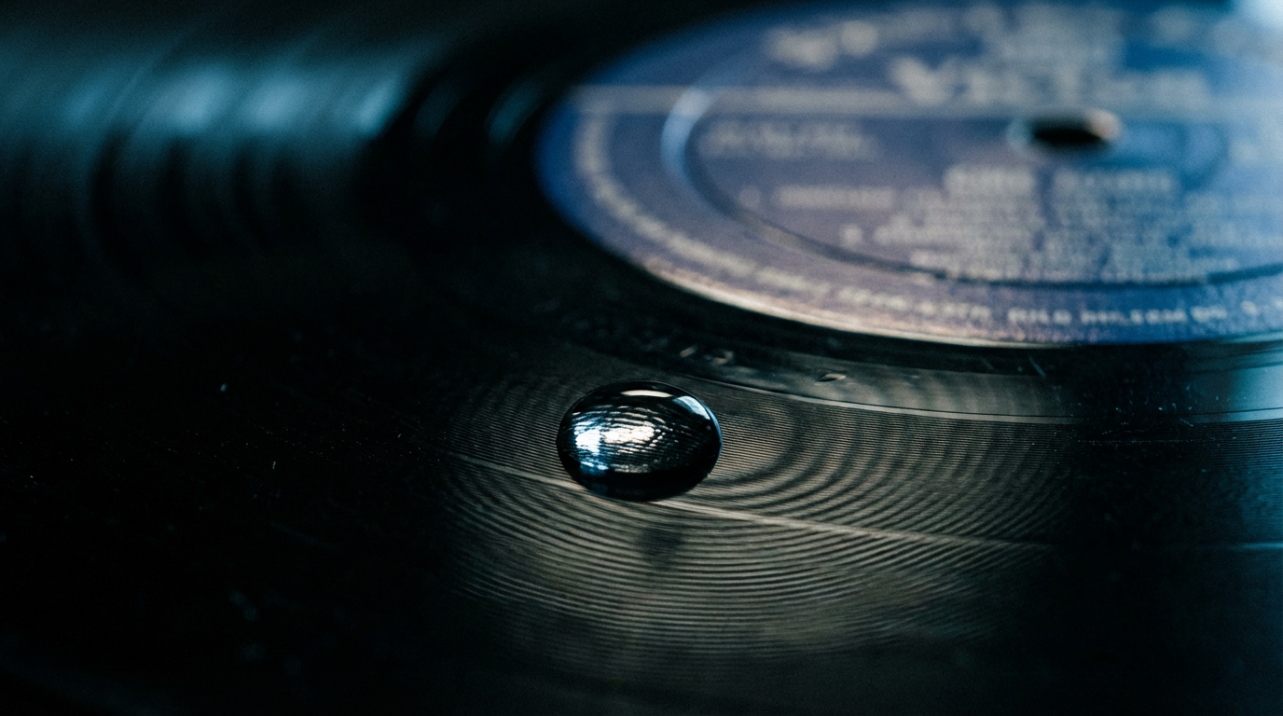
As a Smart Hydration Specialist and lifelong vinyl listener, I think about water in two ways every day: what it does inside your body, and what it does inside a record groove. In both cases, the quality of that water quietly determines the quality of your experience. The difference is that with vinyl, you hear the result immediately as pops, haze, and crackle.
Across archivists, hi‑fi manufacturers, and record‑care experts, there is strong agreement on one point: the water you use to clean your records matters just as much as your brush or cleaning fluid. From home hand-cleaning routines to ultrasonic record-cleaning machines, the choice between tap, distilled, or deionized water changes how effectively dirt is removed, how much residue is left behind, and how long your records and stylus will last.
In this guide, we will look closely at how water quality shapes cleaning results, drawing on guidance from preservation specialists at the University of Illinois, hi‑fi brands like Pro‑Ject and Victrola, and advanced cleaning practitioners who rely on distilled or deionized water for archival-level care. The goal is not just cleaner records; it is a more intentional relationship with water in your listening space, the same way you already think about water in your kitchen.
From Drinking Glass To Record Groove: Why Water Quality Matters
When you wet-clean a record, water is not just a carrier. It is the main ingredient in nearly every cleaning fluid and rinse step. If that water carries dissolved minerals, chlorine, or other impurities, they do not disappear when the record dries. They stay behind in the groove as a microscopic film or as mineral spots that can:
create new noise even after you have removed the original dust,
re-attract dirt and smoke residue,
and force your stylus to plow through a thin crust every time you play the record.
Multiple care guides aimed at everyday listeners, including those from Electrohome, Victrola, and The House of Marley, explicitly recommend distilled water for rinsing and warn that tap water can leave mineral and lime deposits in the grooves. An advanced-cleaning guide from On The Jungle Floor goes further, framing distilled water as preferred because it does not leave mineral or chlorine deposits the way tap water does, especially when you are rinsing away enzyme-based cleaning solutions.
Archivists working with irreplaceable discs reach the same conclusion. The Preservation Self-Assessment Program at the University of Illinois describes cleaning formulas that dilute record-cleaning concentrates with distilled deionized water, and the Library of Congress similarly recommends deionized water with mild surfactants for archival cleaning. These are institutions whose job is to think in decades, not just playlists.
Imagine two identical used LPs from a thrift bin, both visibly dusty. You clean one with a mild record-safe solution mixed with tap water, then air-dry it. You clean the other with the same solution but mix and rinse with distilled water. On first play, both may sound better, but the tap-water copy is more likely to show faint drying marks under bright light, and in practice collectors often report that it regains a light haze of crackle sooner. The distilled-water copy has fewer places for residue to cling, so the stylus tracks cleaner for longer.
Vinyl is a physical medium, so any substance you leave in the grooves has consequences.

The cleaner the water, the less you leave behind.
What “Clean” Water Means In A Vinyl Context
In hydration work, water quality usually refers to safety, taste, and mineral balance. For vinyl, the priority shifts: you want water that is chemically bland and leaves nothing behind when it evaporates.
Tap Water: Convenient But Problematic For Grooves
Tap water is designed to be safe and palatable for drinking, not to behave like a lab reagent. Depending on where you live, it can contain dissolved minerals, treatment chemicals such as chlorine, and microscopic particles. For your body, a moderate mineral content may be perfectly acceptable or even desirable. For a record groove, those same minerals are contaminants.
Several record-care guides, including those from Music Record Shop, The House of Marley, Victrola, Pro‑Ject, and The Record Hub, are remarkably consistent: they advise against using untreated tap water for vinyl cleaning because it can leave residue that dries into mineral or lime deposits. On The Jungle Floor explicitly contrasts distilled water, which does not leave mineral or chlorine deposits, with tap water, which does.
Here is what that means in practice. When you wet a groove with tap water and let it evaporate, dissolved minerals become tiny crystals or films on the record surface. They do not have to be visibly white to matter. Even a thin, nearly invisible film changes the friction between groove and stylus, which you hear as added noise or a dulling of detail. Those films also give dust something to grab onto, undermining the cleaning you just did.
If your tap water is relatively hard, you have probably seen this effect as spots on glassware. On a record, those spots are small enough that you might only notice them when a previously quiet passage suddenly develops a background of soft hiss and ticks after an enthusiastic cleaning session with sink water.
Given how many sources specifically warn against tap water, it makes sense to think of it as emergency-only for vinyl, and even then only if you follow immediately with generous rinses of distilled water.

Distilled, Deionized, And Demineralized Water: The Gold Standard
Distilled and deionized water are both forms of purified water. Distillation removes many impurities by boiling and condensing; deionization uses resins to strip out charged mineral ions. Many record-care articles treat them as functionally similar in this context, and some refer more generally to “demineralized” water.
Across the vinyl-cleaning literature you provided, distilled, deionized, or demineralized water appears in several roles:
as the main component of record-cleaning solutions in consumer guides from Music Record Shop, Simple Green, The House of Marley, Pro‑Ject, Victrola, and others,
as the dedicated rinse step after enzyme-based cleaners, in advanced techniques described by On The Jungle Floor and Turntable Kitchen,
and as the archival standard for preservation institutions, where the University of Illinois and Library of Congress guidance relies on distilled deionized water with mild surfactants.
Music Record Shop calls distilled water a must-have for creating cleaning solutions that leave no residue. Electrohome instructs readers to rinse embedded dirt with cool distilled water and explicitly notes that tap water carries impurities to be avoided. Victrola stresses that tap water can embed impurities in grooves, and that only distilled water should be used for rinsing.
On The Jungle Floor adds another layer: distilled water is not just about avoiding new contamination; it is also about fully rinsing away the cleaning agents you do use. They recommend distilled water rinses after enzyme-based cleaners precisely to prevent dried residue that can dull sound and re-attract dirt.
Turntable Kitchen’s archival-inspired method mirrors what preservation labs do. It describes using a mild surfactant (Tergitol, similar to formulas endorsed by the Library of Congress) in deionized water, followed by a second pass with deionized water alone to rinse out any remaining cleaner. That second pure-water pass only makes sense if the water itself is not adding new contaminants.
If you think about your own hydration habits, this is like choosing very low-sodium water when you are trying to flush out excess salt. You do not want your “rinse” liquid to carry the same load you are trying to remove.
A Quick Comparison Of Water Types For Vinyl Cleaning
To make the trade-offs clear, here is a concise comparison based on the record-care and preservation sources in your research.
Water type |
Typical contents for this context |
Pros for vinyl cleaning |
Risks or drawbacks |
Standard tap water |
Dissolved minerals, treatment chemicals like chlorine, particles |
Always available at the faucet, no extra purchase needed |
Frequently leaves mineral or lime deposits and other residue; multiple guides explicitly advise avoiding it |
Distilled water |
Very low mineral content, minimal impurities |
Widely recommended by hi‑fi brands and cleaning guides; leaves no mineral residue; ideal for rinsing |
Requires separate purchase or production; needs careful storage to stay clean |
Deionized or demineralized water |
Very low mineral content, similar purpose to distilled |
Preferred in archival and advanced methods; used with mild surfactants in preservation workflows |
Not always sold alongside household goods; must be verified as suitable and uncontaminated |
The details of how each type is produced matter less for your records than the simple fact that distilled, deionized, and demineralized water are all low-residue options, while conventional tap water is not.
How Water Quality Changes Your Cleaning Outcomes
The impact of water quality shows up differently depending on how you clean your records. Manual hand cleaning, record-washer baths, and vacuum or ultrasonic machines all respond in their own way to what you pour into them.
Manual Hand Cleaning: The Kitchen-Sink Temptation
Most collectors start by cleaning records by hand with a brush, a microfiber cloth, and a bottle of record-cleaning fluid. Guides from EverPresent-style tutorials, Electrohome, Simple Green, Music Record Shop, The Record Hub, Victrola, and others largely agree on the basic approach: loosen dust with a dry anti-static or carbon fiber brush, apply a record-safe cleaning solution, then wipe and allow the disc to air-dry completely.
The role of water shows up in two parts of this workflow.
First, it is the base of the cleaning solution. Many commercial fluids are distilled-water based with mild surfactants, as Pro‑Ject and Victrola describe. Some DIY approaches dilute non-abrasive cleaners like Simple Green in water at roughly a one-to-thirty ratio, as discussed in a Billboard product guide, again with an emphasis on using distilled water where possible.
Second, water is the rinse stage that determines what remains in the groove after cleaning. Several guides note that if you use concentrates or homemade mixes, following up with a distilled-water rinse helps remove leftover surfactant. Electrohome, Simple Green, and Music Record Shop all highlight either a distilled-water damp wipe or full rinse as a way to prevent residue and mold.
If you substitute tap water into either of these roles, you change the equation. The surfactant may lift oils and grime, but as the water dries, minerals and any dissolved solids settle into the groove. The stylus now has to navigate not just the original contaminants but also what your local water supply left behind. Because those residues are often thin and uniform, you may not see them, but they can flatten micro-dynamics and turn high frequencies slightly grainy.
A simple way to visualize this is to think about a record you clean repeatedly over a year.

If you use a distilled-water rinse every time, the only things that should remain after each clean are the vinyl and whatever scratches or permanent damage were already present. If you use tap water each time, you are slowly layering mineral films on top of the groove wall. Ten or twenty cleanings later, the record may look fine but sound oddly veiled, even though you never abused it physically.
Using distilled or demineralized water reduces that risk to essentially zero.
Record Washer Baths And Manual Machines: The Water You Stand In
Manual record washers such as the Spin-Clean, mentioned positively in the Naim Audio community and in guides from On The Jungle Floor and The House of Marley, are popular because they scrub both sides of a record at once in a bath of cleaning solution. The record rotates between brushes, and loosened contamination falls into the bath.
The water quality inside this bath determines whether you are suspending dirt in a neutral liquid that can be wiped or air-dried away cleanly, or in a mineral-rich soup that will leave a film as soon as it dries.
Spin-Clean and similar systems typically rely on a proprietary concentrate that you dilute in water. On The Jungle Floor emphasizes that after using enzyme-based cleaners and washer systems, a distilled-water rinse is strongly recommended so that no cleaner residue remains. The same logic applies to the bath itself: if you fill it with distilled or demineralized water, any liquid that remains on the record after it leaves the bath evaporates without adding new minerals.
If you instead fill a washer with tap water, every revolution of the record coats the grooves with that water. The brushes lift grime, but the drying stage lays down dissolved minerals in its place. Even if the record looks cleaner, you may notice that background noise never quite reaches the “archival” quiet promised in reviews.
A practical example makes the point clear. Suppose you clean a stack of ten used records in a Spin-Clean filled with a concentrate and tap water. After a few discs, you may see the water turn cloudy as dirt accumulates. When that same scenario is repeated with distilled water, collectors often report that, after a follow-up distilled rinse and proper drying, records play with noticeably fewer clicks and a more open soundstage. The difference is not mystical; it is the absence of mineral films that would otherwise build up with each bath.
Vacuum And Ultrasonic Machines: High-Tech Tools, Simple Water Rule
Vacuum-powered record-cleaning machines (RCMs) and ultrasonic cleaners are the advanced end of the spectrum. Brands like Pro‑Ject, VPI, Degritter, and KLAudio design these tools to apply cleaning fluid in a controlled way, agitate or cavitate it in the grooves, and then remove as much liquid and suspended dirt as possible.
Pro‑Ject’s own guidance is clear that their wet-cleaning fluids rely on distilled water and that tap water, harsh household cleaners, and abrasive materials should be avoided. On The Jungle Floor explains how vacuum machines work by applying a cleaning solution and then using suction to lift it, while ultrasonic machines generate microscopic cavitation bubbles in a bath, causing them to collapse in the grooves and dislodge deeply embedded contaminants.
Turntable Kitchen’s overview of cleaning tiers reinforces the importance of a pure-water rinse even with these sophisticated devices. They highlight an archival-grade approach where a mild surfactant in deionized water is applied, brushed, and left for several minutes, followed by a second pass of deionized water alone to flush out any remaining fluid. On The Jungle Floor gives the same distilled-water rinse advice after enzyme-based cleaning.
What happens if you substitute tap water into these processes? Vacuum and ultrasonic systems are very effective at driving fluid deep into the groove, which is exactly where you do not want tap water leaving behind mineral deposits or trapped chlorine. The machine’s suction or drying stage can remove a great deal of liquid, but no consumer machine pulls out one hundred percent. Whatever remains is what dries in place.
Think of ultrasonic cleaning as a deep facial for your records. If the water in the bath is chemically clean, you finish with bare, refreshed vinyl. If the water carries extra solutes, those get driven into pores and left there. Over time, the most advanced machine in the world cannot undo the accumulation of tiny mineral films left by poor water.
The simple rule that emerges from these advanced methods is straightforward: the more sophisticated your cleaning tool, the more important it is that the water you feed it be distilled, deionized, or demineralized, and that any final rinse stages use the same.
Water, Humidity, And Long-Term Preservation
Water affects vinyl not just as a cleaning ingredient, but as moisture in the air. In hydration work, we talk about balancing fluid intake with environment. Vinyl has its own version of that conversation.
The Preservation Self-Assessment Program from the University of Illinois recommends storing shellac and aluminum discs in a cool, stable environment, ideally around 40–54°F with relative humidity of about thirty to fifty percent, and warns that higher temperature and humidity promote corrosion, fungal growth, and other damage. While that guidance focuses on older disc formats, the principle applies broadly to grooved media: too much moisture in the air invites mold and warping.
On The Jungle Floor makes a similar point in more practical terms. For listeners in humid environments, they suggest silica gel packs in storage areas to absorb excess moisture and reduce the risk of mold and mildew on records and sleeves. Electrohome and multiple consumer guides echo the message that records should be stored upright in a cool, dry place away from direct sunlight and heat.
Cleaning routines interact with this environmental moisture. If you use high-purity water but put a still-damp record into a tight sleeve in a warm, humid room, that trapped moisture becomes an incubator for mold. Several guides, including Electrohome, Victrola, and The Record Hub, emphasize that records must be fully dry before going back into their sleeves and stress vertical air-drying away from heat sources.
From a practical standpoint, this means your “vinyl wellness” routine should combine two things: high-quality water in the cleaning process and controlled moisture in the storage environment. If your listening room is the same place you care about your own comfort, keeping humidity in that moderate range is good for both you and your records.
Practical Water-Quality Game Plan For Vinyl Lovers
Putting all this together, you can think of water in your record-care routine the way you think about food and drink in a balanced lifestyle: focus on quality where it has the largest impact, and build simple habits around that.
If you clean records by hand at a counter or sink, keep a dedicated jug of distilled or demineralized water next to your record brush and cleaning solution. Use it both to dilute concentrates and for any final rinse or damp-wipe steps. When a guide calls for “water,” substitute distilled unless it explicitly says otherwise. This single change aligns your routine with the recommendations from Electrohome, Victrola, Music Record Shop, Simple Green’s vinyl-safe methods, and The House of Marley, all of which lean on distilled water to prevent residue.
If you own a record washer like a Spin-Clean, treat distilled water as part of the kit, not an optional extra. Fill the bath with distilled water plus the manufacturer’s concentrate, and once the bath starts to look cloudy, discard it rather than trying to stretch its life. Following with a distilled-water rinse or careful distilled damp wipe mirrors the advanced technique described by On The Jungle Floor and others, where the combination of cleaner plus pure-water rinse keeps the groove truly clean rather than simply different.
If you use a vacuum or ultrasonic machine, read the manufacturer’s cleaning-fluid recommendations closely and assume that any water added to the tank or used for rinsing should be distilled or deionized. This is how Pro‑Ject positions their fluids, and it is how archival-inspired workflows from Turntable Kitchen and preservation institutions operate. In a sense, you are giving your machine the same high-grade input water you would choose for a premium hydration appliance: clean in, clean out.
Finally, remember that water quality only helps if the record dries completely in a reasonable environment. After any wet cleaning, place records on a clean drying rack or stand them vertically on a shelf with good air circulation. Allow enough time for remaining moisture to evaporate, especially from tight inner-groove areas. This practice, emphasized by The Record Hub, Victrola, and others, keeps even distilled water from becoming a mold problem.

FAQ: Common Water Questions From Vinyl Listeners
Can I ever use tap water on my records?
The consensus from record-care guides and manufacturers is that tap water should be avoided for vinyl cleaning because of the mineral and lime deposits and other impurities it can leave behind. Electrohome, Victrola, Pro‑Ject, The House of Marley, The Record Hub, and advanced-cleaning resources all either specifically recommend distilled or deionized water or explicitly warn against tap water. If you find yourself with no alternative, it is safer to minimize its use and follow with generous rinses of distilled water so that whatever tap water you did use is not the last liquid to dry in the grooves. As a long-term habit, however, building your routine around distilled or demineralized water is far kinder to your collection.
Is distilled water alone enough, or do I still need a cleaning solution?
Distilled water on its own can remove some loose dust and water-soluble contaminants, and guides like Simple Green and Electrohome do describe gentle distilled-water rinses for lightly soiled records. However, many sources recommend adding a record-safe cleaning solution or mild surfactant, especially for used records with oils, fingerprints, smoke residue, or mold. Pro‑Ject, Turntable Kitchen, On The Jungle Floor, and archival institutions mention either commercial record-cleaning solutions or mild surfactant formulas specifically designed for grooves. The ideal pattern is to use a suitable cleaning fluid along the grooves and then rinse or wipe with distilled or deionized water to remove both the loosened grime and the cleaner itself.
Does water quality matter when cleaning the stylus?
Stylus care is crucial for sound quality, and several guides, including Pro‑Ject, Music Record Shop, and Simple Green, highlight stylus brushes or gels for this task. They consistently recommend dry cleaning motions from back to front and warn against aggressive liquids that can wick up into the cartridge and cause damage. Because most recommendations focus on dry tools rather than wet cleaning, water quality is less central here than it is for the record surface itself. The safer approach is to follow manufacturer-approved stylus brushes or gels and keep liquids, even distilled water, away from the delicate cantilever and cartridge unless a specific stylus-cleaning product instructs otherwise.
In the same way that high-quality drinking water supports clearer thinking and better overall wellness, high-quality cleaning water gives your vinyl a quieter, longer life. Treat the water you pour into your record-care routine with the same respect you give the water you pour into your glass, and both your body and your favorite albums will reward you every day.
References
- https://psap.library.illinois.edu/collection-id-guide/phonodisc
- https://digitalcommons.kennesaw.edu/cgi/viewcontent.cgi?article=2074&context=seln
- https://docs.lib.purdue.edu/cgi/viewcontent.cgi?article=7126&context=atg
- https://csumc.wisc.edu/wp-content/uploads/sites/1101/2015/10/REPORT-Preservation-and-Storage-of-Sound-Recordings-Lemcoe-M.M.-Picket-A.G.-undated.pdf
- https://everpresent.com/how-to-clean-vinyl-records/
- https://www.instructables.com/Simple-Way-to-Clean-Vinyl-Records/
- https://www.vinylengine.com/turntable_forum/viewtopic.php?t=126777
- https://www.discogs.com/group/thread/514699?srsltid=AfmBOorqJWy67FsaxXbqlVUpM4duDQ01vQaJJbBlyc0I8aIippzmTLK3
- https://www.electrohome.com/blog/beginners-guide-clean-vinyl-records/
- https://www.freestyle-vinyl.com/blogs/news/vinyl-record-care-101-how-to-safely-clean-vinyl-records-with-soap-and-water?srsltid=AfmBOooMTabizcWok_3-QphF_Bfs829nNxd8NE4uQZUHr4seWnbCVsYl

Share:
Hydration Strategies for Long-Term Meal Replacement Users
Guidelines for New Parents Choosing an RO System for Baby Formula