

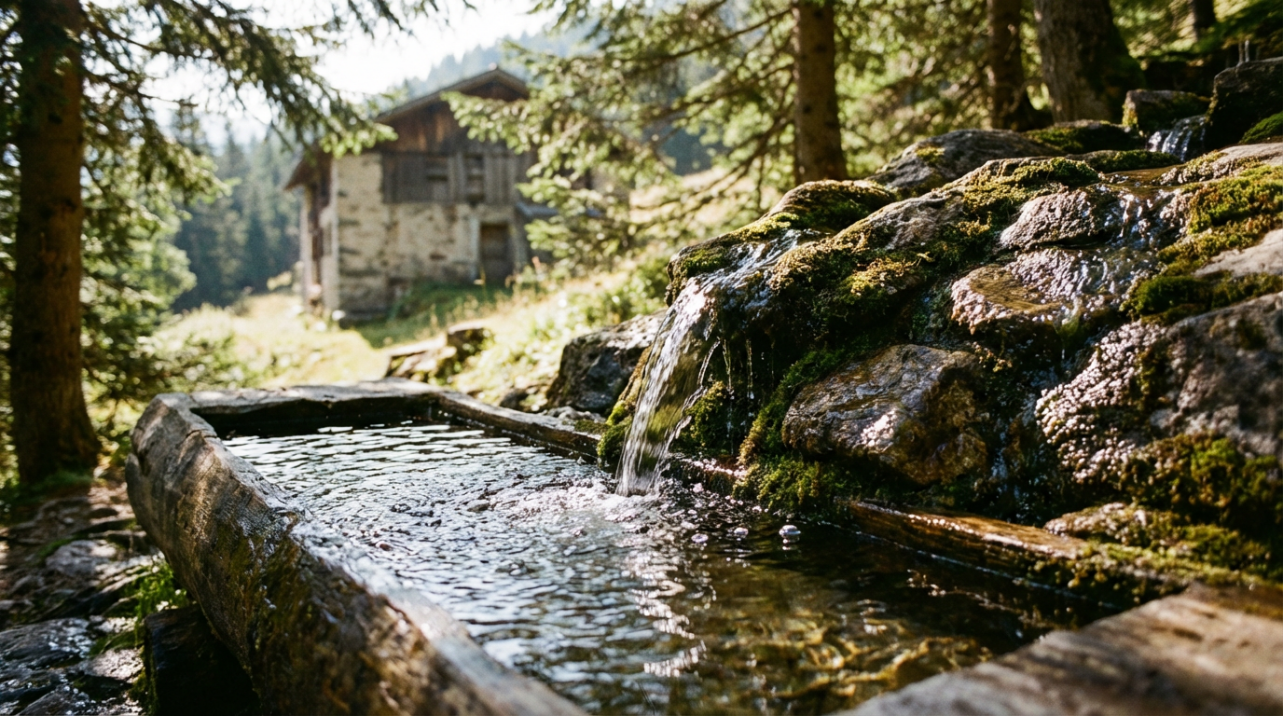
Mountain villas and cabins are often sold with a powerful promise: crystal-clear water bubbling straight from the hillside, so pure you can drink it from the tap. As a smart hydration specialist who works with spring-fed homes and private water systems, I understand exactly why owners want to believe that. The water is cold, tastes great, and feels like an extension of the landscape itself.
But when you move from romance to risk, a hard question appears: is it really wise to drink that spring water without a reverse osmosis (RO) system or other serious treatment?
In this article, I will walk through what the science shows about mountain springs, how they can be contaminated even in seemingly untouched areas, what RO actually does, and how a mountain villa owner can make a defensible, health-first decision about their water system.
The short version is this: relying on untreated or lightly treated spring water for everyday drinking in a mountain villa is not a good idea. Whether you absolutely need an RO system depends on your test results and risk tolerance, but the bar for skipping RO should be very high, especially if you host guests, children, or anyone with fragile health.
Why Mountain Spring Water Is So Appealing
In many mountain regions, especially the Appalachians, spring water is woven into local culture. A shared description from an Appalachian community group paints springs as remote, cool, mineral-rich sources that families have used for generations. People maintain little spring houses, pipe outlets to the road, and treat a stop at “their” spring almost like a ritual.
Commercial spring water brands lean into the same story. Several highlight that their water:
Flows from underground aquifers through layers of rock and soil over years or even thousands of years, undergoing natural filtration and picking up minerals such as calcium, magnesium, and potassium.
Is collected in remote, protected mountain areas with forest cover and little visible industry, like the Ouachita Mountains, the Nantahala National Forest, or high ridges in the Smokies.
Has a “crisp, clean, refreshing” taste that many people prefer over flat-tasting distilled or heavily purified water.
Some brands even detail their mineral profile. One well-known American spring water lists roughly 67 milligrams per liter of calcium, 7.1 milligrams per liter of magnesium, and 1.3 milligrams per liter of potassium, with a slightly alkaline pH around 7.3. Another highlights rainfall of about 80 inches per year feeding a private mountain spring surrounded by trees and granite, which is a great recipe for a generous, naturally filtered source.
From a hydration perspective, naturally mineralized water can support the electrolyte balance your body needs for digestion, circulation, temperature regulation, and muscle and nerve function. Medical commentary cited in recent coverage emphasizes that hydration is not just about water volume, but about the balance between water and electrolytes. That is one reason mineral-rich spring water and mineral baths remain popular in some wellness traditions.
The takeaway is that mountain spring water can absolutely be a beautiful, enjoyable part of a hydration routine. The problem is that beauty and taste tell you almost nothing about safety.
What Spring Water Really Is (And Is Not)
Scientifically, spring water is simply groundwater that finds a pathway to the surface. The U.S. Food and Drug Administration defines bottled spring water as water from an underground formation that naturally flows to the surface and is collected at that spring or via a borehole that taps the same source.
Several important clarifications follow from this definition.
Spring water is groundwater, not magic. It is subject to the same contamination pathways as wells and other groundwater sources.
The recharge area that feeds your spring can extend far beyond your property lines. MyTapScore notes that springs on private land may still be influenced by land uses up slope or miles away: agriculture, septic systems, landfills, industrial sites, or even legacy contamination from decades past.
Spring water is not automatically pure. Sampling campaigns of natural springs in states like Pennsylvania and Minnesota found that the majority of springs tested were contaminated with coliform bacteria and often Escherichia coli. Those findings are consistent with the idea that untreated spring water can create a significant risk of acute gastrointestinal illness.
There is also a crucial difference between raw, do-it-yourself spring water and commercial spring water. Cleveland Clinic draws a sharp line here. Bottled spring water sold in stores is regulated by the Food and Drug Administration and must be tested and treated to meet safety standards. By contrast, the “raw water” trend, where people fill jugs directly from unregulated springs, lakes, or streams, bypasses this entire safety framework. That is where the serious risk lies.
So when a mountain villa lists “pure spring water” as a feature, what matters is not the label but the protections: who is testing it, what they are testing for, and what treatment happens between the spring and your kitchen faucet.
The Contaminant Picture for Mountain Springs
To decide whether an RO system is warranted, you need to understand what you are shielding yourself from. Research on private springs and mountain streams shows that contamination can be both more common and more complex than many property owners assume.
One helpful way to think about contaminants comes from home water quality guidance summarized by Brio Water, which groups them into four broad categories: biological, chemical, physical, and radiological.
Biological contaminants include bacteria such as E. coli and coliforms, parasites like Giardia and Cryptosporidium, and viruses. These are often the most immediately dangerous, because they can trigger gastrointestinal infections within days. MyTapScore and regional health agencies specifically identify E. coli and Giardia as important concerns in springs and surface waters. Information from a state environmental agency highlighted in a Catskills water safety discussion notes that swallowing as few as ten Giardia organisms can be enough to cause infection, and that many animals, including beavers, muskrats, cattle, dogs, and rodents, can shed Giardia into surface waters.
Chemical contaminants cover a wide range of substances, from naturally occurring metals like arsenic, uranium, manganese, and cadmium to nitrates from fertilizer and animal waste, pesticides and herbicides, petroleum compounds, pharmaceuticals, and so-called emerging contaminants such as PFAS. MyTapScore’s spring water guidance lists all of these as documented or plausible contaminants in real-world springs.
Physical contaminants mainly involve sediment and suspended particles. A large study of Appalachian mountain streams conducted over about forty years found that high-elevation streams that people often assume are pristine can be heavily impacted by sediment. Undisturbed forest streams in the southern Appalachians typically show total suspended solids around 8 to 10 milligrams per liter, but streams in areas with mountain and valley development had sediment levels four to six times higher. In some Macon County streams, sediment loads were about four times those of nearby forested streams.
Radiological contaminants can show up in some groundwater systems through naturally occurring radionuclides in rock and soil, although the specific levels vary widely and must be measured.
The sources of these contaminants in mountain areas are often surprisingly ordinary. The Appalachian stream study highlighted unpaved rural roads, roadside ditches, hillside home construction, and poorly managed agriculture as key drivers of sediment and nutrient pollution. Riparian vegetation removal led to warmer streams, while animal enclosures and illicit discharge pipes delivered waste directly into channels. An international geophysical monograph on springs summarized by the American Geophysical Union adds intensive agriculture, mining, oil and gas operations, hydrocarbons, pesticides, heavy metals, pharmaceuticals, and over-pumping as major threats to springs worldwide.
For a mountain villa, that means your “clean” spring may sit downstream, hydrologically speaking, from driveways and gravel roads, pasture land, septic systems, fertilizer use, or historical land uses that left lingering pollution in the aquifer. None of this is visible when you open the tap. Clear, cold, and great-tasting water can still carry bacteria, nitrates, or metals you cannot see or smell.

Misconception: High Elevation Means Safe Water
A common argument from mountain property owners goes something like this: our villa sits high on the ridge, far above farms and towns, so the water is obviously clean.
The research does not support that assumption.
The Appalachian stream work mentioned earlier focused specifically on high-elevation and headwater systems. The authors found that development patterns typical of mountain villas and second homes—ridge-top houses, steep access roads, cut slopes, and small unpaved road networks—were enough to significantly degrade nearby streams. Roadside ditches and gravel roads were identified as particularly important sediment sources, with production increasing as slopes steepened and traffic grew. Even relatively small local road networks could strongly influence water quality.
Similarly, MyTapScore’s review of springs emphasizes that contamination risk is governed less by romantic ideas of remoteness and more by the actual land uses in the recharge area, the geology, and how long the water spends exposed at the surface. Springs that flow across the ground for any distance before collection are especially vulnerable to animal waste and surface runoff.
A Catskills discussion about pipe-fed springs captures the nuance well. Water emerging from a pipe directly out of a hillside may be somewhat safer than open stream water, but the contributors stress that it should still be considered at risk for Giardia and other pathogens. They recommend always filtering such water before drinking.
Cleveland Clinic takes an even broader view. It notes that globally, about two million people die each year from waterborne illnesses and that safe water is one of the core public health achievements of the last century. Untreated spring and raw water bypass the multi-step treatment processes that make municipal supplies safe and are not considered safe options for routine drinking.
High altitude and clean scenery are not substitutes for testing and treatment.

What Reverse Osmosis Actually Does
Reverse osmosis is one of the most powerful household water treatment technologies available. Several sources in the research notes describe its purpose and strengths in consistent ways.
RO systems push water through a semi-permeable membrane under pressure. That membrane acts like a very fine filter, rejecting most dissolved contaminants. Brio Water’s overview explains that reverse osmosis can remove virtually all dissolved contaminants, including many biological threats, at the cost of also removing beneficial minerals. MyTapScore’s treatment guide notes that RO is especially appropriate for high total dissolved solids, nitrates, and many heavy metals and other dissolved chemicals, and that it plays a central role in reducing long-term toxic contaminants.
A consumer-focused comparison from Frizzlife notes that purified water, often produced by reverse osmosis or distillation, contains very low levels of dissolved solids and minerals. In that guide, spring water is framed as naturally filtered groundwater with a preserved mineral profile, while purified water trades those minerals for maximum consistency and purity.
From a health perspective, the same Frizzlife discussion points to current scientific understanding that most essential minerals in a typical diet come from food rather than water.

Both spring and purified water hydrate equally well, and there is no strong evidence that low-mineral water leaches minerals from the body in otherwise healthy people. That does not mean minerals in water are useless; they can contribute modestly and affect taste. It does mean that giving up some minerals via RO is usually a taste and preference issue more than a nutrient crisis.
The main health-role of RO in a mountain villa is therefore not to create “designer water,” but to serve as a safety net for contaminants you cannot fully control at the spring. It is particularly valuable where:
Biological contamination is a concern.
Nitrate levels from fertilizers, animal waste, or septic systems may be elevated.
Heavy metals or other dissolved contaminants show up in lab reports.
Total dissolved solids are high enough to affect taste or long-term health.
When combined with appropriate pre-filters for sediment and carbon-adsorption and, where necessary, disinfection methods such as ultraviolet or chlorination, an RO-based system can produce water that is both very low in contaminants and pleasant to drink.
Pros and Trade-Offs of RO for Spring-Fed Villas
For a spring-fed mountain villa, the benefits of RO are straightforward.
It dramatically reduces a broad spectrum of contaminants. Laboratory treatment summaries indicate that RO can help with many heavy metals, nitrates, and other dissolved chemicals that simpler filters cannot reliably remove. Brio Water recommends reverse osmosis specifically when biological contamination risk is high.
It adds a layer of safety for guests and vulnerable individuals. Frizzlife notes that purified water is often preferred for infants, people with compromised immune systems, and preparing baby formula. That logic carries directly to a vacation rental or multi-generational mountain home, where you do not always know who will drink the water.
It provides consistent quality even when the source varies. Environmental Health Project and EPA guidance both highlight that water testing is just a snapshot and that contamination can spike after events like storms, nearby construction, or industrial activity. An RO system mitigates that variability, as long as it is properly maintained.
The trade-offs are mostly about taste, minerals, and complexity.
RO removes the very minerals that give spring water its characteristic flavor and some of its electrolyte content. If you love the subtle sweetness or mineral “edge” of your spring, RO water will taste flatter. Several spring water brands emphasize that their appeal lies in preserved minerals, while purified water is almost completely neutral.
RO systems require ongoing monitoring and maintenance. Brio Water stresses that any filter, including RO, needs regular cartridge and membrane replacement to stay effective, and recommends testing household water at least every three months even after filtration is installed. EPA and Environmental Health Project both underline the need for follow-up testing after installing treatment to confirm that it is working.
Whether these trade-offs feel acceptable depends on your priorities. If the primary goal is protecting health in a setting where you cannot control everything happening in the watershed, the safety benefits of RO often outweigh the loss of spring character, especially for the main drinking and cooking line in the kitchen.
Is Untreated Spring Water Ever a Good Idea?
Given the evidence, drinking completely untreated spring water on a daily basis at a mountain villa is hard to justify.
Several lines of evidence converge on this point.
MyTapScore’s review found that a majority of sampled natural springs in two different U.S. states were contaminated with coliform bacteria or E. coli.
Cleveland Clinic warns that untreated spring and raw water skip all the protective steps used in municipal treatment and are not considered safe choices for routine drinking.
CDC-linked guidance summarized by Wisler Plumbing and EPA’s home testing overview recommend regular testing of private water sources for coliform bacteria, nitrates, total dissolved solids, and pH, along with additional contaminants when pollution sources are nearby.
Catskills water safety guidance, based on state environmental information, treats even cold, mountain spring-fed waters as likely to contain parasites like Giardia and recommends filtration for pipe springs and surface waters alike.
You can certainly drink a cup of untreated spring water on a hike now and then, and many locals do. But designing a permanent household or rental villa system around untested, untreated spring water is not a health-forward choice.
The minimum prudent standard is to treat a private spring the same way experts treat a private well: test before using it as your primary drinking source, and then test regularly over time. Many guidance documents point to annual lab testing for coliform bacteria and nitrates as a baseline, with more frequent testing and broader contaminant panels when there is known or suspected pollution nearby. Environmental Health Project encourages at least twice-yearly targeted tests for private wells near industrial development, and Brio Water recommends testing every three months for households with filtration to ensure systems are still performing.
Even if you ultimately decide not to use RO, you should plan on robust treatment—at least including disinfection for microbes and appropriate filtration for sediment and organic chemicals—plus regular laboratory testing. Skipping both RO and effective treatment while relying on faith in “pristine” water is not supportable in light of the evidence.
A Practical Decision Framework for Mountain Villa Owners
To move from theory to practice, think through four stages when deciding whether to install an RO system on a spring-fed mountain villa.
First, understand your spring and its watershed. Work out where the water likely comes from. MyTapScore and groundwater protection experts emphasize that springs are influenced by the entire recharge area, not just the immediate spring outlet. Ask what lies above and around you: unpaved roads and driveways, hillside cuts for other homes, grazing land, septic systems, crop fields, or legacy industrial sites. The forty-year Appalachian stream study makes it clear that seemingly minor land-disturbing activities near mountain homes can greatly increase sediment and nutrient loads in streams, which often share aquifers or flow paths with springs.
Second, test the water thoroughly before making any long-term decisions. Combine a reputable laboratory test with simpler at-home checks. Brio Water and Wisler Plumbing describe at-home tests for basic parameters and for sensory clues such as unusual color, odor, and taste compared with distilled or bottled reference water. However, both they and MyTapScore insist that many health-relevant contaminants cannot be seen, smelled, or tasted, and that lab testing is essential if you drink spring water routinely. EPA and CDC-linked guidance recommend at least testing for total coliform bacteria, nitrates, total dissolved solids, and pH, with additional metals, pesticides, or volatile compounds when local conditions warrant. Environmental Health Project also suggests simple ongoing monitoring of parameters like conductivity and pH as early-warning indicators of change.
Third, match treatment methods to the contaminants you actually have. Treatment tables summarized by MyTapScore provide a useful blueprint. Microbial contamination calls for disinfection, typically by chlorination or ultraviolet systems. High turbidity and sediment call for mechanical filtration. Low or high pH can be adjusted with neutralizing filters or chemical dosing. High total dissolved solids, nitrates, and many metals and complex organics often warrant reverse osmosis. Activated carbon filters are effective for many organic chemicals, including numerous pesticides and herbicides. Filter selection guidance summarized by Brio Water advises choosing reverse osmosis when biological contaminants are a serious concern, and carbon-based filtration when you specifically want to improve taste and reduce certain chemicals while preserving more minerals.
Fourth, commit to ongoing maintenance and retesting. Filtration and RO systems do not set themselves and forget themselves. Brio Water recommends retesting filtered household water at least every three months and following manufacturer schedules for replacing filters and membranes. Environmental Health Project encourages keeping a simple journal of test results, sensory observations, and any health or plumbing changes. EPA guidance suggests retesting after any major system modification or suspected contamination event to verify that water quality remains within health-based limits.
If, after all this, lab results show a very clean spring with no microbiological contamination, low nitrate, and no metals or industrial contaminants, you might reasonably decide to rely on a well-designed non-RO system focused on disinfection and carbon filtration, especially if retaining mineral taste is a priority. But that decision should be based on evidence, not aesthetics, and should be revisited regularly through testing.
Taste, Minerals, and Hydration: What You Give Up With RO
One of the strongest emotional objections to installing RO on a spring supply is the fear of “losing” the unique character of the water. That concern is understandable and deserves a clear, science-informed response.
Spring water often carries a modest load of dissolved minerals that function as electrolytes: calcium and magnesium for bones and muscles, potassium and sodium for nerve transmission and fluid balance, and bicarbonate for acid-base balance. Multiple spring brands highlight these minerals as part of their story, and one independent review of spring water explains that mineral ratios strongly shape flavor. Calcium and magnesium contribute a “harder” feel, while bicarbonate and certain cations can create a softer, smoother taste.
Mineral-rich spring water and mineral baths are also historically associated with wellness traditions. In Hot Springs, Arkansas, Indigenous peoples and later visitors soaked in and drank from mineral springs for centuries. Modern medical sources cited in discussions of that region’s springs mention potential benefits of mineral baths for skin conditions such as psoriasis and eczema, as well as circulation and pain relief. Regular immersion in warm mineral baths has even been linked in scientific journals to vascular improvements comparable to some exercise.
At the same time, modern hydration science, as summarized in the Frizzlife comparison of spring and purified water, points out that most people get the bulk of their essential minerals from food, not water. Both spring and purified water hydrate equally well, and there is no strong evidence that drinking low-mineral purified water causes mineral loss in healthy people with reasonably balanced diets.
From a practical hydration perspective, the main differences are therefore:
Taste and experience. Spring water tends to taste more characterful, sometimes slightly sweet or “alive,” while reverse osmosis water is very neutral. Many people prefer that neutrality because it does not compete with coffee, tea, or cooking flavors.
Marginal electrolyte contribution. Mineral-rich spring water can add a small but steady trickle of electrolytes throughout the day. For most people eating a varied diet, this is a bonus rather than a necessity.
Psychological connection to place. For mountain villa owners, drinking the water that flows from the land can be part of the emotional value of the property.
When you install RO, you sacrifice some of that taste and symbolism in exchange for a significant safety margin. There is no one-size-fits-all answer here, but it is important not to overstate the health downside of losing spring minerals in your drinking water, especially if your overall nutrition is solid.
Some owners resolve this tension by using RO for the main drinking and cooking tap in the kitchen while still enjoying minimally treated spring water in a more controlled context, such as a separate tap or for occasional tasting, always backed by regular testing. Whether that makes sense for you will depend on your water quality results and your appetite for risk.
Comparing Options for a Mountain Villa
The following table summarizes typical trade-offs among three common choices for a spring-fed mountain villa, based on the research and guidance discussed so far.
Approach |
Safety for Routine Drinking |
Mineral and Taste Profile |
Practical Considerations |
Untreated spring water |
Generally not recommended; studies show many natural springs contain coliform bacteria or E. coli, and health institutions warn that untreated raw water can carry dangerous microbes and other contaminants. |
Full natural mineral profile and “from the land” taste preserved. |
Relies on assumptions rather than data; no barrier against spikes in contamination; unsuitable for vulnerable guests. |
Spring water with non-RO filtration and disinfection |
Potentially acceptable if repeated lab tests show no serious dissolved contaminants and disinfection is effective against microbes; still must be monitored regularly. |
Most minerals and much of the characteristic taste preserved, especially when using carbon and mechanical filtration without RO. |
Requires thoughtful system design matching treatment to actual contaminants, plus consistent maintenance and periodic lab testing. |
Spring water with RO-based system (plus pre-filters and, as needed, disinfection) |
Provides the strongest overall protection against biological contaminants, nitrates, many heavy metals, and a wide range of dissolved pollutants when correctly designed and maintained. |
Significantly reduced mineral content and more neutral taste; some may find it “too clean” compared with raw spring water. |
Higher upfront complexity, but offers a robust safety net for renters, children, and immune-compromised individuals, and buffers against changes in source quality. |
Special Considerations for Rental Villas and Guest Houses
If your mountain villa is a short-term rental, guest lodge, or multi-family retreat, your risk calculus changes again.
Guests may include infants, older adults, or people with chronic illnesses or weaker immune systems. They may not be accustomed to local microbes, and they may not read or follow any posted instructions about when and how to drink the water. From a guest’s perspective, a clear tap in a beautiful home implies safety.
Cleveland Clinic’s stance that untreated spring and raw water are not safe options for routine drinking is particularly important in this context. MyTapScore’s finding that most tested springs in certain regions carried coliform bacteria or E. coli adds weight. Combined with studies of stream degradation around mountain homes and the documented presence of parasites like Giardia in cold mountain waters, it becomes difficult to justify anything less than a well-designed, monitored treatment system for guest-facing taps.
In practice, that usually means combining source protection and good plumbing design with substantial treatment, often including reverse osmosis at the primary drinking point, even if non-RO water is available elsewhere on the property.
Final Verdict: Should Mountain Villas Use Spring Water Without RO?
Putting all of this together, here is a clear, health-focused answer.
For everyday drinking at a mountain villa, using untested and untreated spring water is not wise. Even apparently pristine mountain springs are frequently contaminated with bacteria and other pollutants, and global health experience, as emphasized by Cleveland Clinic, shows that untreated raw water poses real risks.
A well-designed non-RO treatment train that includes reliable disinfection and appropriate filtration might be acceptable if comprehensive, repeated laboratory testing shows that your spring is consistently low in microbes, nitrates, metals, and other contaminants. Even then, you should monitor and retest regularly, because water quality can change with seasons, development, and climate.
For many mountain villas—especially rentals, multi-generational homes, or properties near roads, agriculture, or other development—a household-scale reverse osmosis system, used in combination with source protection, mechanical and carbon pre-filters, and disinfection where appropriate, is the most defensible choice for primary drinking and cooking water. It trades some mineral character for a broad, robust safety margin.
As a water wellness advocate, my guiding principle is simple: enjoy the romance of spring water, but let science and testing drive your plumbing. Let your mountain villa be a place where the views are wild, not the microbiology in your glass.

Short FAQ
Q: If I boil my spring water, do I still need RO?
A: Boiling can help kill many microbes, and health experts often include it among safer alternatives to raw water in emergencies. However, boiling does not remove nitrates, heavy metals, or many chemicals, and it is impractical as the sole treatment for all daily use in a home. RO and other filtration methods address contaminants that heat cannot.
Q: My spring has been used for generations without anyone getting sick. Why change now?
A: Long-term use without obvious illness is not a safety test. Many contaminants have subtle or long-term effects, and water quality can change as land use, climate, and infrastructure around your property evolve. Studies of springs and mountain streams show that development, roads, and agriculture can degrade sources over time, even in areas that once felt untouched.
Q: I love the taste of my spring water. Can I keep that and still be safe?
A: In some cases, yes. If thorough laboratory testing shows low risk from dissolved contaminants, and if you install effective disinfection and filtration, you may choose to leave RO off part of your system to preserve more minerals and flavor. A common strategy is to use RO for a dedicated drinking tap while retaining a separate, carefully treated but non-RO supply for other uses, all backed by regular testing and maintenance.
References
- https://news.uga.edu/mountain-spring-water-isnt-as-clean-as-you-think-it-is/
- https://www.epa.gov/sites/default/files/2015-11/documents/2005_09_14_faq_fs_homewatertesting.pdf
- https://www.nrcs.usda.gov/sites/default/files/2022-09/stelprdb1167476-spring-development.pdf
- https://health.clevelandclinic.org/raw-water
- https://www.environmentalhealthproject.org/water-monitoring
- https://eos.org/editors-vox/the-importance-of-springs-and-why-humanity-needs-to-protect-them
- https://callwisler.com/how-to-test-your-water-quality-at-home-without-using-a-kit/
- https://www.naturalbushcraft.co.uk/forum/showthread.php?3133-is-drinking-mountain-spring-water-safe
- https://century.com.np/local-spring-water-sources/
- https://www.greatsprings.com/blog/making-a-difference-natural-spring-water-vs-other-sources

Share:
Maintenance Frequency for RO Systems in Dust Storm Areas
Wastewater Reduction Techniques Using Concentrated Water Circulation Technology