

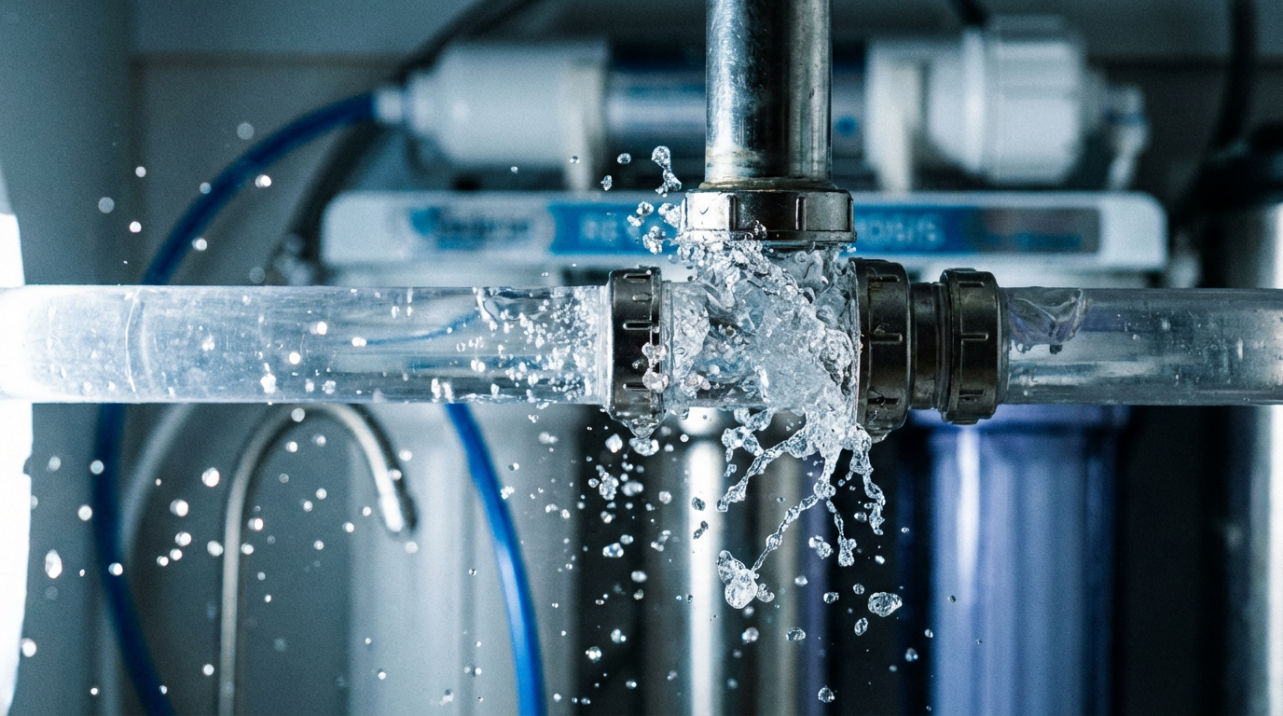
If you have ever turned off a faucet and heard a sharp bang echo through the house, you have already met water hammer. In a home with a reverse osmosis (RO) drinking water system, that same hydraulic shock can do more than startle you; over time it can stress delicate RO tubing, valves, housings, and storage tanks that you rely on for safe hydration.
As a smart hydration specialist, I routinely see beautiful, high‑performance RO systems sitting on the edge of avoidable damage simply because water hammer has been ignored. The good news is that you can treat water hammer just as proactively as you treat contaminants in your water. With the same science‑backed mindset you use for water quality, you can protect the “plumbing heart” of your hydration system and extend its life.
This article walks through what water hammer is, why RO systems are especially vulnerable, and practical strategies to control it based on guidance from plumbing experts, RO manufacturers, and industrial water treatment leaders such as Ironclad Environmental, Axeon Water Technologies, DuPont, Culligan, Fresh Water Systems, and others.
Understanding Water Hammer In An RO-Equipped Home
Water hammer, sometimes called hydraulic shock, is a pressure surge that travels through your plumbing when water flow changes suddenly. Sources like Ironclad Environmental and Anchor Pumps describe the basic picture this way: moving water has momentum, and if a valve closes quickly or a pump stops abruptly, that moving mass has to stop almost instantly. The resulting pressure wave races along the pipe, bangs into bends and fixtures, and often makes pipes physically move and knock against framing.
Plumbing and heating specialists consistently note the most recognizable symptom: a loud bang or series of bangs when a tap closes or when an appliance such as a dishwasher or washing machine shuts off its fast‑acting solenoid valve. Companies like General Plumbing and Splash Plumbing highlight that this noise is not just an annoyance. It signals that pressure spikes may be stressing joints, valves, pumps, and appliances.
Measure Monitor Control and other engineering sources emphasize that water hammer pressures act in both directions in the pipe, not just “downstream.” In short pipe runs like those feeding an under‑sink RO system, the spike can be very sharp and brief, so it may register as a single bang rather than a repeating wave, but the maximum pressure can still be high.

In longer runs, the wave reflects back and forth, and the effects can be more sustained.
To visualize it, imagine slamming your car brakes at highway speed versus easing down gently from city speed. Water hammer is the hydraulic version of slamming the brakes at highway speed in your pipes.
Why RO Systems Are Especially Sensitive
A typical point‑of‑use RO system relies on small‑diameter tubing, narrow flow restrictors, fast‑acting valves, and, in many cases, pumps and storage tanks. Regal Flow, which focuses specifically on RO water hammer, points out several risk factors that are baked into RO design.
First, RO units use small tubing and restricted orifices. This raises water velocity in the lines feeding and leaving the membrane. When a valve in a small, fast‑moving line shuts quickly, the momentum change is intense, and the pressure spike can be more severe than in a larger pipe at the same flow.
Second, RO systems often use rapid shut‑off valves. The automatic shut‑off valve that stops production when the tank is full, and the internal valves in permeate or booster pumps, tend to act very quickly. Regal Flow notes that these fast‑closing valves are a primary trigger for water hammer inside RO units.
Third, RO systems operate at relatively high pressure compared with typical fixtures. Industrial guidance from Axeon and DuPont describes RO as a pressure‑driven process. Even residential units may run membranes at elevated pressure, especially when a booster pump is installed. Forum discussions summarized from Terry Love’s plumbing community mention boosting membrane feed pressure to around 80 psi for better production. When your baseline pressure is higher, any pressure surge starts from a higher “floor,” so the peak can climb closer to the component’s design limit.
Finally, the plumbing that connects an RO system is often quite short and exposed. Under‑sink tubing might run only a few feet between the cold‑water feed, prefilters, membrane, tank, and faucet. As engineering contributors on Eng‑Tips explain, a short pipe does not eliminate water hammer; it compresses the wave into a brief spike. That spike can still be high enough to stress fittings, even if it is over in a fraction of a second.
Put simply, RO systems are compact, high‑pressure, and full of quick‑acting components, which makes them excellent at purifying water but also naturally sensitive to hydraulic shock.
What Water Hammer Can Do To Your RO System
General plumbing and water treatment sources agree on the broad consequences of unchecked water hammer. Ironclad Environmental describes repeated surges leading to structural damage such as burst pipes, cracked tanks, and compromised containment. Anchor Pumps and Measure Monitor Control add that valves, pumps, and other components suffer accelerated wear, and property damage from leaks and corrosion can become costly.
Translating that into RO‑specific terms, water hammer around an RO system can lead to several issues.
The first is stress on fittings and tubing. The small push‑fit or compression fittings that connect RO tubing are designed for steady pressure, not repeated spikes several times higher than normal. Surges can gradually loosen fittings, leading to slow drips in cabinet spaces that you may not notice until wood and flooring have already been damaged.
The second is fatigue of plastic housings and manifolds. Prefilter and membrane housings, especially in compact quick‑change designs, are molded to handle normal pressure with a modest safety margin. Repeated high‑frequency shocks act like constant tapping on a flexing material. Over years, that can contribute to hairline cracks or sudden failures under your sink.
The third is wear on valves, pumps, and RO storage tanks. Ironclad Environmental specifically mentions increased wear on valves and pressure tanks under fluctuating pressure. In an RO context, that includes the automatic shut‑off valve, permeate and booster pumps, and the pressurized RO tank itself. Solenoid valves that snap open and closed under shock are especially vulnerable, and a water‑hammering line can make pump check valves chatter and fail early.
The fourth is system downtime and quality risk. Industrial articles from Axeon and DuPont emphasize that maintaining stable pressure and avoiding surprises is critical to uptime and consistent product water quality. A water hammer event that cracks a gauge, bursts a small line, or damages a valve can take an RO system offline at exactly the moment you need it. In a home, that might mean no drinking water from your dedicated faucet; in a business, it might mean lost production.
A simple example from the field makes this concrete.

In one home I visited, an under‑sink RO system shared a feed line with a high‑efficiency dishwasher. Whenever the dishwasher shut its solenoid valve, the bang rattled the RO tubing visibly. Within a year, the elbow feeding the RO prefilter had developed a slow leak that soaked the cabinet bottom. The root cause was not the RO system itself; it was uncontrolled water hammer at the shared connection.
Recognizing Water Hammer Around Your RO System
Before you can fix water hammer, you need to recognize it. The general signs described by plumbing outfits such as Splash Plumbing, Petetheplumber, and General Plumbing apply directly around an RO system.
Listen for sharp bangs or knocking noises when water flow stops. With an RO system, this may happen in several ways. You might hear a bang the moment you close the RO faucet, especially if the system has been refilling the tank. You may also notice banging when the ice maker or refrigerator dispenser shuts off if they are fed from the RO line.
Feel for vibration in tubing and nearby cabinets. Regal Flow notes that pipe vibration is a common symptom of water hammer in RO setups. If you can feel or see the tubing and filters shake when the tank stops filling, that is a red flag.
Pay attention to other fixtures on the same line. If a toilet flush, washing machine, or dishwasher consistently triggers banging that seems to originate under the sink where your RO lives, your hydration system is being subjected to each of those events as well.
Finally, watch for secondary signs such as drips around fittings, cabinet staining, or occasional air spurts at the RO faucet. While these do not prove water hammer by themselves, combined with noise and vibration they strengthen the case that your system needs protection.
One practical test I often recommend is simple and low risk. During a quiet time, open the RO faucet fully for a minute, then close it in one smooth but not abrupt motion while you are crouched at the cabinet with the doors open. If you hear a single dull thud but no sharp bang and the tubing barely moves, your system is likely behaving well. If you hear a crack‑like bang and see tubing and housings jump, it is time for the strategies below.
Strategy 1: Control Pressure Before It Reaches The RO
The first lever to pull is pressure itself. Multiple plumbing guides, including those from Anchor Pumps and Splash Plumbing, highlight high household water pressure as a primary driver of severe water hammer.
Many homes function best in a static pressure range around 40 to 60 psi. Anchor Pumps notes that when pressure approaches levels near 100 psi, the risk and intensity of hammer rise sharply. The same pressure that makes your shower feel “powerful” is hitting every valve, fitting, and RO component as a heavier hammer.
For homeowners, the starting point is measurement. A simple screw‑on pressure gauge attached to an exterior hose bib or laundry tap can tell you your static pressure when no water is running indoors. If the reading consistently sits far above the typical recommended range, a pressure‑reducing valve (PRV) on the main line, or adjustment of an existing PRV, is one of the most effective controls. General Plumbing and Splash Plumbing both emphasize PRVs as a core solution when hammer coincides with high pressure.
From a water wellness perspective, pressure control has two benefits. It protects your hydration equipment, and it also reduces stress on every water‑dependent appliance, from washers and dishwashers to humidifiers and ice makers, all of which contribute to your overall hydration environment.
Balancing Booster Pumps With Protection
RO systems, especially those treating lower‑pressure municipal supplies or operating in basements, sometimes rely on booster pumps to raise feed pressure to the membrane. Axeon highlights that RO performance metrics such as recovery rate and permeate flow are driven by feed pressure. Terry Love’s plumbing forum notes a common practice of boosting membrane pressure to around 80 psi to improve production and reduce waste water.
There is nothing inherently wrong with using a booster pump; in fact, when properly configured, it can improve water quality and system efficiency. However, adding a booster without thinking about water hammer is a bit like tuning a car’s engine for more power without checking the brakes.
If your RO has a booster pump, verify that it includes appropriate controls such as pressure switches and, ideally, a soft‑start capability. In higher‑end or commercial systems, variable frequency drives (VFDs) are used to ramp pump speed up and down gradually, which Central States Industrial and DuPont point to as a key method of reducing hydraulic shocks.
In practice, that means pairing higher membrane pressure with:
A properly set PRV on the house line so static pressure is not excessive.
Water hammer arrestors and secure piping on the feed line so surges are absorbed.
Control logic that prevents the pump from starting and stopping abruptly against closed valves.
When this balance is achieved, you enjoy the benefits of strong RO performance without subjecting your hydration system to constant pressure spikes.

Strategy 2: Absorb Pressure Surges With Arrestors And Surge Devices
Once you have tamed static pressure, the next line of defense is absorbing the shock wave itself so it never fully reaches delicate RO components. Plumbing and engineering sources converge on a few main devices.
Regal Flow, General Plumbing, and Splash Plumbing all highlight water hammer arrestors as one of the most effective point‑of‑use solutions. Measure Monitor Control and Anchor Pumps also discuss air chambers and more sophisticated surge control hardware for larger systems.
Here is a concise comparison:
Protection option |
How it works for your RO system |
Main advantages |
Key considerations |
A short vertical stub of pipe, capped and filled with air, is installed near a valve. When a surge arrives, the air compresses and cushions the spike before it propagates further. |
Very inexpensive, no moving parts, can be fabricated during rough‑in. |
Tends to fill with water over time and lose effectiveness; often requires draining the system periodically. Effectiveness is less predictable for frequent hammer events. |
|
Mechanical water hammer arrestor |
A sealed unit with an internal air or gas chamber and piston or bladder that compresses when a surge hits. Often installed near quick‑shutoff valves or appliances. |
Compact, reliable, and largely maintenance‑free. Repeatedly absorbs spikes without needing to be drained. Widely recommended by plumbing professionals for dishwashers, washers, and similar loads. |
Higher initial cost than a simple air chamber. Must be correctly sized and placed close to the source of the hammer. |
A larger vessel with air and water separated by a bladder. As roagua’s engineering summary notes, it can absorb significant transient energy in high‑pressure or industrial systems. |
Best suited to larger RO systems or process lines where water hammer is system‑wide. Can also smooth normal pressure fluctuations from pump operation. |
Requires careful sizing, correct pre‑charge pressure, and regular checks. More space‑intensive and typically a professional‑level installation. |
Where To Place Arrestors Around An RO System
The key to effective arrestors is location. They must sit as close as practical to the valves that are causing the sudden stop in flow. Consumer‑facing plumbers like Petetheplumber and General Plumbing emphasize installing arrestors near fast‑acting appliance valves; Regal Flow adds RO valves to that list.
For a typical under‑sink hydration setup, priority placements usually include the cold‑water feed serving both the RO system and nearby appliances and the branch where your RO connects to the supply. In many kitchens, a mini arrestor on the angle stop that feeds both the RO and a dishwasher can dramatically reduce the shock reaching the RO tubing.
In more complex setups, such as a commercial café with a multi‑membrane RO feeding espresso equipment and ice makers, a combination of a mechanical arrestor near solenoid valves and a small hydropneumatic surge tank on the main RO outlet can be appropriate. Measure Monitor Control notes that surge devices are particularly valuable when long pipe runs or storage tanks are involved, and when water hammer could otherwise cause leaks and downtime.
A concrete example from my field work: in a small office, we added two compact arrestors. One was installed on the cold‑water line feeding a noisy dishwasher, the other on the RO feed under the break‑room sink. The banging disappeared instantly, and follow‑up inspections showed the RO tubing and fittings remained stable even during heavy lunchtime use.
Strategy 3: Slow The Flow Changes That Trigger Hammer
Water hammer begins with sudden changes in flow. Slowing those changes, both at valves and at pumps, is one of the most powerful preventive strategies.
Smarter Valve Choices And Operating Habits
Regal Flow specifically recommends replacing fast‑closing valves in RO units with slower‑closing alternatives when practical. In broader plumbing systems, Anchor Pumps and Measure Monitor Control point to fast‑acting solenoid valves as common culprits, especially in appliances.
In a residential RO context, you may have limited control over internal, factory‑installed valves, but you can still make smart choices. When replacing a shut‑off at the wall, choose quality valves that close smoothly rather than cheap, stiff ones that tend to snap shut. If your RO system uses add‑on solenoids for things like refrigerator feeds, select models designed for quieter operation and controlled closing.
Equally important are habits. Training operators to open and close valves gradually is emphasized in industrial guidance from Central States Industrial, and the same principle applies at home. When you service your RO system, avoid wrenching supply valves fully open or closed in a single motion. Taking even a second or two longer to move the handle can significantly soften the resulting surge.
Intelligent Pump Control In Larger Systems
In industrial and commercial RO installations, pump behavior becomes a primary driver of water hammer. Central States Industrial and roagua’s engineering summary underline the importance of controlled ramp‑up and ramp‑down. Slamming a high‑pressure pump on or off against closed or rapidly closing valves is a recipe for repeated transients.
Best practice in these larger hydration systems includes variable frequency drives to ramp pump speed over several seconds or longer, coordinated control logic so that valves reach stable positions before major changes in flow are commanded, and clear startup and shutdown procedures that operators follow consistently.
Engineering discussions on Eng‑Tips remind designers that water hammer waves reflect in both directions and that pipe length changes the timing but not the basic pressure spike. That means non‑slam check valves and properly timed control sequences are critical near RO skids, regardless of whether the pipe runs are only a few feet or extend hundreds of feet to storage tanks.
The payoff is real. DuPont notes that proactive maintenance and smarter operating practices in industrial RO reduce downtime and preserve membrane life. Keeping hydraulic shocks under control is an essential part of that proactive approach.
Strategy 4: Secure Piping And Manage Air In The System
Even modest pressure spikes can become noisy and damaging when pipes are loose or air pockets are present.
Restraining RO Tubing And House Pipes
Ironclad Environmental, Anchor Pumps, Measure Monitor Control, Petetheplumber, and Splash Plumbing all stress that loose or poorly supported pipes amplify water hammer. When the surge hits, a pipe that can move will slam into studs, joists, drywall, or neighboring pipes and fittings. Even if the surge itself is not extreme, the mechanical impact can be.
For your RO system, that means inspecting all accessible lines. Under the sink, gently move each tube and note whether it swings freely or taps against cabinet walls, shelves, or sharp edges. In basements and utility rooms, check that rigid pipes feeding the kitchen are strapped to solid framing, not left hanging from old nails or resting on brittle plastic clips.
Petetheplumber suggests supporting visible pipes roughly every foot along a straight run, at each change in direction, and wherever a pipe passes through a hole. While you may not retrofit every inch of your home’s plumbing, applying that discipline to the runs closest to your RO and its feed line can cut movement sharply.
Several sources, including Anchor Pumps and Splash Plumbing, also recommend foam pipe insulation as a dual‑purpose tool. It cushions pipes against contact and dampens vibration while also reducing freezing risk in cooler spaces. For under‑sink RO tubing, even simple foam sleeves or edge protectors where lines pass through cabinet holes can prevent long‑term chafing and reduce noise.
Filling And Venting To Avoid Air Pockets
Measure Monitor Control calls entrapped air a major cause of water hammer. When a pipe is filled too quickly, air pockets can compress and expand as water passes, creating oscillations and pressure spikes beyond what steady flow would cause. Ball or float valves in tanks can accentuate this effect by rocking in response to ripples.
In many small residential RO systems, the main trapped‑air risk appears after installation or maintenance. If you replace filters, sanitize the system, or drain the storage tank, pockets of air can remain in housings and lines. When the system refills, these pockets may migrate and compress, leading to thuds or rattles until they are purged.
The practical approach is straightforward. After any major service, follow manufacturer guidance to refill the system slowly, keep the RO faucet open initially to allow air to escape, and cycle the tank through a few fill‑and‑drain rounds, as Fresh Water Systems recommends for keeping tanks fresh and properly pressurized. This not only improves water taste and turnover, as Culligan and Fresh Water Systems emphasize, but also helps reestablish stable hydraulic behavior.
In larger RO installations, roagua’s summary and industrial best practice call for dedicated air‑relief valves at high points in the system and careful venting procedures. This level of control is essential where large volumes and longer pipes make air pockets more dangerous.
Strategy 5: Maintenance And Monitoring As Water-Hammer Insurance
You cannot separate hydraulic health from overall RO maintenance. The same practices that protect your water quality also reduce the risk of chaotic pressure behavior.
Keeping Filters, Membranes, And Tanks Healthy
Residential maintenance guidance from Moore Mechanical, Culligan, and Fresh Water Systems paints a consistent picture. Pre‑filters and post‑filters should typically be replaced about every 6 to 12 months, depending on water quality and usage. Pre‑filters protect the membrane from sediment and chlorine; post‑filters polish taste and odor. The RO membrane itself generally lasts several years. Moore Mechanical suggests 2 to 3 years for many systems, while Fresh Water Systems notes a range of 2 to 4 years on hard water and 5 to 7 years on soft water when pre‑filters are maintained. Culligan highlights that a properly maintained RO system can serve a home for up to about 15 years.
Industrial data from DuPont adds that well‑treated membranes in larger systems can last roughly 6 years when pretreatment and operating conditions are well controlled.
Where does water hammer fit in? Clogged filters and fouled membranes increase differential pressure across components. If a valve then opens or closes into this abnormal pressure landscape, the resulting transients can be more severe. A drain line partly plugged with debris from neglected filters can make RO concentrate flow irregular, which in turn leads to unpredictable pressure drops and surges.
Storage tanks deserve special attention. Moore Mechanical recommends inspecting and cleaning RO tanks every 1 to 2 years, and Fresh Water Systems suggests fully draining tanks regularly, even as often as every couple of weeks when usage is low, to maintain freshness and proper operation. A tank whose air charge is out of range or whose internal surfaces are fouled does not just affect water taste; it also affects how pressure ramps up and down during use.
Regular sanitization, as recommended by Culligan and Fresh Water Systems, helps control bacterial growth but also ensures valves and flow paths move freely and do not stick. A sticky shut‑off valve that finally snaps closed tends to generate more water hammer than a clean, smoothly operating one.
Watching For Early Warning Signs
Both Axeon and DuPont advise routine monitoring for leaks, abnormal noise, and vibration in RO systems. Moore Mechanical echoes the value of annual professional inspections, where a technician checks for wear, tests water quality, and tunes components.
In practice, that means doing a quick sensory check whenever you are under the sink for any reason. Look for moisture, staining, or mineral deposits around fittings. Listen to the sound of the system as the tank fills after a large draw; note any new clicks, rattles, or bangs. Feel housings and tubing for excessive vibration.
At a slightly more advanced level, using a simple TDS meter to track membrane performance, as Fresh Water Systems suggests, and occasionally checking pressure gauges on larger systems helps you spot changes early. A rising differential pressure across filters or an unexplained increase in noise may signal that a component is moving toward failure, creating conditions where water hammer could become worse.
I often tell homeowners: the same curiosity that leads you to read a water quality report is valuable when listening to your plumbing. Both are forms of health monitoring for your hydration environment.
Worked Example: Quieting A “Clanging” Kitchen RO System
To tie these strategies together, consider a real‑world style scenario drawn from common service calls.
A family notices that every time the dishwasher finishes a fill cycle, a loud bang echoes from under the sink, and their under‑sink RO system’s tubing visibly jumps. There is no obvious leak yet, but the noise is getting worse.
A stepwise approach, informed by the guidance above, might look like this. First, measure static water pressure at a hose bib and find that it sits around 90 psi when no fixtures are running, much higher than the typical 40 to 60 psi range discussed by Anchor Pumps and Splash Plumbing. A licensed plumber installs a PRV on the main and adjusts it, bringing static pressure down to about 55 psi.
Second, the plumber adds a compact mechanical water hammer arrestor to the cold‑water line feeding both the dishwasher and the RO, placing it close to the dishwasher’s fast solenoid valve in line with recommendations from General Plumbing, Splash Plumbing, and Regal Flow.
Third, the accessible copper and plastic lines under the sink are inspected and strapped more securely, roughly every foot along straight runs and at changes in direction, consistent with Petetheplumber’s suggestions, and foam insulation is added where pipes contact cabinet walls.
Fourth, during the same visit, an annual RO maintenance is performed following patterns from Moore Mechanical and Fresh Water Systems: pre‑filters and post‑filters are replaced, the system is sanitized, the tank is drained and refilled, and the tank’s pre‑charge pressure is checked.
After these changes, the family still hears a gentle thud when the dishwasher shuts off, but the sharp bang is gone, the RO tubing no longer jumps, and cabinet inspections over the following months show no signs of leaks or new movement.

Water quality remains excellent, and the homeowner has greater confidence that the hydration system is not being quietly battered every evening.
When To Bring In A Professional
Many homeowners can handle basic steps such as listening for hammer, adding pipe insulation, or replacing RO filters. However, several situations call for professional help.
If banging is loud enough to be heard throughout the home, persists after simple measures, or coincides with visible pipe movement, local plumbing firms such as General Plumbing, Splash Plumbing, and Petetheplumber strongly encourage professional assessment. If you measure very high static pressure or notice that hammer occurs when major appliances start or stop, installing or adjusting PRVs and arrestors is best done by someone who understands local codes and system design.
Likewise, Culligan and Fresh Water Systems emphasize the value of professional maintenance for RO systems, particularly for tasks such as full‑system sanitization, tank pre‑charge checks, and diagnostics when water quality changes. For industrial or high‑pressure RO, DuPont and Axeon both point to the importance of experienced teams, accurate instrumentation, and sometimes specialized hydraulic analysis when modifying systems.
From a water wellness perspective, involving the right professionals at the right time is not about relinquishing control; it is about investing in the long‑term safety, reliability, and performance of the system that supplies the water you drink every day.
FAQ: Water Hammer And RO Systems
Is water hammer mostly a noise issue, or can it really hurt my RO system?
Plumbing and engineering sources are clear that water hammer is more than a noise issue. Ironclad Environmental, Anchor Pumps, Measure Monitor Control, and Splash Plumbing all link repeated hydraulic shocks to leaks, damaged pipes, worn valves, and harmed appliances. In an RO system, that same stress is applied to filter housings, tubing, shut‑off valves, and the RO tank. You might not see immediate failure, but each unchecked hammer event chips away at the mechanical health of your hydration equipment.
Does the clicking noise from a permeate pump mean I have water hammer?
Not necessarily. Terry Love’s permeate pump discussions highlight that a rhythmic clicking while the RO is producing water is normal pump operation, not water hammer. The concern arises when you hear sharp, isolated bangs when flow stops or when other fixtures shut off, especially if you can see tubing or housings jump or feel cabinet vibration. The steady tick of a permeate pump is usually part of how it transfers energy efficiently; sharp, startling impacts usually indicate water hammer elsewhere in the plumbing.
Where is the best place to install a water hammer arrestor to protect my RO system?
Plumbers and product experts such as General Plumbing, Splash Plumbing, Petetheplumber, and Regal Flow all stress that arrestors should be installed close to the valves that cause water hammer. In a kitchen, that usually means near fast‑acting solenoid valves on appliances and near the cold‑water feed that supplies the RO system. For a typical under‑sink setup, a compact arrestor on the cold‑water angle stop feeding both the dishwasher and RO, or on the branch serving only the RO, is often an effective and unobtrusive choice.
Protecting your RO system from water hammer is really about respecting both sides of water wellness: chemistry and hydraulics. You already care about what is in your water; by managing how that water moves, you extend the life of your filters and membranes, reduce the risk of leaks and surprises, and keep your home hydration quiet and dependable.
If you start by listening to your pipes, checking your pressure, and addressing obvious hammer sources, you will already be ahead of most homeowners. Layer in thoughtful use of arrestors, secure piping, smarter valve and pump control, and consistent maintenance, and your RO system can deliver clean, great‑tasting water for many years without being battered by unseen shockwaves.
References
- https://mooremech.net/reverse-osmosis-system-maintenance-tips/
- https://www.premierh2o.com/reverse-osmosis-water-pressure-regulator?srsltid=AfmBOoricrSsw80ZMZF0X6CffM8nK9kt_QHwia2W0MIX9m7dMfNH0H2W
- https://www.aquasana.com/info/3-tips-for-maintaining-a-home-reverse-osmosis-system-pd.html?srsltid=AfmBOopLMRJcHvoJtsbU4nfVs8iTt9BZMdT4zMU4jPc8wkJwVH46xnPm
- https://www.culligan.com/blog/how-to-keep-your-water-filtration-system-working-properly
- https://www.dupont.com/knowledge/importance-of-industrial-ro-system-maintenance.html
- https://espwaterproducts.com/pages/reverse-osmosis-maintenance?srsltid=AfmBOor5Bw1PSdvB4z2ID4WznFCxEkgXTB8ZdT8hQYNqVOtrh-iT7zFp
- https://www.justanswer.com/plumbing/qjtww-own-installed-gro-475bp-reverse-osmosis-water.html
- https://www.measuremonitorcontrol.com/resources/water-hammer-causes-and-solutions
- https://www.petetheplumber.com/quick-fix-for-banging-or-thwacking-pipes/
- https://www.reverseosmosis.com/products/shokblock-pressure-regulator?srsltid=AfmBOop6W0WxexsNIA14Ey431qwTJz3mDAqfh2ibJnPEwe1AipJwlixl

Share:
Effective Pre-Treatment Solutions for Oil-Contaminated Water RO Systems
Effective Solutions for Low Water Pressure Areas Under 0.2 MPa