

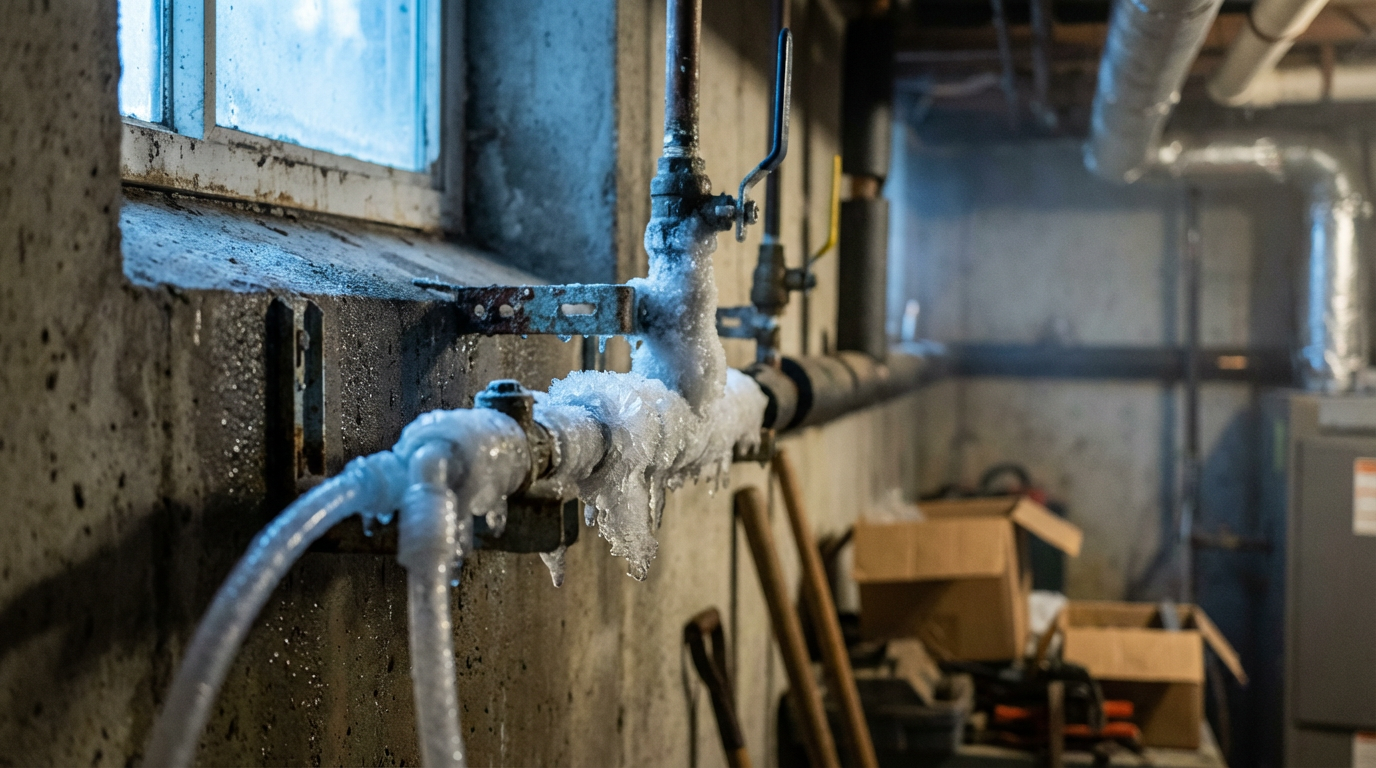
As someone who spends a lot of time in cold pump rooms, well houses, mountain cabins, and even maple sugar shacks, I can tell you this with confidence: reverse osmosis (RO) wastewater pipes are one of the most underestimated freeze risks in a home or small business water system. People will lovingly wrap their feed lines and storage tanks in foam, yet leave a skinny RO drain tube running through a freezing crawl space or out to a distant floor drain. The result is a system that looks winterized on the surface but can still be knocked out by one frozen waste line.
In extremely cold regions where temperatures routinely drop below 32°F and can plunge toward minus 40°F, understanding how and why RO wastewater pipes freeze is essential if you rely on filtered water for daily hydration. This article walks through what is actually happening inside those small tubes, why they are particularly vulnerable, and how to protect them using practical, science-backed steps drawn from plumbing experts, RO manufacturers, and cold-climate water specialists.
How RO Systems Move Water – And Where Wastewater Goes
Reverse osmosis systems are membrane-based nanofiltration units that push water through a semi-permeable membrane. As described by RO specialists such as CuDel and RO-MAN, the system separates incoming water into two streams. One stream is the purified water you drink and cook with, stored in a pressure tank or delivered directly to a faucet. The other stream is the concentrate, often called the wastewater or drain line, which carries away the rejected dissolved solids, sediment, and a portion of the original water.
In a typical under-sink RO system, pressurized feed water enters sediment and carbon prefilters, then the membrane.

Purified water flows to a small storage tank or dedicated faucet. Concentrate water exits through a small plastic tube that usually discharges into a sink drain via an air-gap faucet or a drain saddle clamped onto the sink drain line. In more complex installations, especially in well houses, garages, or sugar shacks, RO waste lines may run several feet before they reach a floor drain, a sump, a trench drain, or even an outdoor discharge point.
What makes the wastewater pipe different is that it is usually small in diameter, often lightly supported, and frequently routed through the coldest parts of the building because “it is just a drain line.” That combination of small size, intermittent flow, and exposure to cold air is the perfect recipe for freezing in severe winter weather.
The Science of Freezing in Small RO Lines
The underlying physics is the same whether we are talking about a copper main or a thin RO drain tube. When water cools and drops toward the freezing point of 32°F, it begins to expand. SpringWell Water notes that when water cools below about 39.2°F it can expand by roughly 9 percent. In an enclosed pipe or filter housing, that expansion has nowhere to go, so pressure builds until something gives. That may mean cracked tubing, split fittings, or even a ruptured filter housing.
State Farm and public agencies such as Michigan’s winter preparedness program and the La Crosse Water Utility all emphasize the same core risk: once a pipe is frozen solid, the expanding ice can burst both plastic and metal lines. University of Nebraska–Lincoln Extension adds that even small openings and drafts can cause pipes in marginal areas to freeze, especially where the pipe is exposed or poorly insulated.
Small-diameter plastic tubes, such as RO drain lines, freeze faster than large pipes because they contain less water and offer a greater surface area relative to volume. Softener and filtration specialists have observed that brine lines and small drain lines tend to freeze first in an unheated well house; the same is true for RO drain tubing. Clear Water Filtration and SpringWell both warn that freezing does not just cause leaks; it can also damage filter media and membranes, creating microscopic cracks that let unfiltered water bypass the treatment system without obvious symptoms at the tap.
In extremely cold regions where outdoor temperatures can drop to around minus 40°F or even colder, an RO waste tube running through a crawl space, along an exterior wall, or into a lightly insulated shed can reach freezing conditions quickly, especially when the system is not running and water is standing still in the line.

High-Risk Installations in Extremely Cold Climates
Cold damage to RO wastewater lines is rarely random. In the field, the same patterns keep showing up in cold-climate homes, cabins, and RVs.
Unheated Basements, Garages, and Crawl Spaces
Winterization guides from Clear Water Filtration and SpringWell highlight that water treatment systems installed in unheated basements, crawl spaces, and garages are particularly vulnerable to freezing. The risk is not just to large tanks and housings but to every connection and tube running in and out of them.
Crawl spaces and drafty basements are especially problematic because cold air can enter through vents, cracks, and unsealed openings around pipes and electrical conduits. Caccia Plumbing and the University of Nebraska–Lincoln both point out that air leaks around pipe penetrations, vents, and openings can chill pipes enough to freeze them, even when the indoor temperature elsewhere in the building is above freezing.
RO wastewater pipes become high-risk when they run under the floor, along foundation walls, or across a garage to reach the nearest drain. Because they often have minimal insulation and no active heating, they are effectively being run through a refrigerator.
Well Houses, Pump Sheds, and Sugar Shacks
Water softener manufacturers such as SoftPro describe how well houses and outbuildings can drop below 32°F if they are not actively heated, causing softener brine tanks, resin tanks, and related plumbing to freeze. The same logic applies directly to any RO system installed in a pump house or similar outbuilding.
In real-world setups, I often see RO units mounted on the wall of a well house or sugar shack, with economy tubing carrying concentrate to a floor drain or trench. In one maple sap producer discussion, an RO unit was mounted permanently in an unheated sugar shack with only intermittent heat from the boiling arch. The RO owner wanted to avoid hauling the unit inside every night and considered heat tape as a solution. The challenge is that once the arch is off and the space cools, both the RO unit and its drain line rapidly approach outdoor temperatures. Without insulation and controlled heat, the waste line is one of the first components to freeze.
RVs, Tiny Homes, and Seasonal Cabins
Off-grid and RV communities talk frequently about winter living in temperatures around minus 40 to minus 50 degrees, with the main concern being frozen water lines and underbody tanks. One RV sewer discussion noted that if you dump correctly, there should be nothing left in the hose to freeze, and recommended disconnecting and storing the hose between dumps.
That behavioral insight applies directly to RO drainage. Waste lines that are allowed to stay full of water between cycles are like RV sewer hoses left connected in the cold; they are far more likely to freeze. In RVs, tiny homes, and seasonal cabins, RO waste tubing is often routed through exterior walls or under floors to reach a drain, exposing it to some of the harshest temperatures on the property.
Early Warning Signs of RO Wastewater Freezing
Early detection matters because the damage from a freeze often occurs as the ice forms or during thawing, not when you first notice a problem. General frozen-pipe guidance from Consumer Reports, State Farm, and municipal utilities can be adapted to recognize issues with RO wastewater lines.
If a frozen pipe is in a supply line feeding your RO unit, you may notice only a trickle or no water at the RO faucet, similar to the way a household faucet behaves when a line is frozen. Reduced water pressure to the RO system can also come from a partially frozen service line, something the La Crosse Water Utility notes with buried water services that are beginning to freeze.
When the freeze is in the waste line, symptoms shift. You may hear gurgling at the RO faucet or under the sink as the system tries to discharge concentrate against an ice blockage. Water could back up into the sink through an air-gap faucet or leak around the drain saddle connection if pressure builds behind the blockage. In some cases the RO unit may shut down, trip an error if equipped with controls, or stop producing water as internal pressures drift out of design range.
Any of these signs, combined with known low temperatures and exposed lines, should prompt a careful inspection and, where needed, professional help before the line ruptures or sewage backs up into the system.
Prevention Fundamentals: Temperature, Air, and Insulation
The most effective strategy to keep RO wastewater pipes from freezing is layered, not reliant on any single tactic. The core layers are maintaining adequate ambient temperature, controlling cold air drafts, insulating vulnerable piping, and managing how water moves and drains through the system.
Control the Room Temperature and Air Leaks
Multiple sources, including University of Nebraska–Lincoln, Michigan’s winter preparedness materials, State Farm, and the City of La Crosse, converge on a simple temperature rule of thumb: keep spaces with plumbing at or above about 55°F, even when you are away. This guidance applies directly to rooms housing RO systems.
Maintaining a consistent indoor temperature, rather than turning the thermostat down at night, reduces freezing risk in walls, cabinets, and under-sink areas. For homes left unoccupied in winter, Nebraska Extension recommends setting the thermostat no lower than 55°F and having someone check the home regularly. The La Crosse Water Utility and Michigan guidance echo this approach.
In marginal spaces such as basements, crawl spaces, and pump sheds, temperature control must be paired with air sealing. Nebraska Extension and SpringWell recommend sealing gaps around pipe penetrations, vents, windows, and doors with caulk, insulation, or weatherstripping. Even small air leaks, when combined with wind, can freeze pipes that might otherwise stay above freezing. Clear Water Filtration suggests scanning the installation area for broken windows, missing insulation, and other pathways for cold air before winter hits and correcting those issues as part of system preparation.
If a pump room or well house cannot be kept warm consistently, a thermostatically controlled space heater or heat lamp rated for enclosed areas is a common strategy, as described in SoftPro and RO-MAN guidance. The heater should be positioned safely, away from flammable materials, and powered according to manufacturer and electrical safety instructions.
Insulate RO Waste Lines and Nearby Plumbing
Once you have controlled the air and ambient temperature as much as is practical, insulating the RO drain tube and all nearby piping is your next line of defense. Several plumbing and HVAC sources, including Call MVP Plumbing, Justin Dorsey Plumbing, AE Heating & Cooling, and Clear Water Filtration, emphasize that insulating pipe is one of the highest-impact winterization tasks.
RO drain lines are small, often similar in size to aquarium RO tubing. In cold-climate reef aquarium forums, hobbyists report success using small-bore foam insulation that closely matches the outside diameter of their RO tubing. In practice, that means choosing insulation with an internal diameter close to the tube size so that it fits snugly. A loose fit allows cold air to circulate and undermines the insulation.
For all pipe insulation, the core principles from Call MVP Plumbing and AE Heating & Cooling are consistent.

Measure the diameter and length of each pipe run before buying materials. Choose insulation with low thermal conductivity and a profile designed for plumbing, such as closed-cell foam sleeves, rubber insulation, or fiberglass wrap. Seal seams with appropriate tape to avoid gaps. Combine straight runs with preformed elbows and T-joints to maintain continuous coverage around corners and branches.
The following table summarizes common insulation types and how they can help protect RO wastewater lines and adjacent piping, based on the comparative guidance from AE Heating & Cooling, Call MVP Plumbing, and Justin Dorsey Plumbing.
Insulation type |
Best for |
Advantages |
Considerations |
Foam sleeves (polyethylene) |
Indoor cold-water and moderate-temperature lines, under-sink RO tubing |
Very affordable, easy DIY installation with pre-slit tubes, good for preventing freezing and condensation |
Lower heat tolerance than fiberglass or mineral wool, less ideal for very hot pipes, must be taped carefully at seams |
Rubber insulation |
Mixed hot and cold runs near RO units, tight or complex pipe layouts |
Flexible, durable, moisture-resistant, good for both hot and cold lines, resists mold |
Mid-range cost, must be matched closely to pipe diameter to work well |
Fiberglass wrap or tubes |
Hot lines and high-heat areas near boilers or furnaces; can also protect cold lines |
Excellent heat retention and fire resistance, strong choice in very cold climates |
Requires gloves and respiratory protection, can irritate skin and lungs, needs a vapor barrier in damp spaces |
Reflective foil wrap |
Supplemental wrap over other insulation or around irregular components |
Adds a radiant barrier and often acts as a vapor barrier, can improve overall insulation system |
Must be applied tightly and sealed with high-temperature tape, less effective as a stand-alone in extreme cold |
Pipe blankets |
Long, exposed runs or temporary protection in accessible areas |
Easy to install and remove, reusable seasonally, adaptable to varied pipe sizes |
Must fully cover exposed sections and be secured tightly to eliminate cold spots |
For RO wastewater lines in extremely cold regions, a common strategy is to use snug foam or rubber sleeves as the primary insulation and then add a layer of reflective foil or a pipe blanket in particularly exposed sections, such as where the tube passes near an exterior wall. Weatherproofing tape can be applied over joints and around penetrations to block drafts and moisture, as Call MVP Plumbing recommends.
When and How to Use Heat Tape or Heat Cables
In harsher climates or marginal locations, insulation alone may not keep a waste line above freezing. In those cases, electrical heat tape or heat cables can provide the extra margin of safety. Nebraska Extension, the La Crosse Water Utility, Call MVP Plumbing, and SoftPro all discuss heat tape or heat cables as a legitimate tool when used correctly.
There are several critical safety points. Only use heat tape or cables that are specifically rated for water pipes and compatible with the pipe material. For RO drain lines, that usually means products approved for plastic piping. Cables should be wrapped in an even spiral without overlapping, as overlapping sections can overheat. Both Nebraska Extension and SoftPro emphasize selecting products evaluated by independent testing organizations, such as UL or those meeting NSF/ANSI standards, and following manufacturer instructions exactly, including whether the product is approved for interior or exterior use.
Heat tape should be powered by a properly grounded outlet, ideally one protected by a ground-fault circuit interrupter. The system should be inspected regularly, especially before and during winter, to check for damaged insulation, worn cables, or tripped controls. Heat cables are not a substitute for good insulation and air sealing; they are a supplement for particularly vulnerable sections of pipe.
Keep Water Moving When It Truly Makes Sense
Many water utilities and insurance resources, including Consumer Reports, State Farm, Michigan preparedness materials, and the La Crosse Water Utility, recommend letting faucets drip during extreme cold. The logic is simple: water that is moving is less likely to freeze, and a slow flow can help relieve pressure if some ice begins to form. Some utilities advise a small continuous stream about the diameter of a pencil during severe cold snaps.
For RO systems, using continuous dripping throughout the whole home just to protect a single drain tube is usually not the most efficient approach. However, it can be reasonable to ensure that the RO system runs periodically during a cold wave, so water in its lines is not stagnant for days at a time. Clear Water Filtration and RO winterization guides encourage monitoring weather forecasts and taking extra steps during severe cold, such as increasing water flow or adding insulation.
For example, if your RO unit is in a marginally heated basement, using it a few times a day to fill pitchers or cooking pots during a known cold snap can help move water through both the purified and wastewater sides of the system. Combined with insulation and ambient heat, that regular circulation can reduce freezing risk.
Design Your Drain Path to Avoid Standing Water
Caccia Plumbing notes that lack of water flow in exposed drainpipes increases the chance of freezing. RV owners in cold climates also emphasize that a sewer hose that drains fully after a dump is much less likely to freeze than one that holds residual liquid. Applying that same logic to RO wastewater lines means paying attention to the slope and routing of the drain tube.
In practice, this means working with your plumber or installer to avoid long horizontal runs with low spots where water can collect. The tubing should ideally slope continuously toward the drain so that, after the RO unit stops, most of the water drains out instead of sitting in a cold section. Avoid routing the waste line along exterior walls or through uninsulated voids whenever possible. If it must pass through a cold zone, that segment should receive the best combination of insulation and, if necessary, heat cable.
Winterizing RO Systems You Cannot Keep Warm
Sometimes, especially in seasonal cabins, remote pump houses, or unheated sugar shacks, it is simply not realistic to keep the RO system and drain lines above freezing all winter. In those cases, full winterization and temporary shutdown are safer than trying to fight the cold continuously.
CuDel and RO-MAN emphasize that RO systems are highly vulnerable to freezing and that long-term winter storage must be done deliberately. In general terms, the process for a system that will sit unused for months in a freezing environment involves disconnecting it from both power and water, draining all housings and lines, and protecting membranes with appropriate storage or winterization solutions.
This usually begins with shutting off the feed water, unplugging the unit, and removing sediment and carbon prefilters so that housings can be drained. Flow meters, membrane housings, and the permeate storage tank need to be emptied as completely as possible. CuDel describes closing concentrate and recycle valves and filling each membrane housing with a suitable winterization solution before sealing it again. These are general concepts; specific products and procedures vary by manufacturer and membrane type, which is why both CuDel and RO-MAN recommend following the model-specific manual and, when in doubt, working with an RO professional.
SpringWell and Clear Water Filtration provide complementary guidance for whole-house filtration systems and cabins. They recommend shutting off the water supply, opening all faucets to allow lines to drain, siphoning or blowing out remaining water in housings and pipes, and reinstalling components without filters for the duration of the freeze period. For seasonal homes, they advise fully draining and sometimes relocating equipment to a warmer location until spring.
If you adopt this full winterization approach, make sure the RO wastewater tube is also drained and left empty.

Any low spots that hold water can still freeze and crack the tubing even if the rest of the system is dry and properly stored.
Safely Thawing a Frozen RO Wastewater Pipe
Despite best efforts, freezes do sometimes occur. When they do, the priority is to thaw the line gently, avoid creating a fire or scalding hazard, and prevent additional damage or sewage contamination.
Consumer Reports explains that if you suspect a frozen pipe and water is still running somewhere, you should open the affected faucet before applying heat. For RO systems, that means opening the RO faucet or the downstream tap so that once the ice plug melts, water can flow freely and help carry heat into the frozen section.
Approved thawing methods, drawn from Consumer Reports, the La Crosse Water Utility, Michigan guidance, and State Farm, include wrapping the frozen area with an electric heating pad, using an electric hair dryer, positioning a portable space heater nearby, or applying towels soaked in hot water. Any electric device should be kept away from standing water to minimize shock risk. Caccia Plumbing recommends pouring very hot but not boiling water down a frozen sewer drain to help melt ice, while cautioning that excessively hot water can damage PVC or create dangerous pressure.
All of these sources strongly warn against open flames. Blowtorches, kerosene or propane heaters, and charcoal stoves can overheat pipes and easily start fires in confined spaces. That risk is even higher with small plastic RO drain lines that can soften or melt quickly.
If you suspect the line has already cracked, or if thawing reveals leaks or sewage backup, shut off the appropriate water valves. For main home supply problems, that often means shutting the water at the water meter or where the main line enters the house, as Consumer Reports notes. For RO-specific leaks, close the feed and tank valves. In cases where sewage has backed up into the drain system due to frozen sewer lines, restoration specialists such as PureDry Restoration and sewer service firms like J Sewer & Drain Plumbing stress that homeowners should not attempt sewage cleanup on their own; professional tools and safety protocols are needed to fully sanitize the area and restore the space.
If you cannot locate the frozen section, if it is inaccessible, or if your thawing attempts are not working, Consumer Reports, State Farm, and municipal utilities all recommend calling a licensed plumber. Professionals have specialized equipment for locating and thawing frozen lines, including heat cables and thawing machines that can be used safely on both water and sewer piping.
Choosing the Right Protection Strategy
The best strategy for preventing RO wastewater pipe freezing depends on climate, building layout, and how much control you have over the space. Broadly, you can think in terms of four approaches: improving the environment around the system, insulating and heating the pipes, redesigning the drain path to minimize standing water, and fully winterizing or relocating the system when continuous operation is not required.
The following table outlines these approaches and how they apply in extremely cold regions, based on the combined guidance of SpringWell, Clear Water Filtration, CuDel, RO-MAN, Nebraska Extension, La Crosse Water Utility, and plumbing experts.
Approach |
Where it works best |
Advantages |
Considerations |
Improve ambient conditions (heat and air sealing) |
Occupied homes, basements, utility rooms, well houses with reliable power |
Protects all plumbing in the space, not just the RO line, reduces condensation and moisture problems, aligns with home energy efficiency goals |
May require ongoing energy cost, needs good thermostat control and regular checks during cold waves |
Insulate and, if needed, add heat cables |
Under-sink areas, crawl spaces, short exposed sections in pump rooms or garages |
Directly targets vulnerable RO waste lines, often feasible as a DIY project, can be combined with ambient heating for robust protection |
Incorrect installation of heat tape can create fire risk; products must be UL or similarly listed and rated for the pipe material; insulation must be checked for gaps or damage |
Redesign and shorten the drain path |
Renovations, new installations, major RO upgrades |
Reduces length of pipe in cold zones, improves drainage so less water is left to freeze, can simplify future maintenance |
May require opening walls or floors, often needs a plumber, best done in conjunction with other remodeling |
Full winterization or relocation |
Seasonal cabins, sugar shacks, remote well houses where heating is unreliable |
Eliminates freeze risk by draining and, if possible, moving the RO system to a warm location; prevents hidden damage to membranes and housings noted by SpringWell and Clear Water Filtration |
RO will be offline until spring, requires careful adherence to manufacturer winterization steps, may involve professional service visits |
In my experience, homeowners in extremely cold regions get the best results when they combine these approaches. For example, a mountain home might keep the utility room at 55°F or higher, seal foundation drafts, insulate and heat-tape only the short section of RO waste tube crossing a cold wall cavity, and commit to a full drain and shutdown if the property will be vacant for the winter.
Working With Professionals
While much of RO wastewater freeze protection is within reach for a careful DIYer, several situations justify bringing in experts. If your RO system is tied into a complex whole-house filtration and softening setup in a well house, a specialist familiar with softeners and RO units in cold climates can help design an integrated protection plan. Softener manufacturers, SpringWell, and Clear Water Filtration all promote professional winterization services precisely because freeze damage can destroy tanks, valves, and membranes in a single cold snap.
When sewer lines are involved, such as floor drains or septic laterals at risk of freezing, licensed plumbers and restoration companies like J Sewer & Drain Plumbing or PureDry Restoration emphasize the importance of proper sewage backup prevention and cleanup. A frozen RO drain that leads into a frozen sewer line can escalate from a nuisance to a sanitation hazard if not addressed correctly.
Finally, for membrane-specific questions—such as what winterization solution to use, how long an RO membrane can safely sit in storage, and how to flush a system after winter—it is wise to consult the RO manufacturer or a qualified RO service company. CuDel and RO-MAN stress that their general recommendations must be adapted to each design, and that following model-specific manuals is essential to preserve both performance and warranty coverage.
FAQ
Is insulating just the RO wastewater pipe enough in very cold regions?
Insulating only the RO drain tube is better than doing nothing, but in extremely cold regions it may not be sufficient by itself. Guidance from Nebraska Extension, Clear Water Filtration, and SpringWell repeatedly emphasizes that ambient temperature, air leaks, and overall plumbing layout play major roles in freezing risk. If the room itself is dropping below freezing or cold air is blowing directly on the pipe, even a well-insulated line can freeze over time. For reliable protection, combine pipe insulation with air sealing, adequate room heat, and, where necessary, carefully installed heat cables.
Can I run my RO waste line outside to avoid indoor flooding risk?
Routing an RO waste line directly outdoors can reduce the chance of indoor leaks, but it significantly increases freeze risk in cold climates. Outdoor filter and softener guidance from Clear Water Filtration and SpringWell stresses that above-ground lines and components exposed to winter weather must either be fully drained and shut down or given robust insulation and heat to survive. A small, constantly wet line discharging outdoors is particularly vulnerable around 32°F and below. In most extremely cold regions, it is safer to discharge into an indoor drain located in a well-protected space and then focus on keeping that space warm and sealed.
Is heat tape safe to use on small plastic RO drain lines?
Heat tape can be safe when it is explicitly designed and listed for use on plastic water pipes and installed according to the manufacturer’s instructions. Nebraska Extension, the La Crosse Water Utility, and SoftPro all recommend using only products approved by independent testing organizations and warn against overlapping cables or using them in ways the instructions do not allow. The key is selecting the correct type for the pipe material, wrapping it evenly, providing proper electrical protection with a grounded and preferably GFCI outlet, and inspecting the system regularly. If you are unsure, a licensed plumber or RO specialist can help design and install a safe heating setup.
Does letting a faucet drip really help protect an RO wastewater line?
Letting faucets drip is a widely recommended method from State Farm, Consumer Reports, and multiple water utilities to reduce freezing risk in supply lines, because moving water is less likely to freeze and pressure is relieved if some ice forms. For an RO system, dripping a regular faucet protects the larger supply piping more than it directly protects the small waste tube. If your primary concern is the RO drain line in a marginal area, it is usually more effective to insulate that line, control the environment around it, and make sure it drains well after each cycle. That said, during a severe cold snap, allowing appropriate faucets to drip can be a useful supplementary measure to keep the whole plumbing network warmer and more resilient.
Closing Thoughts
Healthy hydration depends on more than just great filtration; it depends on your system being alive and functioning when winter is at its worst. RO wastewater lines may be small, but they can shut down an entire system if they freeze. By treating those slim tubes with the same respect you give your main pipes—controlling temperature and drafts, insulating intelligently, using heat tape carefully where justified, and winterizing when you cannot keep things warm—you dramatically reduce the risk of midwinter failures. That way, even when the weather outside looks more like a freezer than a front yard, your home hydration stays consistent, safe, and stress-free.
References
- https://www.shreveportla.gov/FAQ.aspx?QID=319
- https://www.michigan.gov/miready/be-informed/winter-prep/preventing-frozen-pipes
- https://water.unl.edu/article/drinking-water-wells/problematic-frozen-pipes-can-be-prevented-routine-pre-winter-0/
- https://www.consumerreports.org/home-garden/home-maintenance-repairs/how-to-keep-pipes-from-freezing-a2277945570/
- https://www.cityoflacrosse.org/your-government/departments/utilities/water-utility/freezing-pipe-prevention
- https://www.ultimatereef.net/threads/insultating-r-o-tubing.830765/
- https://www.aeheatingandcooling.com/blog/pros-cons-home-pipe-insulation
- https://callmvpplumbing.com/easy-diy-pipe-insulation-methods-for-winter/
- https://www.jsewerandplumbing.com/how-can-i-prevent-my-pipes-from-freezing-in-wintersewage-backup/
- https://www.justindorseyplumbing.com/plumbing-pipe-insulation-101-understanding-the-basic/

Share:
Impact of Membrane Fiber Density on RO Performance Analysis
Wastewater Reduction Techniques Using Concentrated Water Circulation Technology