

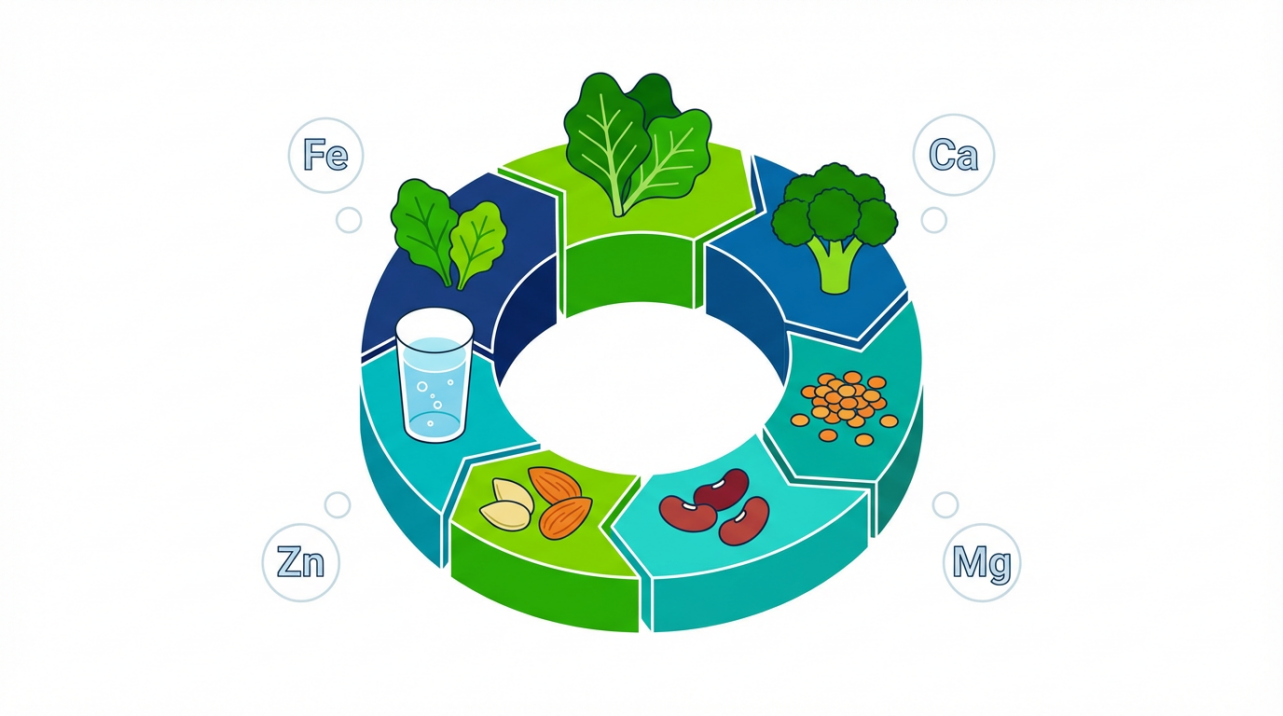
Summary: Vegetarian diets can easily fall short in key minerals like iron, calcium, zinc, iodine, magnesium, and selenium, but a mix of smart food choices, targeted supplements, and mineral‑rich hydration can reliably prevent most deficiencies.
Why Vegetarians Face Mineral Shortfalls
Vegetarian patterns cut out meat and often fish and seafood, which are concentrated sources of iron, zinc, iodine, selenium, and certain forms of calcium and vitamin D. Studies like NuEva and work from Heart & Stroke and Mayo Clinic all flag these nutrients as “watch list” items for plant‑based eaters.
Modern farming adds another wrinkle. Research summarized by BodyBio notes that soil depletion and heavy processing lower mineral density in even colorful, plant‑rich diets, so “eat more veggies” is necessary but not always sufficient.
Absorption matters as much as intake.

Phytates in whole grains and beans, oxalates in some leafy greens, and tannins in tea and coffee can all reduce how much iron, zinc, and calcium you actually absorb, as described by Plant-Based RD and other dietitians.
The Big Five (Plus Two) Minerals for Vegetarians
Iron Non‑heme iron from plants is harder to absorb than heme iron from meat, so several experts (including Mayo Clinic) advise vegetarians to aim closer to double the typical iron target. Common symptoms of low iron include fatigue, dizziness, and shortness of breath, as BetterYou highlights.
Pair iron‑rich foods such as lentils, beans, tofu, fortified cereals, pumpkin seeds, and spinach with vitamin C sources (bell peppers, strawberries, oranges, broccoli) at the same meal to boost absorption significantly.
Calcium Without dairy, it is easy to slip under the 1,000–1,200 mg/day most adults need for bones, teeth, muscles, and heart rhythm, according to Harvard Health and NIH‑cited reviews. Calcium also partners with vitamin D and vitamin K2 to keep minerals in bones rather than soft tissues.
Vegetarians can rely on dairy or calcium‑set tofu, fortified plant milks, calcium‑fortified juices and cereals, plus low‑oxalate greens like kale, bok choy, broccoli, and turnip greens. A systematic review of calcium‑rich mineral waters shows they can match milk for calcium absorption, offering a calorie‑free bonus source.

Magnesium Magnesium supports muscle relaxation, sleep, mood, energy production, and heart rhythm. Both BetterYou and BodyBio suggest that 20–75% of people fall short, regardless of diet, with vegetarians at risk if they under‑eat nuts, seeds, legumes, and whole grains.
Good vegetarian sources include almonds, cashews, pumpkin seeds, black beans, chickpeas, oats, and dark leafy greens. When diet is not enough, a well‑absorbed magnesium supplement (often in citrate, glycinate, or mixed forms) can help, ideally taken in the evening for relaxation.
Zinc Zinc is vital for immunity, skin and hair health, wound healing, and hormone and taste function. It is abundant in shellfish and meat but less bioavailable from plants due to phytates. Health briefs from BetterYou and Healthline both point to vegetarians as a higher‑risk group.
Beans, lentils, chickpeas, tofu, tempeh, pumpkin seeds, hemp seeds, and whole grains do provide zinc. Soaking, sprouting, fermenting (e.g., sourdough, tempeh, miso), and using leavened bread instead of dry crackers reduce phytates and improve mineral absorption.
Iodine and Selenium Iodine is essential for thyroid hormones and metabolism; selenium supports antioxidant defenses, immunity, and thyroid function. Without seafood, eggs, or dairy, vegetarian intake can be inconsistent, as flagged by NuEva and multiple clinical reviews.
Iodized salt (used sparingly), seaweed in moderate amounts, Brazil nuts (for selenium), and fortified foods help cover these gaps. Because both too little and too much can be harmful, testing and individualized guidance are wise if you rarely eat fortified products.

Nuance: Some heart foundations note that well‑planned vegetarians are not automatically more anemic than meat‑eaters, but several clinical groups still advise higher iron and careful monitoring because absorption is lower from plants.
How Hydration and Filtration Affect Your Minerals
From a mineral perspective, water is more than “just water.” Classic work from U.S. drinking water committees and newer reviews show that hard, calcium‑rich mineral waters can provide anywhere from a small top‑up to roughly one‑third of an adult’s daily calcium needs.
At the same time, many popular home systems—especially reverse osmosis (RO) and distillation—strip out almost all minerals along with contaminants. That leaves you with very clean but essentially mineral‑free water, which is fine for short‑term detox but not ideal as your only long‑term source.
As someone who routinely helps plant‑based households design filtration setups, I typically recommend pairing robust filtration with remineralization. Options include inline remineralizing cartridges, balanced electrolyte powders, or trace‑mineral drops added back to each pitcher or bottle according to label directions.
Hydrating foods such as cucumbers, romaine, spinach, watermelon, strawberries, and tomatoes are over 90% water and also carry potassium, magnesium, and in some cases iron and calcium. They help you reach daily fluid targets (often around 68–95 fl oz for many women and 84–125 fl oz for many men, per international guidelines) while nudging up your mineral intake.

A Practical Mineral‑Smart Plan for Vegetarians
- Prioritize mineral‑dense foods at each meal: include a legume, a whole grain, and a nut or seed most days, plus at least one dark green vegetable.
- Use absorption “boosters”: pair iron foods with vitamin C, add garlic and onions when cooking beans and grains to improve iron and zinc uptake, and include some healthy fat with fat‑soluble vitamins that support calcium metabolism.
- Make your water work harder: if you use RO or distilled water, either choose a remineralizing filter stage or add a measured electrolyte or trace‑mineral mix to each 12–16 fl oz glass.
- Supplement strategically, not blindly: common vegetarian needs include iron (especially for menstruating women), B12, vitamin D, magnesium, zinc, and sometimes iodine or selenium—best chosen with lab data and guidance from a clinician or registered dietitian.
With a well‑planned plate and a mineral‑aware hydration setup, vegetarians can enjoy the cardiovascular and ethical benefits of plant‑based eating while keeping their iron stores, bones, thyroid, and energy levels robust.
References
- https://www.health.harvard.edu/staying-healthy/the-best-foods-for-vitamins-and-minerals
- https://pmc.ncbi.nlm.nih.gov/articles/PMC10384676/
- https://www.uclahealth.org/news/article/15-food-that-help-you-stay-hydrated
- https://www.fepblue.org/news/2023/06/20/13/41/10-Foods-Rich-in-Water
- https://www.frontiersin.org/journals/nutrition/articles/10.3389/fnut.2022.819106/full

Share:
Hydration Strategies for Long-Term Meal Replacement Users
Guidelines for New Parents Choosing an RO System for Baby Formula