

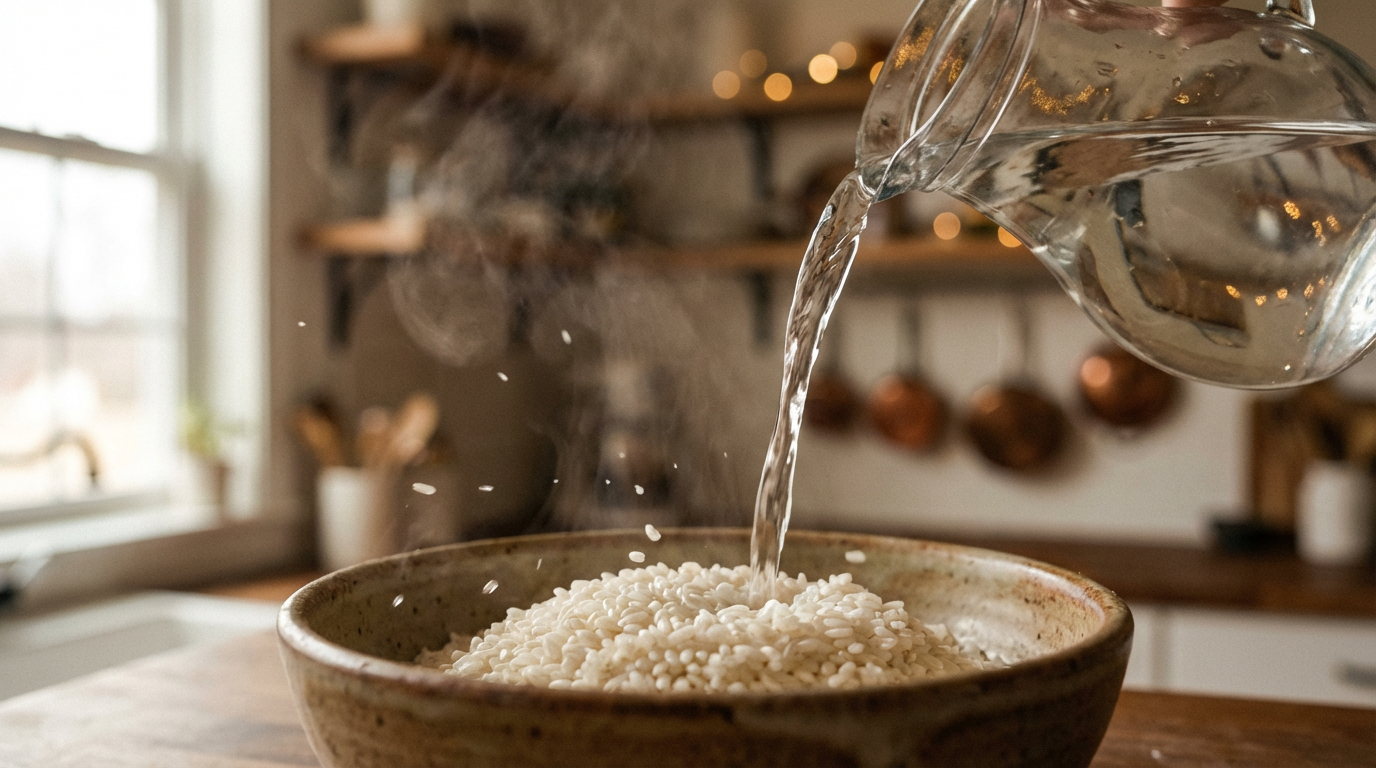
Cooking rice seems simple: grain plus water plus heat. Yet in kitchens where I help families tune their hydration and cooking habits, the same bag of rice often produces two very different bowls: one fragrant and fluffy, the other dull, slightly chlorine‑smelling, and uneven in texture. The only difference is the water.
As a smart hydration specialist, I treat water as a core ingredient, not a background detail. Research from water‑filtration companies, food scientists, and Japanese rice experts all point in the same direction: the quality of the water you cook with can noticeably change how your rice tastes, smells, looks, and even how nutritious it is.
So does cooking rice with purified water enhance flavor? In most real‑world kitchens, the answer is yes. Let’s unpack why, when it matters most, and how to get the benefits without overcomplicating your routine.
Why Water Quality Shapes Rice Flavor
Rice Is A Sponge For Whatever Is In Your Water
Rice is remarkably absorbent. During cooking, each grain pulls in water, swells, and gelatinizes its starch. That water brings along anything dissolved in it: chlorine, minerals, trace metals, and off‑odors.
Food industry researchers at Oklahoma State University emphasize that water used in processing and cooking directly influences texture, aroma, flavor, color, and even equipment fouling. In other words, water is not a neutral medium. It is more like an invisible broth that your rice soaks up.
Water filtration and hydration specialists such as Brio and Water Filters Australia go further and frame water as a “secret ingredient.” They argue that when you pair nutrient‑dense foods with clean, contaminant‑reduced water, you get better flavor and better nutrition in the finished dish. Rice, which absorbs more water than many foods, is a prime example.
Water As A Food Ingredient, Not Just A Utility
At home, most people think about water quality only at the faucet and only for drinking. Yet the same water rinses your rice, soaks it, steams it, and ends up locked inside every grain. Japanese rice‑cooking research, highlighted by University of Shizuoka–inspired guides, treats water quality as fundamental to achieving ideal texture, glossy appearance, and balanced stickiness.
When you start treating water as an ingredient, the question shifts from “Is tap water safe?” to “Is this the best water to bring out flavor, aroma, and nutrition in my rice?” That is where purified or filtered water often pulls ahead.

How Tap Water Changes Your Rice
Chlorine: Necessary For Safety, Tough On Flavor
Municipal systems commonly disinfect tap water with chlorine to keep it safe as it travels through miles of pipe. A Malaysian water‑treatment provider (NESH) notes that tap water can contain dozens of impurities, including chlorine, lead, and cadmium. They highlight that at least a small dose of chlorine is deliberately added to each liter to control microbes.
That chlorine has a job to do at the treatment plant and inside the water mains. In your rice pot, though, it is an uninvited flavor. NESH points out that when you cook rice in chlorinated tap water, the chlorine is absorbed into the rice and ends up in your stomach. They also warn that chlorine can react with organic compounds to form by‑products such as trihalomethanes and can damage sensitive nutrients like vitamin B1 in the rice.
Even if you never think about those chemical details, your nose likely notices the story: a faint swimming‑pool aroma in the steam, a slightly harsh edge to the rice, and a less nuanced grain flavor.
Hardness And Minerals: When “Extra” Minerals Work Against You
Many regions, particularly those relying on mineral‑rich groundwater, have hard tap water. Food‑industry guidance from Oklahoma State University and consumer advice from Water Filters Australia both point out that high mineral content, especially calcium and magnesium, can change how food cooks and tastes. Hard water can alter color, affect solubility, and interact with starches and proteins.
With rice, those dissolved minerals can subtly toughen the outer layer of the grains, interfere with even hydration, and shift the way starch gels. The result can be slightly firmer, less tender rice, or grains that do not plump up as fully as they do in softer or filtered water. Hard water can also leave mineral residues inside pots and rice cookers, which accumulate over time and may contribute faint off‑notes.
Old Pipes, Lead, And “Invisible” Contaminants
Beyond chlorine and hardness, the plumbing itself can matter. NESH cautions that in older buildings with lead‑containing pipes or fixtures, contaminants can leach into water. Long‑term exposure to lead is associated with serious health risks, especially for infants and children, including impaired development, kidney problems, and elevated blood pressure.
You do not taste lead in your rice. Yet if your water carries it, your rice can carry it too. That is one more reason why many water‑quality experts advise using filtration that specifically targets heavy metals for both drinking and cooking.
What Counts As Purified Or Filtered Water?
From Simple Filters To Multi‑Stage Treatment
In a home kitchen, “purified” or “filtered” water usually means tap water that has been passed through one or more treatment stages to remove unwanted substances. Common approaches, reflected in sources ranging from Oklahoma State University to Fountain Filters and Brio, include:
Activated carbon filtration, often made from heated coconut shells, provides a huge internal surface area that adsorbs chlorine, many organic chemicals, and odor‑causing compounds. This is the core technology behind most pitcher filters and many under‑sink units.
Ceramic filtration uses naturally porous clay cartridges with microscopic pores that strain out fine particles and many microbes. Some ceramic filters also incorporate carbon, combining physical filtration with chemical adsorption.
Ultraviolet disinfection uses a UV lamp in a stainless‑steel chamber to damage microbial DNA as water flows past, mimicking the germ‑reducing effect of sunlight without adding chemicals.
Reverse osmosis systems push water through a semi‑permeable membrane, removing a wide range of salts, microbes, and dissolved contaminants. Oklahoma State University notes that RO can remove roughly ninety‑nine percent of microorganisms and is widely used for bottled water, but it strips out beneficial minerals and wastes a portion of feed water.
All of these methods can improve taste and safety.

For rice flavor specifically, the most impactful step is usually removing chlorine and strong off‑odors, which carbon and some ceramic filters handle very well.
Special Case: Binchotan Charcoal In Rice
A particularly interesting tradition comes from Japan, where dense white oak charcoal called binchotan is used as a natural water filter. Knife‑specialist retailer Knifewear describes binchotan as about ninety‑five percent carbon and highly porous. When pre‑boiled and placed in a jug of water, a stick of binchotan adsorbs chlorine and can release trace minerals such as calcium, iron, and magnesium.
The same article notes that adding a couple of small, pre‑boiled pieces of binchotan directly to a pot of rice produces rice that tastes cleaner, lighter, and airier. In practice, that is a very localized form of filtration happening right inside the pot: the charcoal is quietly scavenging off‑flavors while the grains hydrate.
Do You Lose Too Many Minerals With Very Pure Water?
There is a common concern that very pure water, especially from RO systems, removes not only contaminants but also beneficial minerals. Technical guidance from Oklahoma State University echoes this: RO is highly effective at removing viruses, bacteria, and pyrogens, yet it also strips out naturally occurring minerals like calcium and magnesium.
From a rice‑cooking perspective, softer, lower‑mineral water generally gives more tender grains and lets the rice’s inherent sweetness and aroma shine through, as Japanese research summaries suggest. However, if your only water source is extremely low in minerals, you may prefer to avoid using it exclusively for drinking unless you also get adequate minerals from food or other sources. For cooking rice alone, though, the mineral removal is usually a culinary advantage rather than a drawback.
Side‑By‑Side: Tap Water Rice vs Purified Water Rice
The easiest way to understand the impact of water is to compare the characteristics of rice cooked with typical municipal tap water to rice cooked with filtered or purified water. Drawing on the sources above and on repeatedly cooking these side‑by‑side for clients, the patterns are surprisingly consistent.
Aspect |
Rice Cooked With Typical Tap Water |
Rice Cooked With Purified / Filtered Water |
Aroma in the steam |
Can carry faint chlorine or “chemical” notes |
Smells cleaner; grain and subtle nutty or floral notes stand out more |
Flavor |
Slightly flat, with occasional harsh or bitter edge |
Rounder and sweeter; easier to taste the rice itself |
Texture |
More variable; can be patchy or slightly firm |
More even tenderness and plump grains |
Color and sheen |
Sometimes a touch dull |
Often brighter, with a more noticeable shine |
Nutrient protection |
More exposure to chlorine and potential by‑products |
Less chlorine contact; better preservation of sensitive nutrients |
Safety margin |
Possible trace metals or by‑products from pipes |
Filtration can reduce chlorine, some metals, and other contaminants |
In homes where tap water is already soft, low‑chlorine, and relatively clean, the difference is subtle but still noticeable to many palates. In homes with hard, strongly chlorinated water, the difference is dramatic enough that even children can tell which batch “tastes like restaurant rice.”
How To Cook Rice With Purified Water For Maximum Flavor
Purified water alone will not fix every rice problem. The technique still matters. But when you combine clean water with best‑practice rice handling, you get consistently better results.
Start With Clean, Cold Rinsing
Rice experts and Japanese cooking traditions place surprising weight on the first rinse. A widely shared Japanese guideline, echoed in media sources and in a University of Shizuoka–inspired guide, suggests that the first contact between dry rice and water is especially important because the grains rapidly absorb that initial liquid.
Using filtered or otherwise purified water for that first rinse means the rice does not immediately intake chlorinated or off‑tasting water. Tasting Table’s coverage of Japanese practice describes rinsing rice with filtered water, swirling gently, and draining off the cloudy water, then repeating this a couple more times while rubbing grains lightly together to remove surface starch.
Food writers such as Simply Recipes add that rinsing removes fine starchy dust and debris formed during processing and transport. The author notes that rinsed rice consistently cooks less gummy and more fluffy, and that proper rinsing usually takes only a few minutes.
In my own testing in client kitchens, the biggest leap in flavor and aroma happens when people switch from unrinsed rice and chlorinated tap water to thoroughly rinsed rice using filtered water, especially in that first contact.

Soak For Even Hydration
Soaking gives rice time to hydrate to the core before heat fully sets the starch. Japanese research summarized by cookware educators recommends soaking rice for at least about thirty minutes at room temperature or in the refrigerator. This step improves evenness of texture and can help grains expand more fully.
Again, the water you soak in matters. If you soak in tap water heavy in chlorine or off‑odors, every grain is quietly absorbing those compounds. When you soak in purified water, the only thing entering the grain is clean water and the rice’s existing minerals and flavor precursors have a better chance to shine.
Some Japanese experts emphasize that very cold water for rinsing and soaking helps preserve the surface starch layer that contributes to the desirable balance of stickiness and grain separation. If you follow that approach, using filtered water that you chill in the refrigerator can give you both temperature control and flavor benefits.
Use The Right Water‑To‑Rice Ratio, Then Let It Absorb
Once the rice is rinsed and soaked, the next key variable is how much cooking water you add and how you apply heat.
A home‑cook guide that draws on Japanese research recommends roughly one and a quarter to one and one‑third parts water by volume for every part of short‑ or medium‑grain rice when cooking by absorption, adjusting slightly for preference. Traditional absorption‑method instructions from experienced cooks suggest using more water for long‑grain varieties, sometimes up to about one and three‑quarters or even twice the rice volume, particularly for basmati.
The absorption method aligns beautifully with purified water. You measure a specific amount of clean water, bring it to a gentle boil with the rice, then allow all of that water to be absorbed, without draining. A rice‑cooking guide that focuses on this method stresses the importance of a heavy pot with a tight lid, medium heat to reach a simmer, then turning off the heat and letting the rice rest, covered, so it steams and completes absorption.
Because you are not discarding any liquid, the rice keeps all of the dissolved minerals and flavor compounds it started with.

When the water is filtered and free of off‑tastes, that is exactly what you want.
Optional: Charcoal‑Enhanced Rice
If you are curious and enjoy subtle improvements, binchotan charcoal offers an elegant touch. After sanitizing a stick of binchotan by boiling it for several minutes and letting it dry, Knifewear recommends adding small thumb‑sized pieces to the pot when cooking rice. Over about a month of use, the same stick can first filter drinking water and then lend its benefits to cooking.
In my experience, this does not radically change the rice, but it smooths out the flavor and lightens the texture in a way that pairs particularly well with delicate Japanese varieties.
Pros And Cons Of Cooking Rice With Purified Water
Advantages
The most obvious benefit is sensory. Brio, Water Filters Australia, and Japanese rice‑cooking researchers all converge on the point that filtered, low‑chlorine, appropriately soft water lets the natural flavor and aroma of rice shine through. You get a cleaner nose from the steam, better sweetness in the grain, and more consistent tenderness.
There are health and nutrition benefits too. NESH highlights that chlorine can degrade vitamin B1 in rice and contribute to potentially harmful by‑products. Filtering out chlorine before it reaches your pot reduces that exposure. If your system also targets heavy metals, you limit the chance that your rice becomes a vehicle for contaminants from old plumbing.
Finally, there is a reliability benefit. Removing variability in water quality makes your rice more predictable from batch to batch. When the water’s taste, hardness, and contaminant levels are stable, your soaking time and water‑to‑rice ratio translate more directly into repeatable results.
Potential Drawbacks And Trade‑Offs
Purified water is not completely free. Pitcher filters require cartridges. Under‑sink or whole‑house systems need periodic maintenance. RO systems waste a portion of intake water and remove beneficial minerals along with contaminants. These are manageable costs for most households, but they are still real.
If you use extremely low‑mineral water exclusively for drinking and cooking, you may also miss the flavor contribution of mild mineral content that some people enjoy, especially in certain styles of tea or coffee. Food‑processing guidance notes that for ingredients such as bottled water, nearly mineral‑free RO water is common, but for general hydration many people still prefer water with some natural minerals.
There is also a learning curve. If you switch from very hard water to much softer purified water, your rice may suddenly feel softer at your old water‑to‑rice ratio. You might need to reduce the water slightly or shorten soaking time to match your preferred texture.
That said, nearly every household I have guided through the switch, especially in areas with strong chlorine or hard water, chooses to keep cooking rice with purified water once they taste the difference.

When Purified Water Makes The Biggest Difference
Strongly Chlorinated Municipal Supplies
If your tap water smells like a swimming pool or you can taste chlorine when you drink it, your rice will taste it too. In these homes, even a basic carbon filter or a stick of binchotan used for drinking water, plus filtered water for rinsing and cooking rice, can be transformative.
Hard‑Water Regions
In places where water runs hard and leaves scale on kettles and faucets, the improvement is often as much about texture as taste. Removing or reducing hardness with a softener plus downstream carbon filtration, or with a point‑of‑use filter for cooking water, leads to rice that is consistently more tender and evenly cooked.
Homes With Older Plumbing
If your building is older and you are concerned about lead or other metals, a filtration system designed for heavy‑metal reduction is worth considering, both for rice and for overall hydration. Guidance from public‑health agencies and water‑quality experts emphasizes that safe water is a prerequisite for safe food. There is little point in perfecting your rice technique if the water itself is questionable.
Households Focused On Nutrient Density
Brio’s nutrition‑focused guidance frames purified water as part of a larger strategy: combining nutrient‑dense foods, such as whole grains, with clean water to maximize health benefits. For families prioritizing brain health, energy, and long‑term wellness, using purified water for staples like rice is a simple alignment with those goals.
FAQ: Common Questions About Purified Water And Rice
Do I need bottled water to get better‑tasting rice?
In most kitchens, no. A good carbon‑based filter, an under‑sink system, or a jug with activated carbon will usually remove enough chlorine and off‑flavors to noticeably improve rice. Bottled water can be a useful short‑term experiment: cook one pot with your tap water and one with a high‑quality bottled water, then decide whether a home filter is worth installing to replicate that cleaner taste every day.
Should I cook all foods with purified water, or just rice?
Rice is one of the most responsive foods because it absorbs so much water. That said, the same logic applies to vegetables, grains like quinoa, pasta, soups, and beverages. Brio’s cooking guidance and Oklahoma State University’s food‑industry research both recommend treating water as a critical ingredient wherever it becomes part of the food. If you can only filter some of your cooking water, prioritize foods that absorb water and dishes where subtle flavors matter most.
Can filtered water help with arsenic in rice?
Arsenic levels in rice come primarily from the soil and irrigation water used during cultivation, not from your tap. A discussion among home cooks points out that rice naturally accumulates more arsenic than many crops. Food‑safety agencies often recommend diversifying grains in the diet, rinsing rice, and, in some cases, cooking in extra water that you drain off to reduce arsenic load. Filtration at home is important for other contaminants such as chlorine and lead, but it does not solve the agricultural arsenic issue on its own.
Is it still worth rinsing if I already use purified water?
Absolutely. Rinsing and soaking address starch, debris, and texture; purified water addresses taste and contaminants. Japanese tradition, Tasting Table coverage, and modern cooking guides all agree that rinsing in clean, cold water, then soaking, gives a noticeably better texture. Using purified water simply ensures that those steps do not introduce new off‑flavors.
Closing Thoughts From A Hydration‑Focused Kitchen
When you step back, cooking rice with purified water is not about chasing perfection. It is about removing avoidable obstacles so simple, nourishing food can taste the way it should. Clean, well‑treated water lets each grain express its natural sweetness and aroma, keeps textures consistent, and aligns your everyday cooking with the same health standards you expect from your drinking glass.
As a water wellness advocate, my practical advice is straightforward: if rice is a staple in your home and your tap water is anything less than delicious, give purified water a trial run in your next few pots of rice. Your nose, your taste buds, and, quietly, your long‑term health are likely to notice the difference.
References
- https://www.epa.gov/ground-water-and-drinking-water/emergency-disinfection-drinking-water
- https://extension.okstate.edu/fact-sheets/water-use-in-the-food-industry.html
- https://en.wikipedia.org/wiki/Water_purification
- https://www.cdc.gov/water-emergency/about/index.html
- https://www.culligannation.com/cooking-with-filtered-water
- https://www.simplyrecipes.com/how-to-rinse-rice-5667473
- https://www.fountain-filters.co.uk/blog/7-ways-purify-water-naturally-drinking-cooking-hygiene-54.html
- https://www.wfa.com.au/rice-filtered-water/?srsltid=AfmBOopt4SVOmz4iq97BduqWFIGksZdz4gsH11mKwKj5GOOuCN2WYO2S
- https://nesh.com.my/will-chlorine-end-up-in-your-stomach-when-rice-is-cooked-with-tap-water/
- https://briowater.com/blogs/blog/cooking-with-filtered-water?srsltid=AfmBOooTGzbTQAqa9Rac3AP0tFIgLh8RpKJ01N-VtLYxwa77-e0cdItE

Share:
Understanding the Adhesion Phenomenon in Milk Powder Solutions
Using Purified Water for Aquarium Water Changes Safely