

Summary: Zero-calorie water is your most reliable, metabolism-friendly drink when you cut sugar—think plain or naturally flavored water first, with diet or “zero” beverages used only as strategic backup, not your daily base.
What Counts as Zero-Calorie Water?
When I say “zero-calorie water,” I’m talking about water that truly hydrates you without adding calories or sugar. That includes: plain tap water (ideally filtered), bottled water, and unsweetened sparkling water.
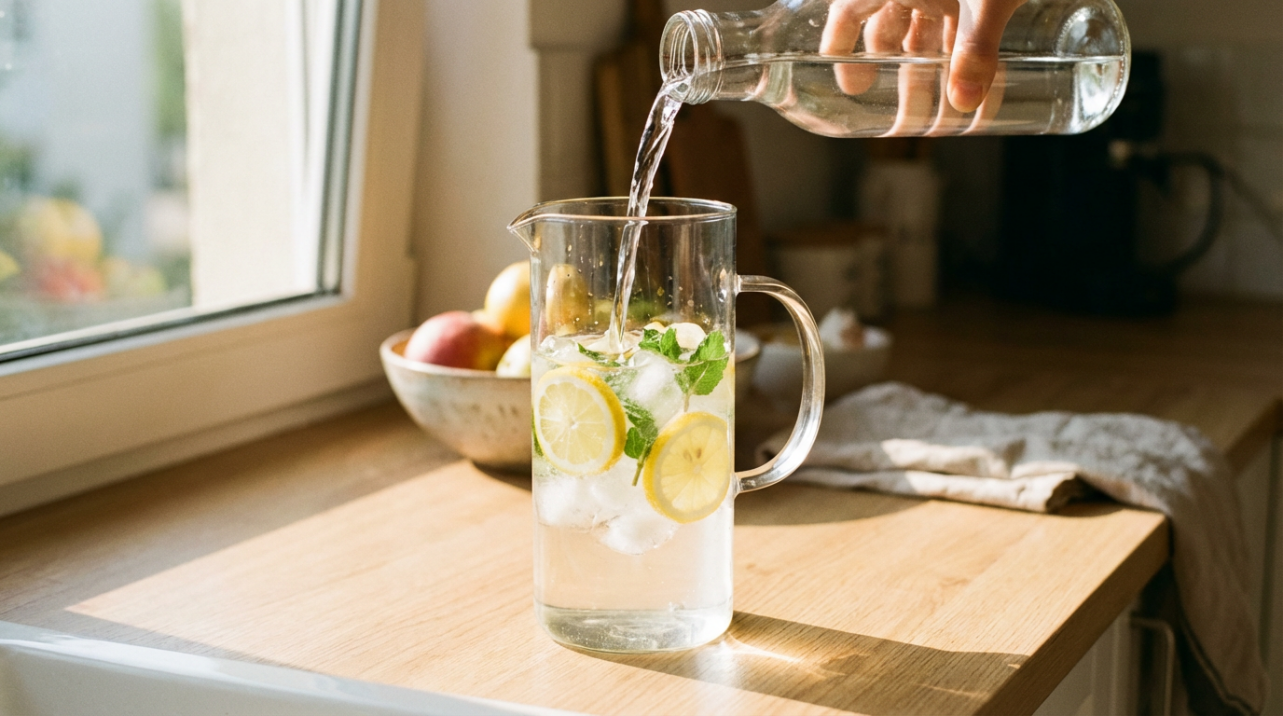
Naturally infused water also fits: think a pitcher of filtered water with lemon slices, cucumber, berries, or mint. You get flavor, essentially no calories, and no added sugar. Diabetes.org and Harvard T.H. Chan School of Public Health both highlight this as a smart way to make water more appealing.
Be cautious with products marketed as “vitamin water,” “fitness water,” or even “zero” or “diet” waters. Many are actually soft drinks in disguise, with non-nutritive sweeteners and flavor systems that behave more like soda than water from a metabolic perspective. Always check that the label shows zero calories and no sugar, and be aware that “sugar-free” usually means sweetened with something else.
Why Hydration Matters When You Ditch Sugar
Cutting sugar is a stressor for your body. It’s common to feel headaches, fatigue, and mood changes, especially in the first week. Staying well hydrated helps your kidneys and liver clear byproducts, tamps down headaches, and makes that transition more comfortable. Clinicians writing for medical practices and public-health groups repeatedly emphasize this during sugar reduction.
Good hydration also keeps your metabolism and brain running smoothly. Research summarized by the CDC and Harvard shows that water helps regulate body temperature, supports blood pressure, cushions joints, and keeps your thinking and mood steadier. Even mild dehydration can make you feel tired, foggy, and “snacky,” which is the last thing you need when you’re trying to avoid sugar.
A simple self-check: your urine should be clear or light yellow. Dark yellow or orange, plus symptoms like dry mouth, more frequent headaches, or muscle cramps, is a sign from your body that you need more fluids.

Water vs Diet Drinks vs “Zero” Beverages
For sugar-free dieters, the big question is whether zero-calorie sodas and sweetened waters are “just as good” as water. The evidence is mixed, and context matters.
Randomized trials reviewed in JAMA Network Open and in obesity journals show that low- and no-calorie sweetened beverages can help people cut calories when they replace regular soda. In some structured weight-loss programs, people allowed to keep their diet drinks actually lost slightly more weight than those who had to drink only water, likely because they felt less deprived.
But other research points the opposite way. An American Diabetes Association poster in women with type 2 diabetes found that swapping one daily diet drink for water led to greater weight loss and roughly double the rate of diabetes remission compared with continuing diet drinks. A Harvard review has also raised concerns that carbonated “zero” drinks might boost hunger hormones, which could drive overeating over time.
Major health organizations try to balance this evidence. The American Heart Association and diabetes groups in the US and UK say: if you’re a heavy regular soda drinker, diet drinks can be a useful transition or targeted tool, but plain water and unsweetened drinks should be your default. The CDC similarly notes that “sugar-free” or diet drinks may reduce calories in the short term, but their effectiveness for long-term weight control is uncertain.
Nuance: High-quality trials sometimes favor diet drinks, while large guidelines still favor water—so treat diet and “zero” beverages as optional tools, not hydration foundations.
How Much to Drink for Sugar-Free Success
Most healthy adults do well with roughly 9–13 cups of total fluid per day (about 72–104 fl oz), according to guidance cited by Harvard and the Institute of Medicine. That includes water, other drinks, and water from fruits and vegetables.
Your ideal number depends on your size, activity, climate, and medical conditions. You’ll likely need more if you exercise hard, live in a hot, humid area, or are in early “sugar withdrawal.” People with heart, kidney, or certain endocrine conditions should follow a personalized plan from their clinician.
A practical, weight-friendly pattern that appears in several studies is to drink about 2 cups of water (16 fl oz) before each main meal. That volume helps you feel fuller, can reduce calorie intake, and seems to support modest extra weight loss over months when paired with an overall healthy eating pattern.
Simple Hydration Habits You Can Start Today
Here are zero-calorie strategies I use with clients who are cutting sugar:
- Start your day with 12–16 fl oz of filtered water before coffee or breakfast.
- Keep a 20–24 fl oz bottle of still or sparkling water at your desk and finish it twice per workday.
- Drink a glass of water 20–30 minutes before each meal to curb “false hunger” that’s really thirst.
- Flavor your home-filtered water with lemon, lime, cucumber, or mint instead of reaching for diet soda.
- Make water the default at home: set up a countertop or under-sink filtration system and keep a chilled pitcher ready so water is as convenient as any can in the fridge.
If you love your diet or “zero” drinks, keep them occasional and deliberate—use them as a stepping stone away from sugary beverages, not a replacement for building a strong, zero-calorie water habit. Over time, your taste buds adjust, and clean, cold, well-filtered water starts to taste surprisingly satisfying.

References
- https://www.health.harvard.edu/blog/zero-weight-loss-from-zero-calorie-drinks-say-it-aint-so-2021032222204
- https://pubmed.ncbi.nlm.nih.gov/35285920/
- https://www.cdc.gov/healthy-weight-growth/water-healthy-drinks/index.html
- https://alabamaageline.gov/en/41tutorialsgx/vitamin-water-zero-good-weight-loss/
- https://health.ucdavis.edu/blog/good-food/why-its-important-for-you-to-drink-water-and-stay-hydrated/2022/07

Share:
How to Dilute Essential Oils with Purified Water for Fragrance Blending
Essential Water Quality Standards for Homebrewing Craft Beer