

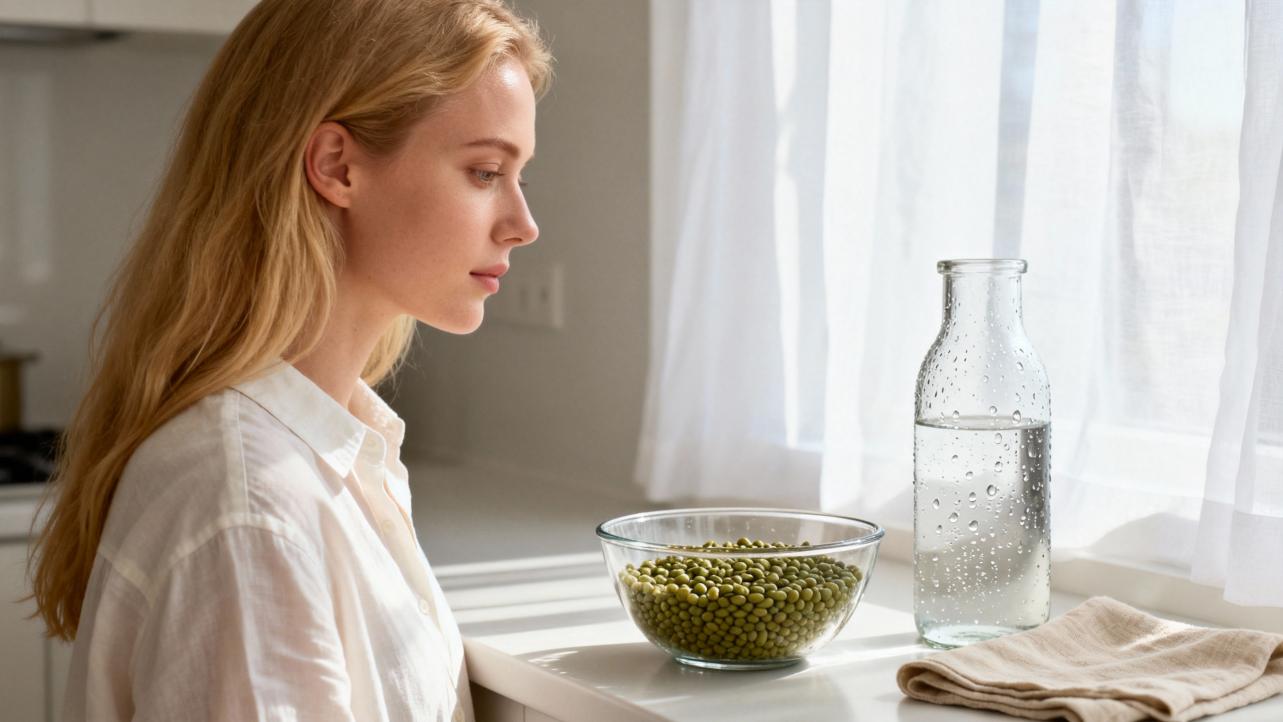
Mung bean soup looks so simple on the surface: just beans and water, maybe sugar or ginger. Yet anyone who has simmered a pot on a summer afternoon knows it has a personality of its own. A bright jade-green broth can slowly fade to yellow, shift toward tea-colored amber, or even turn a surprising red or dark brown. As someone who spends a lot of time thinking about water quality, plant chemistry, and how they show up in your kitchen, I see those color shifts as a story your soup is trying to tell you.
This article unpacks that story. You will see how pigments in mung beans respond to heat, oxygen, and the chemistry of your cooking water; why the same recipe can yield green, golden, or reddish soup; what that means for nutrition and traditional “cooling” benefits; and how to use smart water choices and gentle technique to keep your mung bean soup clear, attractive, and hydrating.
What Really Gives Mung Bean Soup Its Color
Seed coats, chlorophyll, and flavonoids
Whole mung beans are small, but they are chemically complex. A study in an MDPI journal examining heat treatment of mung beans describes the seed as three main parts: seed coat, cotyledon (the yellow interior), and hilum. Color is not spread evenly. It is concentrated in the seed coat, especially in a surface texture layer and two pigment-rich layers underneath.
The green you see on dry mung beans and in a fresh, lightly cooked soup comes mostly from chlorophyll in the parenchymal layer of the seed coat. That same MDPI work explains chlorophyll’s structure: a porphyrin ring with a magnesium ion in the center. Like the chlorophyll in spinach or kale, it absorbs violet and red light and reflects green.
Alongside chlorophyll, mung bean seed coats carry a range of flavonoids and other polyphenols. A metabolomics study on colored mung bean varieties found that flavonoids such as luteolin derivatives and vitexin glycosides strongly track with green color, while other pigments such as anthocyanins contribute to darker or blackish seed coats. These flavonoids are not just colorants; legumes research summarized in PubMed Central notes that mung beans’ flavonoids and related polyphenols support antioxidant and metabolic effects in lab models.
In the pot, chlorophyll is mostly responsible for bright, leafy green tones early in cooking, while flavonoids and other polyphenols are responsible for many of the later yellow, red, or brown shades after they oxidize or form complexes with minerals.
Why bright green matters in traditional use
In Chinese and East Asian food culture, mung bean soup (lü dou tang) is a classic “cooling” food. Writers like Betty Liu have shared family recipes where chilled, slightly sweet mung bean soup is an everyday summer remedy for feeling “on fire” internally, a concept traditional Chinese medicine uses for heat-related skin issues, irritability, and thirst. A Chinese herbal reference summarized by ItsHerbs notes that mung beans are thought to clear heat, relieve summer dampness, and support the skin and urinary system, with many of these traditional effects attributed to compounds concentrated in the green seed coat.
A classical text cited by ItsHerbs advises that for heat relief, mung beans should be boiled only until the water just comes to a boil, then taken off the heat and cooled, so the soup stays bright green and clear. When the soup is boiled for a long time until it turns turbid and darker, that text considers it less suitable as a “cooling” drink.
Modern nutrition science does not use yin and yang language, but it does recognize that many of the polyphenols and flavonoids that sit inside that green seed coat act as antioxidants and may support metabolic health in lab and animal studies. From a water wellness point of view, a lightly cooked, green, clear mung bean soup is essentially a plant-based infusion: water carrying dissolved pigments, minerals, and small molecules from the seed coat, with relatively little breakdown from prolonged heat.
The Science Behind Color Changes When You Boil Mung Beans
Oxygen and polyphenol oxidation
A Chinese nutrition article on why mung bean soup turns red emphasizes the role of polyphenols in the seed coat. These plant compounds are naturally prone to oxidation. When you boil mung beans, those polyphenols dissolve into the water. If they are exposed to oxygen in the air, they gradually react and darken, shifting the color from bright green toward yellow, red, or even brown.
Another article aimed at home cooks, explaining why mung bean soup can be green or red, points out that leaving the pot uncovered increases the contact between the soup and air, accelerating oxidation. Keeping a lid on the pot during most of the simmer slows that exposure and helps you hang onto a greener shade.
As polyphenols oxidize, they form larger, more complex molecules that absorb light differently. Initially this shows up as a pleasant golden-green color. With more time and oxygen, those oxidized pigments can move into a reddish-tea or brown range. The article from en.cnys frames the final red or dark brown as a combined result of oxidation, water quality, bean variety, and cooking time rather than a sign of microbial spoilage by itself.
Heat, time, and chlorophyll breakdown
Chlorophyll is one of the more fragile pigments in your pot. The MDPI heat-treatment study explains that under acidic conditions and heat, the magnesium ion in chlorophyll can be replaced by hydrogen, forming pheophytin, which looks more olive or brown. With prolonged heating, pheophytin can further convert to pyropheophytin, which deepens brown tones in the solution.
Food chemistry references reviewed in that paper note that chlorophyllase, the enzyme that starts breaking down chlorophyll, becomes active around 140–180°F. Boiling or high-temperature sterilization can inactivate that enzyme, but if the heating is long and slow or combined with acidity, chlorophyll still degrades. That is why leafy green vegetables held too long in a hot buffet line look dull and army green instead of bright.
Mung beans behave similarly. At first, as water penetrates and the seed coat hydrates, chlorophyll disperses into the soup, giving a fresh green hue. Over time, especially with extended boiling or repeated reheating, chlorophyll slowly converts into brownish derivatives. A Chinese food-science study on mung bean clear soup focused on boiling conditions and found that heating regimes significantly changed both color and antioxidant activity, with more intense processing associated with darker colors and altered phenolic content.
In other words, long cooking times and high heat drive two parallel processes: oxidation of polyphenols and structural changes in chlorophyll. Both push your soup from green toward duller colors.
Water pH, hardness, and dissolved metals
The water you cook with is not just a neutral background. It is an active ingredient.
The en.cnys article on red mung bean soup notes that alkaline water and dissolved metal ions in cooking water interact with mung bean polyphenols and can produce a reddish broth. A home-cook explainer on soup color makes the same observation from a practical angle: slightly alkaline tap water tends to push the soup toward dark red, while filtered or purified water, or water slightly acidified with a few drops of lemon juice or vinegar, helps keep the soup more yellow-green.
This matches basic plant chemistry. Polyphenols and chlorophyll derivatives can bind metal ions such as iron, copper, and aluminum, forming complexes that shift color toward brown or gray. Hard, mineral-rich water or water that has passed through old metal pipes contributes more of those ions. Slightly alkaline water also favors the formation of certain oxidized pigment forms that look red-brown.
From a hydration-systems perspective, this is where smart water filtration can make a visible difference. Good point-of-use filtration, especially systems that reduce dissolved metals and moderate water hardness, tends to produce water closer to neutral pH with fewer reactive ions. When you use that water for mung bean soup, you are giving the pigments fewer “partners” to react with, which usually yields a clearer, cleaner color.
Cookware metals and color reactions
The Chinese article on soup color and several practical guides warn against using iron cookware for mung bean soup. Bare cast iron and some uncoated steel can release iron ions into acidic, hot liquid, particularly if the seasoning is thin. Those ions readily react with polyphenols and chlorophyll fragments, deepening the red-brown colors and sometimes giving a slightly metallic aftertaste.
Aluminum pots can also participate in color changes and may contribute off-flavors. A general mung bean soup guide aimed at home cooks recommends using stainless steel, glass, or clay pots for the cleanest flavor and most attractive color. This is consistent with the MDPI analysis that shows chlorophyll and related pigments can swap their central magnesium ion for other metals under the right conditions.
If your soup tends to turn muddy in a particular pot but looks greener in glass or stainless steel, your cookware is part of the story.
Saponins and “dirty” bean water
Some cooks worry when their bean water looks dark or slightly soapy. A Quora answer on why bean water turns black reminds us that beans contain saponins, plant “soaps” that foam and cloud the soaking water. Chickpeas are especially rich in saponins, but mung beans have them as well.
During soaking, saponins and some pigments leach into the water, which can make the liquid look grayish or dull. Some cooks discard the first soak water to remove saponins and any dusty flavors from storage. Others keep all the cooking liquid, particularly in Southern bean traditions where the “pot liquor” is prized. For mung bean soup, discarding soaking water can slightly reduce foaming and some surface cloudiness, but the main deep color changes during boiling come from pigment chemistry rather than saponins alone.
Storage, “keep warm,” and slow darkening
Color is not fixed the moment you turn off the heat. It continues to evolve during holding and storage.
A home cook on a cooking Q&A forum noticed that mung beans cooked in a rice cooker and left on the appliance’s keep-warm setting gradually turned from green to dark brown over several hours, especially overnight. The same treatment did not darken rice or red beans as much. Although that post asked for explanations rather than offering them, the pattern fits what we know: prolonged exposure to moderate heat in the presence of oxygen encourages continued oxidation of mung bean polyphenols and breakdown of chlorophyll fragments into browner compounds.
Food safety guides on mung bean soup, like a practical article from a spice and food-education site, recommend cooling soup within about two hours, then refrigerating it in a sealed container for up to about three days. Leaving soup uncovered to cool, or holding it warm for many hours, gives oxygen more access and allows pigments to break down further. The result is darker color and often a heavier, slightly stale taste.
From a hydration and home-water standpoint, you can think of this as “post-processing” of your soup. The quality of the water and the pigments continues to change as long as the soup is warm and exposed to air.

What Different Soup Colors Usually Mean
You can translate what you see in the pot into likely underlying causes. The table below summarizes common appearances, based on the mechanisms described in the research above.
Soup color and look |
Likely dominant chemistry |
Typical situation |
Practical interpretation |
Bright, clear green |
Chlorophyll from fresh seed coats still largely intact, minimal oxidation of polyphenols |
Short cooking time, neutral or filtered water, lid on most of the time, quick cooling |
Ideal for traditional “cooling” use and a light, refreshing drink; pigments and antioxidants are closer to their native state. |
Pale yellow‑green, slightly opaque |
Some chlorophyll converted to pheophytin, moderate polyphenol oxidation |
Moderate simmering, maybe some stirring with lid off, normal tap water |
Normal everyday result for long-simmered dessert soups; still fine to drink, just less vivid. |
Amber to reddish‑brown, like weak black tea |
Substantial oxidation of seed‑coat polyphenols, interactions with alkaline water or metal ions, more chlorophyll breakdown |
Hard or alkaline tap water, iron or aluminum pot, lid off, long boiling or repeated reheating |
Flavor is often heavier and more “beany.” A Chinese nutrition source suggests discarding obviously red soup to avoid possible digestive discomfort, especially if it is also old or heavily reduced. |
Dark brown or nearly blackish, thick broth |
Advanced oxidation and polymerization of pigments, possible Maillard‑type browning in concentrated liquid |
Beans held for many hours on a warm setting, soup reduced a lot, or reheated multiple times |
Quality has clearly declined; even if it is still microbiologically safe, the soup is no longer light, refreshing, or strongly “cooling” in the traditional sense. Most hydration‑focused practitioners would start fresh. |
Color is not a perfect safety test, but it is a valuable quality signal. When you see a soup that has drifted toward the bottom row in this table, it is time to question how long it has been sitting out and whether it still matches your health and hydration goals.

Practical Ways To Control Color At Home
Start with neutral, filtered water
Because pH and dissolved metals are so central to color changes, your cooking water is one of the most powerful levers you have.
A home-oriented article on mung bean soup color notes that many municipal tap waters are slightly alkaline and moderately hard. That combination tends to push soups toward darker red‑brown shades. The same article suggests that using filtered or purified water helps keep the soup yellow‑green and clearer.
From a smart hydration perspective, it makes sense to cook with the same quality of water you want to drink: water that has been filtered to reduce chlorine, off‑flavors, and excess metals. If your home has a filtration system that targets hardness and heavy metals, using that water for mung bean soup reduces pigment‑metal interactions and usually produces a more attractive broth.
If filtration is not available, you can get part of the benefit by avoiding the hottest tap water (which sometimes leaches more metals from pipes) and drawing cold water instead, then heating it on the stove.
Adjust cooking time to match your goal
Traditional Chinese sources make a clear distinction between a lightly cooked, bright green “cooling drink” and a thicker, long‑simmered dessert soup.
A classical recipe summarized by ItsHerbs advises rinsing the beans, bringing them to a vigorous boil, then turning off the heat as soon as the water boils and setting the pot aside to infuse as it cools. The result is a clear, bright green soup with beans that are only just tender. A contemporary Chinese health article emphasizes that when mung bean soup is boiled for too long until it turns turbid, it is considered less effective for relieving summer heat.
By contrast, family recipes like Betty Liu’s call for a one to two hour gentle simmer, sometimes with dried lilies and rock sugar, to produce very soft, blossomed beans and a thicker, richer liquid. The color in this style is naturally more muted, often drifting toward yellow‑green or light brown, especially if the soup is served hot.
There is no single correct approach. If you want a hydrating, lightly sweet drink with maximum “cooling” character, favor shorter cooking and quicker cooling. If your priority is comfort‑dessert texture and soft beans, accept that the color will deepen and focus on controlling water chemistry and oxygen exposure to keep it from going all the way to murky brown.
Manage oxygen by using lids and smart cooling
Since oxygen drives polyphenol oxidation, you can slow color change by limiting air contact during cooking and cooling.
The color‑control article for home cooks highlights that cooking with the lid open accelerates red discoloration. Keeping the lid on most of the time, cracking it only briefly when needed to prevent boiling over, keeps more oxygen out and helps retain green tones.
Once cooking is done, do not leave the pot uncovered for a long time. A reasonable routine is to turn off the heat, keep the lid on for a short rest, then transfer the soup to clean, relatively shallow containers so it cools faster before going into the refrigerator. This respects both pigment stability and general food safety guidance.
If you prefer to drink mung bean soup chilled, this approach doubles as a hydration strategy: you have a ready‑to‑pour, plant‑infused beverage in your refrigerator that is closer to what you originally cooked, rather than something that oxidized for hours on the stove.
Choose non‑reactive pots and gentle heat
For color‑sensitive soups, stainless steel, heat‑resistant glass, or glazed clay pots are your friends. The Chinese explanation of red mung bean soup specifically calls out iron cookware as problematic because iron ions deepen the color. Aluminum can have similar effects and sometimes imparts a metallic note.
Gentle heat matters too. A rolling boil agitates the beans, exposes more surface area to oxygen, and slightly increases mechanical damage to seed coats, all of which encourage pigment breakdown. A steady, gentle simmer keeps the beans just barely rolling and reduces both oxygen incorporation and mechanical stress.
If your stovetop runs hot, use a diffuser or move the pot to a smaller burner once it comes to a boil. Electric smart kettles or induction burners with precise temperature control also make it easier to hold that sweet spot between too cool and aggressively boiling.
Add sugar, salt, and acids at the right time
Several recipes and practical guides agree on a key point: it is better to add sugar toward the later stages of cooking.
Betty Liu’s family recipe adds rock sugar after the beans have already been simmering and softened, then adjusts sweetness to taste. A home‑cook explanation notes that high sugar concentrations in the water can slow water penetration into the beans, which lengthens cooking time. Longer cooking means more pigment breakdown and a duller color.
Acid is more subtle. The Chinese article on soup color suggests that slightly acidifying the water with a few drops of vinegar or lemon juice can help keep the soup more yellow‑green when the tap water is alkaline. This likely helps by slowing oxidation of polyphenols and moderating their interactions with metals. At the same time, plant‑pigment research summarized in the MDPI paper reminds us that strong acidity plus heat accelerates chlorophyll conversion to brownish pheophytin.
The practical compromise is to keep your cooking water close to neutral or just slightly acidic during most of the simmer, then add any noticeable acid (such as lemon juice for flavor) near the end of cooking or right before serving. That timing helps you benefit from acid’s freshness and possible anti‑oxidative effects on polyphenols without over‑exposing chlorophyll to hot, acidic conditions for long periods.
Salt has less influence on color than pH and metals, but high salt early in cooking can toughen bean skins in some legumes. For mung beans, modest salt added after they are mostly soft keeps the salt from extending cooking time.
Practice safe cooling and storage
Guidance from a food‑education article on mung bean soup recommends cooling within about two hours, then refrigerating in an airtight container for up to roughly three days. Leaving soup unsealed while cooling increases both oxidation and the chance of microbial contamination, which the article notes can lead to digestive upset when the soup is drunk cold.
If you make a large batch intending to use it as a hydrating drink throughout a heat wave, consider dividing it into several smaller containers. That way you only open and close what you will actually consume in a day, minimizing repeated warming of the full batch.
Avoid leaving mung bean soup in a rice cooker or slow cooker on a keep‑warm setting for many hours. As the home cook observed in the rice‑cooker example, mung beans in that environment turn dark brown overnight. Even if the temperature is high enough to suppress bacterial growth initially, the ongoing pigment breakdown leads to a heavy, tired‑tasting soup that does not serve your hydration goals well.

Color, Nutrition, And Hydration: How Much Should You Worry?
A certain amount of darkening is normal whenever you cook plant foods. A study on mung bean clear soup in a Chinese food‑science journal reports that boiling conditions influence both color and antioxidant activity. Generally, gentler and well‑controlled heating preserves more of both, while harsher or longer heating leads to darker colors and lower measured antioxidant capacity.
Similarly, the MDPI article on heat treatment in mung beans notes that thermal processing and drying can damage vitamins and pigments if not carefully controlled, and a metabolomics study on flavor development shows that storage and high‑heat treatments reshape flavor‑precursor pools and promote Maillard reactions, especially in dry or roasted applications.
In plain language, here is how to think about it in your kitchen.
If your soup shifts from bright green to a soft yellow‑green after a comfortable simmer but still smells fresh and light, you have simply moved along a normal spectrum. Some chlorophyll has changed form; some polyphenols have oxidized slightly; but you still have a nutritionally interesting, hydrating beverage.
If your soup is edging toward deep amber or reddish‑brown, especially with a metallic or stale aroma, the balance has tipped. Oxidation has gone further, more delicate compounds have broken down, and traditional sources like en.cnys suggest that noticeably red mung bean soup may be more likely to cause digestive discomfort, especially if it has also been sitting for a long time.
From a water wellness standpoint, the best mung bean soup for hydration is one you enjoy drinking, that feels light on your system, and that you are confident was cooked and stored safely. Color is a helpful visual cue about where it is on that continuum.

FAQ: Common Questions About Mung Bean Soup Color
Why did my mung bean soup look green when hot but more yellow or brown after chilling?
Warm liquids scatter light differently from cold ones, so color often looks brighter in a hot bowl. As the soup cools and sits in the refrigerator, pigments continue to interact with oxygen, slowly oxidizing and sometimes binding with any residual metals. That ongoing chemistry shifts the appearance toward yellow or light brown even if the soup was green at the end of cooking. Using low‑metal, neutral water, cooking with a lid, cooling quickly, and sealing containers reduces but does not completely prevent this change.
Is it safe to drink mung bean soup that has turned red?
A Chinese nutrition article focused specifically on red mung bean soup states that when the soup turns noticeably red, it is usually due to extensive polyphenol oxidation plus interactions with alkaline water and metal ions, and recommends not drinking such soup to avoid possible gastrointestinal discomfort. Western food‑safety guidelines rely more on time‑temperature and signs like odor or visible spoilage than color alone, but if your soup is conspicuously red and has been boiled hard for a long time or left out for many hours, it is reasonable to discard it and start again.
Does using filtered water really make a difference to soup color?
Evidence from practical cooking guides and mechanistic studies says yes. Articles aimed at home cooks have observed that mung bean soup made with filtered or purified water stays lighter and greener compared with soup made from hard, slightly alkaline tap water. The scientific explanation comes from research on polyphenols and chlorophyll: fewer dissolved metal ions and a pH closer to neutral mean fewer opportunities for pigments to form dark complexes, and less alkaline conditions slow some oxidative pathways. As a smart hydration specialist, I encourage people to think of their cooking water as part of their home hydration system. The same filtration that improves the taste and safety of the water in your glass improves the clarity and freshness of the water in your pot.
A pot of mung bean soup is more than beans and heat; it is a live demonstration of how water quality, plant chemistry, and time interact. When you understand why your soup shifts from green to gold to brown, you can fine‑tune your water, your cookware, and your technique so that every batch supports not just flavor, but also your daily hydration and sense of lightness in hot weather.
References
- https://pmc.ncbi.nlm.nih.gov/articles/PMC11899303/
- https://www.researchgate.net/figure/Chlorophyll-content-and-color-of-heating-aqueous-solutions-of-mung-bean-seed-coats-and_fig2_361106175
- https://spice.alibaba.com/spice-basics/mung-bean-soup
- https://en.cnys.com/article/296385.html
- https://www.heynutritionlady.com/how-to-cook-mung-beans/
- https://www.indianhealthyrecipes.com/mung-bean-soup/
- https://mynewrootsgrow.life/mung-beans/
- https://vocal.media/feast/why-is-mung-bean-soup-sometimes-green-and-sometimes-red-after-cooking-what-influences-the-color-of-the-soup
- https://yoyochinese.com/blog/learn-mandarin-chinese-culture-food-remedies-chinese-medicine-tcm-yin-yang-mung-bean-soup-hot-ginger-coke
- https://www.spkx.net.cn/EN/abstract/abstract47293.shtml

Share:
Understanding the Safety of Tap Water in Europe vs China
How to Choose Water to Eliminate Fishy Smell in Steamed Fish