

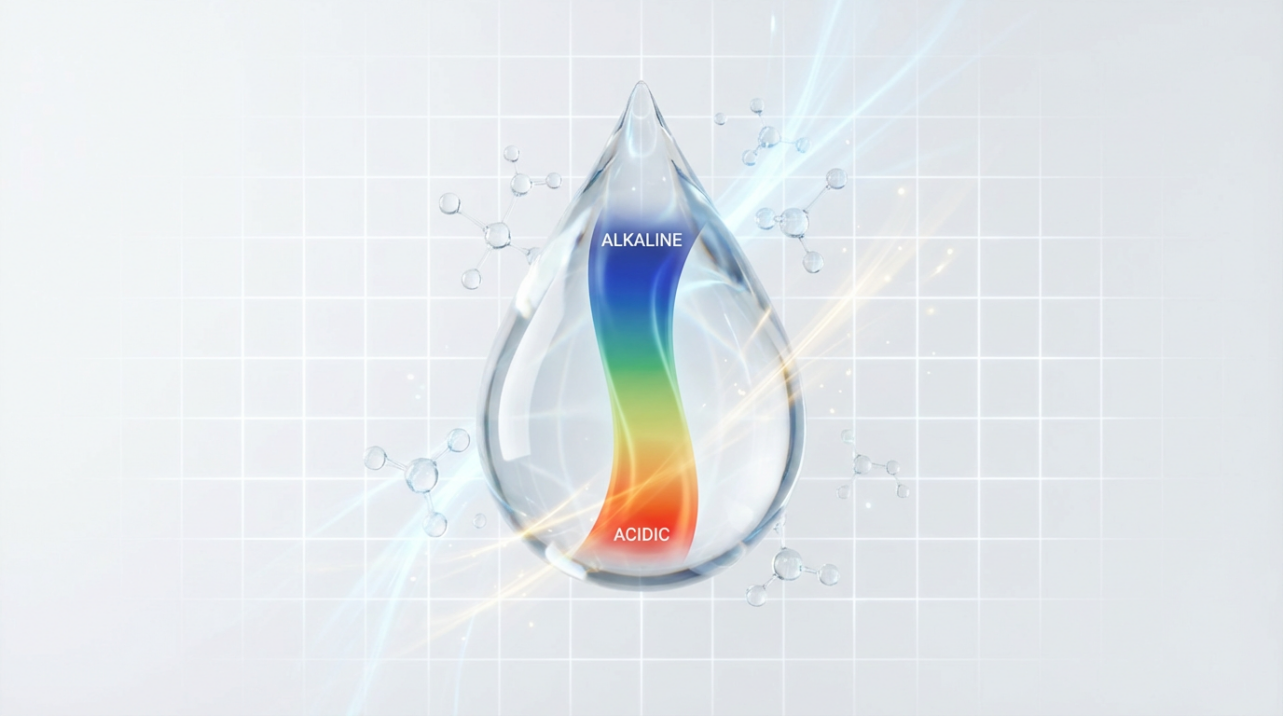
If you care about clean, great‑tasting water at every tap, pH is one of the most overlooked numbers that quietly runs the show. When water is too acidic or too alkaline, it does more than change flavor. It can chew through pipes, leach metals, interfere with filtration performance, and even affect how safe your water really is.
From a smart hydration perspective, treating pH extremes is about three things: protecting your family’s health, safeguarding your plumbing and appliances, and creating water that you actually want to drink all day. In this guide, we will walk through science‑backed, practical ways to correct both low and high pH in home water, and how to choose the right technology for your situation without overcomplicating it.
Why pH Extremes in Drinking Water Are a Problem
What “acidic” and “alkaline” really mean
pH, or “potential of hydrogen,” is a logarithmic scale from 0 to 14 that measures how acidic or alkaline water is. A pH of 7 is neutral. Values below 7 are acidic; values above 7 are alkaline. Because the scale is logarithmic, water at pH 6 is about ten times more acidic than water at pH 7, and pH 5 is about one hundred times more acidic than neutral.
Most drinking‑water guidance, including the Environmental Protection Agency’s recommendations referenced by SimpleLab Tap Score and several well‑water resources, puts the ideal range for drinking water between about 6.5 and 8.5. Extension drinking water guidance and instrumentation companies like Sensorex and Blue‑White describe typical treatment systems trying to hold pH in an even narrower band, often roughly 6.3 to 7.6, because many treatment steps and distribution systems work best there.
A simple example helps. If your well report shows pH 5.8, that might look only “a little bit low.” In reality, that water is more than four times as acidic as neutral water on the hydrogen ion scale. If your city water arrives at pH 9.2, it is more than ten times as alkaline as neutral. Those may be invisible changes in the glass, but they matter once that water sits in your plumbing, heater, or filtration system year after year.
Health and plumbing impacts at both ends of the scale
Acidic water, especially below about 6.5, is corrosive. Extension drinking water guidance and articles from Sensorex and Springwell Water all emphasize the same pattern. Low‑pH water dissolves metals from pipes and fixtures, including copper, lead, iron, zinc, and manganese. You do not see the chemistry, but you see the symptoms: blue‑green stains where copper is dissolving, rusty deposits from iron, and eventually pinhole leaks in metal piping. In extreme cases, Sensorex notes that replacing an entire corroded plumbing system can cost up to roughly twenty percent of a home’s value.
From a health standpoint, the pH itself is not usually the toxin. The concern is what low pH frees up. Multiple sources, including Sensorex and Springwell, highlight that acidic water can leach lead and copper, which are linked to neurological damage, kidney stones, possible kidney or liver failure, and developmental problems in children. That is why well‑water guidance strongly recommends not drinking untreated acidic water and testing for heavy metals when pH is low.

On the alkaline side, drinking‑water extension resources indicate that very high pH water, especially above about 9, can taste like soda or baking soda and still corrode certain metals such as brass, copper, zinc, aluminum, and iron. Alkaline waters with a lot of calcium and magnesium also tend to leave hard, white scale. Industrial articles from Blue‑White and Ecologix describe how such scaling can clog equipment and reduce efficiency. In the home, that same scaling quietly shortens the life of water heaters, dishwashers, and fixtures.
It is important to recognize that extremes of pH also interfere with the biology and chemistry of treatment itself. Ecologix notes that biological treatment processes generally work best in the pH range of about 6.5 to 8.5. Research from North Carolina State University on paper‑mill process water showed that beneficial bacteria dramatically lost performance at pH 4 and 8 compared with pH 5 to 6, because harsh pH damaged their cell membranes and enzymes. The same principle applies in smaller ways inside carbon filters, whole‑house media tanks, and even septic systems: if your pH is far off, the bio‑processes you rely on are less effective.
Imagine a home where acidic well water at pH 5.5 feeds copper plumbing for ten years. The homeowner notices blue‑green staining in sinks and a bitter metallic taste. Behind the walls, copper is dissolving; lead solder, if present, may be contributing. A family that drinks a few quarts of this water every day is not just taking in H₂O; they are taking in trace metals that accumulate. Correcting the pH is not just a plumbing repair; it is a health intervention.
Step One: Test Before You Treat
An important pattern across neutral‑pH guidance from university extensions, SimpleLab Tap Score, and manufacturers like Springwell and Cannon Water is that they all insist on one thing: test before you buy any hardware.
The first reason is that pH is only part of the story. Causes of low or high pH include dissolved minerals, excess carbon dioxide, environmental pollutants, and the underlying rock your water passes through. Extension drinking‑water guidance and Clean Your Water’s recommendations for water balance both point out that high pH often comes with elevated calcium and magnesium, while low pH is often linked to carbon dioxide. Those details determine whether a simple neutralizing filter will work or whether you need a chemical feed system.
The second reason is that pH can be misleadingly simple to measure but hard to interpret in isolation. Sensorex, Tap Score, and Springwell all distinguish between quick pH checks and full laboratory analysis. Test strips and basic meters are helpful indicators that your water is, for example, around pH 6.0 instead of 7.0. Certified laboratory testing adds heavy metals, hardness, and other contaminants, which you need to see before committing to a system.
A practical approach for a homeowner looks like this. You start with a home pH kit or a digital meter to get a ballpark reading. If it shows pH below roughly 6.5 or above 8.5, you order a comprehensive lab test that includes pH, hardness, and a heavy‑metals panel. If your pH is low, you ask the lab or a water‑treatment specialist whether the acidity is mostly from carbon dioxide or other causes; if pH is high, you confirm how much calcium, magnesium, and alkalinity you have. By the time you are thinking seriously about equipment, you should know your pH and what else is riding along in the water.

A simple numeric check helps illustrate why flow and contact time matter, which will show up again when we discuss treatment. Drinking‑water extension guidance on neutralizing filters recommends that flow through calcite media not exceed about 3.0 gallons per minute per square foot of filter bed, with a bed depth of about 32 to 36 inches. Suppose your home has a neutralizer tank with a cross‑sectional area of 1 square foot and a typical shower uses about 2.5 gallons per minute. That single shower fits comfortably within the recommended flow. If you plan to run multiple showers and a washing machine at once, your maximum flow might jump to 8 or 10 gallons per minute, and suddenly that same tank is undersized. You would either need a larger diameter tank or multiple tanks to keep the chemistry working properly.
Testing up front, and sizing with those numbers in mind, saves you from installing a “fix” that simply cannot keep up with real‑world usage.
Treating Acidic Water: From Mild to Severe
Once you know your water is acidic, the question becomes how acidic and what else is going on chemically. Several sources, including SimpleLab Tap Score, Springwell, Sensorex, Cannon Water, and extension drinking‑water guidance, converge on two broad ranges and treatment strategies: mildly acidic water that responds well to neutralizing filters, and more strongly acidic water that often requires chemical injection.
Mild acidity (around pH 6.0–6.5): calcite‑based neutralizing filters
For mildly acidic water, typically in the pH 6.0 to 6.5 range, calcite neutralizing filters are the workhorse solution. Sensorex describes calcite as crushed white marble rich in calcium. As water flows through a tank filled with this media, the calcite slowly dissolves, raising pH by roughly one unit and self‑limiting near neutral, usually around pH 7. Drinking‑water extension resources and Tap Score both note that calcite works best when incoming pH is already around 6.0 or above, because the media is not aggressive enough to correct more severe acidity alone.
In home installations, these systems are typically installed at the point where water enters the house, after the pressure tank for a well. Water passes through a bed of calcite and sometimes magnesium oxide. Extension guidance specifies that the media bed should be about 32 to 36 inches deep and that flow rates should not exceed about 3.0 gallons per minute per square foot of bed area, which ensures enough contact time for the pH correction to take place.
You can visualize this with a small well‑water home that uses about 300 gallons per day and has peak usage of 6 gallons per minute. A neutralizer tank with a cross‑sectional area of 2 square feet could handle up to about 6 gallons per minute within the recommended 3.0 gallons per minute per square foot rule of thumb. That gives you confidence that when the whole family is showering on Saturday morning, the pH correction is still happening effectively rather than allowing a slug of acidic water to slip through.
The trade‑off is hardness. Because calcite is largely calcium carbonate, these filters add calcium and sometimes magnesium to the water, which raises hardness. Tap Score and MyTapScore’s acidic‑well‑water guidance note that if hardness rises above roughly 120 parts per million, you may notice white scale on fixtures and difficulty lathering soaps. Many homes pair a neutralizing filter with a downstream softener to control that hardness, particularly in areas where water is already moderately hard.
Moderate to strong acidity (about pH 4.5–6.0): soda ash and caustic injection
For more acidic water, calcite alone may not keep up. Sensorex, Tap Score, Cannon Water, and extension drinking‑water resources all recommend chemical injection systems when pH is in the roughly 4.5 to 5.5 range, or when flow rates are high and contact time in a media bed would be too short.
The most common approach is a soda ash injection system. These systems use a metering pump to inject a solution of sodium carbonate (soda ash) into the water stream. The soda ash reacts to raise pH toward neutral without adding calcium or magnesium, so it does not increase hardness the way calcite does. Extension drinking‑water guidance indicates that soda ash injection can be effective even when source water pH is as low as 4.
In some designs, sodium hydroxide (caustic soda) or potassium hydroxide is used instead of, or in addition to, soda ash. These chemicals are more aggressive bases and can correct pH with lower injected volume, but they require extra care in handling. Extension guidance emphasizes that sodium hydroxide must be added slowly to water with good mixing, handled with protective gloves and goggles, and stored in a cool, dry place away from flammable materials. Potassium hydroxide is an alternative when added sodium is a concern, though it is typically more expensive.
A typical configuration for a household with very acidic well water might involve a small solution tank filled with a measured soda ash–water mixture, a peristaltic metering pump controlled by a pH sensor or a flow‑proportional controller, and an injection point upstream of the pressure tank. Sensorex notes peristaltic pumps as a popular option because they can deliver smooth, accurate dosing and tolerate a wide range of chemicals without complex sealing.
Consider again a home using 300 gallons per day with incoming pH 4.8. A neutralizing filter based only on calcite would struggle; the pH change needed is more than one unit and the media would dissolve quickly. A soda‑ash feed, tuned to match flow rates, can dose just enough base so that water leaves the pressure tank closer to pH 7, without over‑alkalinizing it. The homeowner must commit to refilling the chemical tank periodically and checking the system, but the plumbing is now protected from a highly corrosive feed.
Managing side effects: hardness, sodium, and metals
Whatever method you choose, pH correction is not the end of the story. It changes other aspects of water chemistry that you need to manage.
Neutralizing filters, especially those using magnesium oxide in blends of about 10 to 20 percent magnesium oxide with 80 to 90 percent calcite as Sensorex describes, raise pH more aggressively and can correct water around pH 5.5 by as much as 1.5 units. Overdosing magnesium oxide can overshoot pH and even give the water a laxative effect. That is why these blends should be carefully sized and monitored, especially if you are aiming for drinking water that feels and tastes neutral rather than strongly alkaline.
Soda ash and sodium hydroxide do not add hardness, but they do add sodium. Extension guidance urges people on low‑sodium diets to consult their doctor and compare the added sodium from treated water to their overall dietary intake. Where sodium is a concern, potassium‑based chemicals may be preferable, although they cost more.
One more important point is that pH correction does not magically remove metals that have already leached into the water. Sources such as Sensorex and Tap Score stress that if your acidic water has elevated lead or copper, you still need appropriate filtration or a change in plumbing materials. PEX or PVC tubing, which are more resistant to corrosion, may be advisable in severely affected homes. In practice, many smart hydration setups combine pH treatment at the point of entry with a certified point‑of‑use filter at the kitchen sink for fine removal of metals and other contaminants.
A simple practical sequence shows how this can work. An acidic well at pH 5.5 is treated with a calcite and magnesium oxide filter that raises the pH to around 7. The homeowner tests after a month and confirms that lead and copper levels are lower but still measurable, so they add a certified under‑sink filter that specifically targets heavy metals. The result is neutral, low‑metal water at the tap, while the whole‑house system protects pipes, appliances, and bathrooms.
Treating Highly Alkaline Water: Bringing pH Back Down Safely
Households more often struggle with acidic well water, but some regions have naturally alkaline groundwater or municipal treatment that leaves water on the high end of the scale. Industrial and pool‑water literature provides a clear view of best practices for bringing pH down, and many of those principles translate to home systems when they are scaled and controlled properly.
When “too alkaline” is actually a problem
Drinking‑water extension guidance notes that water with pH above about 8.5 is considered basic. At moderate levels, alkaline water is usually more of an aesthetic issue, giving a slippery feel and a baking‑soda taste, and contributing to white scaling on fixtures. At higher levels, especially above about 9, it can corrode certain metals and interfere with disinfection.
Blue‑White’s overview of pH in water treatment points out that chlorine‑based disinfectants work best at pH roughly 5.5 to 7.6. Above that, they become less effective and may lead to more disinfection by‑products. Pool‑water guidance from Sensorex and ClearComfort recommends maintaining pool pH around 7.2 to 7.8 for similar reasons: to keep chlorine effective and avoid eye and skin irritation. While you are not running a swimming pool out of your kitchen faucet, the chemistry is the same. If your water arrives at pH 9.5, a small home ultraviolet system, for instance, would still work, but chlorine residuals from the utility may not behave as intended, and scale buildup will be faster.
A simple real‑world scenario would be a home on municipal water that reports pH 9.0 with high alkalinity and hardness. The water looks clear, but the homeowner notices white crust on shower heads and fogged glassware out of the dishwasher. Over ten years, the water heater efficiency drops as scale insulates heating elements. Bringing that pH down closer to neutral slows scaling and may improve taste, even if the water is technically compliant.
Acid injection options for home systems
The most direct way to lower pH is to dose an acid. Drinking‑water extension resources describe several options used in treatment systems: acetic acid (essentially white vinegar), citric acid, alum, and stronger acids such as hydrochloric or sulfuric acid for very high pH situations.
For lightly to moderately alkaline water, acetic acid is the most common choice in drinking‑water applications because it is relatively mild and familiar. Acid injection systems look similar to soda‑ash feed systems: a metering pump draws from a diluted acid tank and injects into the water stream under control of a pH sensor or flow signal. The acid reacts with bicarbonate and carbonate in the water, lowering pH and reducing scaling potential.
In more extreme cases, such as industrial waters above about pH 11, stronger acids like hydrochloric or sulfuric acid are sometimes used. Blue‑White and ClearComfort describe how muriatic acid, a common form of hydrochloric acid, is widely used in pools because it lowers pH quickly. One gallon of full‑strength muriatic acid added to a 20,000‑gallon pool, for example, has a substantial effect on pH and also raises total dissolved solids, which pool operators must monitor. For household drinking water, such strong acids must be handled with extreme caution and typically belong in professional hands, not DIY setups.
Safety is a central concern. Extension guidance stresses that acids should be stored in clearly labeled containers, kept out of reach of children, and always diluted by adding acid to water, never the other way around, to avoid violent reactions. Eye protection, gloves, and appropriate clothing are non‑negotiable when handling concentrated acids or bases.
A home example makes this more concrete. Suppose your well report shows pH 9.3 and a hardness of 180 parts per million. Rather than relying only on a softener, which will address hardness but not pH, your water specialist might recommend a small acetic‑acid injection system. They would calculate an initial dose based on alkalinity, set the pump stroke accordingly, and adjust after follow‑up testing to achieve a pH near 7.2. The result is water that is still rich enough in minerals to taste full but less likely to leave scale on fixtures and appliances.
CO₂‑based pH reduction and combination strategies
An increasingly attractive option for lowering pH, especially where scale and corrosion need to be balanced carefully, is carbon dioxide. Articles from Blue‑White, ClearComfort, and Burnett Inc. describe CO₂ systems in industrial and pool contexts, but the underlying chemistry holds for domestic treatment as well.
When CO₂ is dissolved in water, it forms carbonic acid, which then equilibrates to bicarbonate. This reaction lowers pH in a self‑buffering way and tends to stabilize the water just above about pH 6. That buffering means it is harder to accidentally drive the water into strongly acidic territory, which makes CO₂ particularly appealing where fine control and safety are priorities.
In commercial pools, ClearComfort describes CO₂ systems that lower pH without increasing total dissolved solids, while a strong acid is used periodically to bring alkalinity back down. Burnett’s RE~MIN process uses a combination of carbon dioxide and calcium hydroxide to adjust pH and form calcium bicarbonate, stabilizing alkalinity and improving water quality. Blue‑White notes that CO₂ dosing reductions in corrosion risk and over‑dosing, though it may not be sufficient on its own for very highly alkaline waters.
For a household, a CO₂‑based system might look like a small CO₂ cylinder feeding a dissolving device or injector in the line, controlled by a pH sensor. Because CO₂ gas is compressible and does not leave residual strong acids in the system, it can be a gentler option when you want to nudge pH down from, say, 8.8 to 7.4 without raising sulfate or chloride levels. As with any compressed gas, storage in a well‑ventilated area and secure cylinder mounting are important.
One illustrative example is a small community well serving several homes that has pH 9.0, moderate hardness, and concerns about corrosion in a mixed‑metal distribution system. Operators might choose a CO₂ feed to bring pH down to about 7.2, avoiding the higher handling risks of strong acids and reducing both scaling and corrosion. While this is a step up from a typical single‑home project, the same technology can be scaled down to a larger estate or multi‑unit building with customized hydration systems.
Comparing Key Methods for Treating pH Extremes
To bring these options together, it is useful to see how the main approaches compare for home or small‑community use.
Method |
Best pH Range / Use Case |
Main Benefits |
Main Trade‑offs and Watch‑outs |
Calcite neutralizing filter |
Mild acidity around pH 6.0–6.5 |
Simple, self‑limiting near pH 7, low upkeep |
Increases hardness, limited for very low pH |
Calcite plus magnesium oxide blend |
More acidic water around pH 5.5 |
Stronger pH boost (up to about 1.5 units) |
Risk of overshooting pH, possible laxative effect |
Soda ash injection |
Acidic water roughly pH 4.5–6.0 |
Handles stronger acidity, does not add hardness |
Adds sodium, requires pump, tank, and regular checks |
Sodium or potassium hydroxide injection |
Strong acidity or high flow where soda ash is not enough |
Aggressive correction with small doses |
Significant handling hazards, careful control needed |
Acetic or weak acid injection |
Moderately alkaline water above about pH 8.5 |
Familiar, easier to handle acids, controllable |
Risk of over‑acidifying, requires careful dosing |
Strong acid injection (HCl, H₂SO₄) |
Very high pH, often industrial or specialized |
Rapid pH reduction |
High hazard, heat generation, typically professional |
CO₂ injection |
High pH with desire for gentle, buffered correction |
Self‑buffering, lower corrosion risk |
Equipment cost, cylinder handling, may not fix extreme pH |
Silica physical field (Na₂SiO₃) |
Raising slightly low pH and reducing metals without dosing |
No direct chemicals added to water, potential metal reduction |
Emerging approach, still developing for home systems |
This table reflects patterns described by Sensorex, SimpleLab Tap Score, extension drinking‑water guidance, Blue‑White, ClearComfort, Burnett Inc., and IntechOpen research on sodium silicate fields.
Smart, Health‑Focused System Design for Home Hydration
Matching the system to your family’s priorities
From a smart hydration standpoint, the “right” pH solution is rarely about chasing a trendy number. It is about aligning water chemistry with your household’s needs, preferences, and health conditions while respecting the underlying science.
Several sources emphasize that pH adjustment is only one part of a complete treatment train. Coagulation, filtration, disinfection, and distribution all interact with pH. Blue‑White and Ecologix both show that many processes are optimized in a moderate pH zone around 6 to 8.5. That is a helpful anchor. Instead of aiming for highly alkaline water simply because it is marketed aggressively, it is often wiser to aim for comfortably neutral water that supports your other treatment steps and is pleasant to drink.
If you have acidic well water and a history of blue‑green staining or elevated copper, protecting health and infrastructure should come first. Acid neutralizing filters or soda‑ash injection systems, properly sized and maintained, will move your water into a safe pH range and reduce ongoing metal leaching. A secondary filter at the kitchen tap can then refine taste and remove any residual metals or organic contaminants.
If you have highly alkaline water with heavy scaling, your priorities may be to extend the life of your water heater, dishwasher, and fixtures, while ensuring that disinfection remains effective. Here, a carefully controlled acid or CO₂ feed can bring pH down to the mid‑7s. A softener may still be needed to handle hardness, but the combined effect is cleaner appliances and lower maintenance.
To illustrate this holistic thinking, imagine two homes on the same street. House A has a well at pH 5.8, low hardness, and copper plumbing with visible staining. House B is on city water at pH 9.0 with hard water and frequent scale issues. House A opts for a calcite neutralizer and under‑sink metal‑removal filter, protecting pipes and health. House B chooses a small CO₂ system to nudge pH toward 7.4 and a softener to manage hardness. In both cases, daily drinking water feels better, appliances last longer, and the systems are tuned to the actual chemistry instead of a one‑size‑fits‑all gadget.

Emerging approaches: silica fields and controlled alkalinity
Most household pH solutions rely on adding chemicals directly into the water. An interesting emerging approach described in IntechOpen research involves using a natural sodium silicate (Na₂SiO₃) “physical field” to raise pH and remove metals without dosing chemicals into the water itself.
In that study, a composite material containing sodium silicate was thermally fused and placed under small beakers of tap water in a controlled room around 72 °F. Over several hours, the pH of the water gradually rose, with measurements suggesting that water up to roughly 80 centimeters away could reach pH values near 8.5. The authors propose that the silica field alters ionization, increasing hydroxide ions and promoting the formation of silica–metal complexes that precipitate as metal hydroxides, thus raising pH while removing certain dissolved metals.
Radiation safety assessments found no concerning radioactivity in the material, and the authors cited literature suggesting that mildly alkaline water may offer antioxidant and mineral‑absorption benefits, though they also emphasized that more clinical research is needed.
From a smart hydration perspective, this kind of technology is appealing because it aims to minimize consumable chemicals and plastic waste. Instead of continuously adding soda ash or replacing large volumes of media, you may be able one day to place engineered silica modules in or around treatment tanks to gently stabilize pH and capture metals.
At the same time, industrial water‑treatment experience offers a cautionary note. Burnett Inc. and others show that even with advanced chemistries like calcium hydroxide slurries and CO₂‑based remineralization, precise control, careful calibration, and ongoing monitoring are essential. Any new approach for household use should be tested thoroughly, integrated with certified treatment components, and evaluated with proper lab testing rather than assumed safe or beneficial by default.
A balanced way to think about “alkaline” in this context is this: modestly raising low pH to the neutral or slightly alkaline range, as EPA and multiple sources suggest, protects health and infrastructure and can improve taste. Pushing pH far above that, in pursuit of claims not yet well supported by clinical science, carries risks such as metabolic alkalosis described by Sensorex, and is rarely necessary for everyday hydration.
FAQ: Everyday Decisions About Acidic and Alkaline Water
Is alkaline water always better for hydration than neutral water?
Not necessarily. Several sources, including Sensorex and IntechOpen, note that ideal drinking water pH falls within about 6.5 to 8.5. Mild alkalinity can improve taste and may have some potential health benefits, but very high pH can cause off‑tastes, a soapy feel, and even health issues such as metabolic alkalosis if consumed in large amounts. The safer, more evidence‑based goal is to keep your water comfortably near neutral and focus on removing contaminants rather than chasing extreme alkalinity.
If my well water is acidic, can I just drink it and let my body handle the pH?
Your body does regulate its internal pH tightly, but acidic water creates problems before it ever reaches your cells. Research summarized by Tap Score, Springwell, and Sensorex shows that acidic water corrodes plumbing and leaches heavy metals such as lead and copper into the water you drink. Those metals, not the hydrogen ions themselves, are the main health concern. The prudent approach is to correct water pH into the recommended range and test for metals, rather than relying on your body to compensate for a corrosive water supply.
How often should I test my water once a pH treatment system is installed?
Private well owners are generally advised, including by EPA‑linked resources cited by Tap Score and Springwell, to test at least once per year. After installing pH treatment, it is wise to test more frequently in the first year, for example after a few weeks, then after six months, to confirm that pH is stable and that metals are under control. If you change media, adjust dosing, or notice taste or staining changes, that is also a good time to retest.
Balanced water is the quiet foundation of a healthy hydration routine. By understanding what pH really means, testing thoughtfully, and choosing treatment methods that fit both your chemistry and your lifestyle, you can turn “problem water” into a long‑term asset for your home. Smart hydration is not about chasing extremes; it is about thoughtfully guiding your water back toward the neutral, stable zone where your health, your appliances, and your everyday routines all thrive.
References
- https://scholarworks.utep.edu/cgi/viewcontent.cgi?article=5147&context=open_etd
- https://bioresources.cnr.ncsu.edu/resources/effects-of-ph-on-biological-treatment-of-paper-mill-white-water-with-the-addition-of-dominant-bacteria/
- https://drinking-water.extension.org/drinking-water-treatment-ph-adjustment/
- https://www.watersystemscouncil.org/download/wellcare_information_sheets/potential_groundwater_contaminant_information_sheets/pH.pdf
- https://www.burnett-inc.com/faqs/optimizing-ph-in-wastewater-treatment-with-efficient-water-technologies
- https://clearcomfort.com/phroblem-best-practices-for-balancing-ph/
- https://ecologixsystems.com/articles/ph-adjustment-wastewater
- https://www.intechopen.com/chapters/88005
- https://sensorex.com/maintaining-optimal-ph-levels-in-pools/?srsltid=AfmBOooufb8zpnyCIR7X0Z7sRR-_kQDNnq0XjExwqRAtvtsbbjnME_9F
- https://sodimate-inc.com/ph-control-for-water-treatment/

Share:
Effective Pre-Treatment Solutions for Oil-Contaminated Water RO Systems
Effective Solutions for Low Water Pressure Areas Under 0.2 MPa