

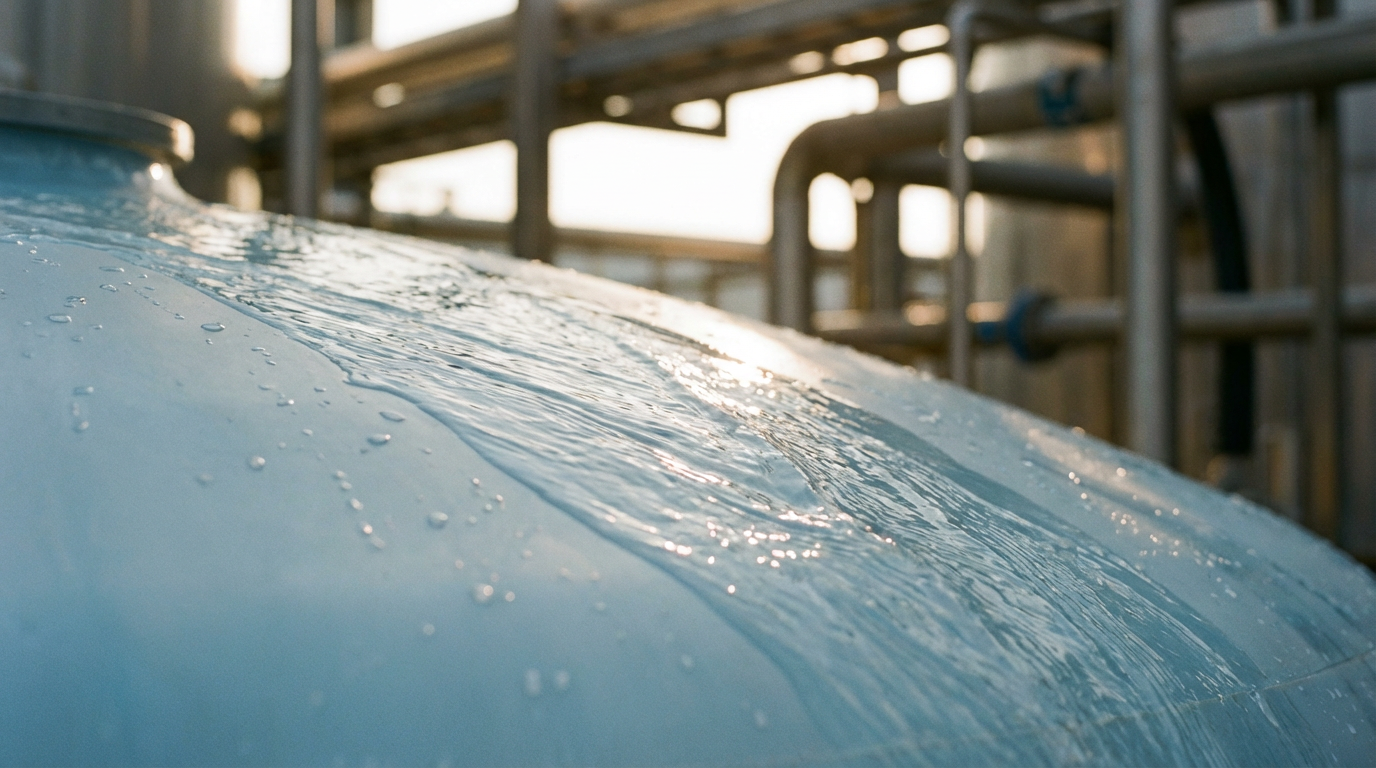
As a smart hydration specialist, I like to ask one simple question when I walk into a home, farm, or facility with a storage tank: would you be comfortable drinking directly from the inside wall of that tank? If the answer is no, then the quality of the liner – or the lack of one – is already telling you a lot about the safety of the water.
Water tanks themselves are just structure: steel, concrete, fiberglass, or plastic. The real guardian of your drinking water is the surface that actually touches the water. When that surface is a certified, food-grade liner, you can protect the health of everyone who drinks or cooks with that water, while also extending the life of the tank and lowering long-term costs.
Why Liners Matter for Safe Water Storage
Tank lining is not a luxury add‑on; in many settings it is a regulatory requirement. One storage-liner provider notes that every tank that contains water for human consumption is required to have protective coatings and linings. That mandate exists for good reasons.
Unlined or poorly lined steel tanks start to show significant internal corrosion and floor and weld damage in roughly fifteen years. Industry data summarized by corrosion specialists and tank-lining experts show that high-quality linings can push above‑ground carbon steel tanks into the thirty to forty year range, sometimes more in mild service. The National Association of Corrosion Engineers has estimated that corrosion-related tank failures cost industries billions of dollars annually in repairs and replacements.
For concrete tanks, the picture is different but just as serious. Concrete is strong but porous and prone to cracking. Without a flexible, impermeable lining, water can escape through hairline cracks and external contaminants can seep inward. Lining manufacturers and coating suppliers emphasize that flexible linings for concrete are specifically designed to bridge those cracks and create a continuous barrier that prevents infiltration and leakage.
Beyond structural issues, the inner surface of an unlined tank is a perfect place for rust, scale, biofilm, and algae to build up. A water treatment lining specialist points out that corroded or cracked tank surfaces can harbor bacteria, including pathogens like Legionella and Pseudomonas. Linings help break that cycle by providing a smoother, more inert surface that is easier to clean and disinfect.
In short, a tank without a proper liner is exposed on three fronts at once: it is more likely to leak, more likely to corrode, and more likely to contaminate the very water it is meant to protect.

What Makes a Liner “Food-Grade”?
A storage tank liner is a protective barrier applied to the inside of a tank. It can be a flexible membrane dropped into place or a resinous coating such as epoxy, polyurethane, or polyurea that is applied and cured in situ. In every case, its job is to separate the stored liquid from the tank structure and the external environment.
A liner earns the label “food-grade” or “potable-grade” when it is specifically engineered and certified as safe for contact with drinking water and other consumable products. Several independent standards and regulations sit behind that label.
Lining and coating manufacturers frequently reference FDA regulations for food-contact coatings such as FDA 21 CFR 175.300. For drinking water, NSF/ANSI 61 is the key certification that verifies that a lining system and its additives do not leach harmful substances into potable water. Potable-water tank lining specialists also highlight NSF 600, a newer reference standard that tightened limits on solvents such as ethylbenzene, toluene, and xylenes in coating formulations as of January 1, 2023. At the system level, EPA requirements govern inspection and containment for larger storage vessels and federal guidance such as API 653 applies to inspection and repair of above-ground tanks.
When you see a liner advertised for potable water, reputable manufacturers will be explicit about these approvals. BTL Liners, for example, emphasizes NSF‑61 certification for reinforced polyethylene and polypropylene geomembranes, and an inspection-services firm notes that owners, applicators, and coatings specialists are now expected to select liners that comply with NSF 600 to avoid water-quality issues and liability.
Another key distinction is that not every plastic that looks “food-safe” actually is in a tank setting. BTL Liners explains that flexible PVC liners that depend on plasticizers for softness typically cannot obtain NSF‑61 certification, because those plasticizers are considered harmful to human health if they leach into water over time. Advanced Polymer Coatings, by contrast, highlights BPA‑free, FDA‑compliant ChemLINE systems designed specifically for food and beverage storage, developed to maintain product purity even under aggressive high-temperature cleaning.
Being food-grade, then, is not about marketing language. It is about documented chemical composition, extraction testing, and independent certification that the liner can sit in constant contact with water and not compromise its safety, taste, or odor.

How Food-Grade Liners Protect Water Quality and Taste
Blocking Contaminants and Keeping Water Clean
In real-world tanks, the main threats to your water are not only what is dissolved in the water but also what is trying to get in from the outside. Royal Liner describes how rain, dust, and debris can threaten above-ground tanks. Tiny cracks in concrete or gaps around fittings can act like capillaries, pulling in contaminated surface water, soil bacteria, or fine particles.
A properly installed food-grade liner acts as an impermeable membrane, stopping that exchange.

Water tank lining experts repeatedly stress impermeability as a primary selection criterion. If seams are weak or the film is porous, contaminants can slip through and stored water can leak out. Reinforced polyethylene and polypropylene liners, for example, can be heat-welded, creating strong, homogeneous seams that sharply reduce the chance of leaks.
The same principle is well known in food packaging. Packaging-liner specialists explain that flexible liners inside bags, pouches, and containers keep dust, bacteria, and chemicals away from food by creating a sealed barrier. Container-liner manufacturers use similar large-scale barriers inside shipping containers to protect bulk food commodities, chemicals, and powders from moisture and residues left by prior loads. Water tank liners simply apply these same barrier technologies to a stationary tank rather than a moving truck or tote.
Preventing Corrosion and Heavy-Metal Leaching
Any time untreated water sits against bare steel, corrosion is inevitable. Sherwin-Williams notes that steel tanks are highly susceptible to corrosion and recommends anti-corrosive epoxy and polyurethane systems to provide long-term protection. Markleys Precision reports that unlined carbon steel tanks can start failing around fifteen years, while lined tanks commonly operate for thirty years or more and, in mild water service, can exceed forty years.
Corrosion is not just a structural problem; it is also a water-quality problem. As steel rusts, it can release iron and other metal ions into the water, and flaking paint or rust scale can shed particles. Markleys highlights how linings help block rust particles, metal ions, and paint chips from entering food and pharmaceutical liquids and keep potable water free from dissolved metals. In concrete tanks, microcracks and porosity can allow external contaminants to seep in. Flexible linings form an impermeable barrier that prevents that infiltration.
Economically, the difference is substantial. Markleys describes a medium-sized produced-water tank where grit blasting and recoating can cost in the range of $170,000.00 to $250,000.00 per event, not including downtime, temporary storage, or environmental mitigation. By contrast, well-selected linings can stretch internal maintenance intervals to roughly ten to twenty years and allow utilities to apply less invasive overcoating strategies. One Massachusetts water utility saved about $1.2 million by overcoating existing linings on five tanks instead of fully blasting and repainting them.
For potable water, preventing corrosion and leaching is non-negotiable.

Using NSF‑61 certified, food-grade liners is one of the most straightforward ways to separate the water from reactive metal or porous concrete and keep dissolved metals within safe limits.
Fighting Algae, Biofilm, and Off-Flavors
Even if a tank is structurally sound, the inner surface can become a breeding ground for unwanted growth. Royal Liner points out that without a reliable liner, tank walls can support algae, which affects appearance and can pose health risks. Water treatment lining experts add that cracked or corroded surfaces harbor biofilm and waterborne pathogens such as Legionella.
Food-storage and beverage-packaging experiences support this. Plascon’s patented Saftea urn liners for iced tea, for instance, create a disposable barrier between tea and urn walls and spigots, helping prevent bacterial contamination and cross-contact between batches. Independent lab testing confirmed that these liners improve beverage hygiene and flavor while dramatically cutting scrubbing and sanitizing time between services.
Translating that to water tanks, a food-grade liner provides a smoother, more inert surface that is less hospitable to algae and biofilm. Cleaning is easier and more predictable: rather than grinding rust and concrete scale off a rough surface, operators can wash or disinfect a relatively smooth membrane or coating. Combined with a regular inspection and cleaning program, this reduces the chance that unwanted growth will impact taste, odor, or safety.

Controlling Cross-Contamination and Allergen Risks
In industrial and food-and-beverage operations, tanks are often reused for different products. Arena Products explains that single-use liquid tote liners virtually eliminate cross-contamination risks between product batches, including flavors and allergens, and help manufacturers meet allergen-control and labeling requirements.
For potable water tanks, cross-contamination risks typically involve prior chemical use, disinfectants, or residual sludge from prior operations. For farms and agribusinesses, the same tank might have held fertilizer one season and irrigation water the next. Food-grade liners designed for both chemical resistance and potable use can make those transitions safer, provided the liner material is compatible with every stored liquid and certified accordingly.
Agricultural guidance from ATM Tanks emphasizes that food-grade tank liners maintain clean water for irrigation, livestock hydration, and crop care, reducing waterborne hazards that can move along the food chain. In that sense, a proper liner does double duty: it protects your water and also protects the food crops and animals that eventually nourish people.
Beyond Hygiene: Liners as a Long-Term Investment
From a purely financial perspective, lining a tank is one of the highest-return steps you can take in a water system.

Corrosion experts and tank-lining providers describe unlined tanks needing frequent repairs, internal patching, or full recoats, while well-selected linings reduce lifetime maintenance costs by extending maintenance intervals and simplifying cleaning.
Relining or installing a geomembrane liner typically costs far less than replacing an entire tank. Water treatment lining specialists note that applying epoxy, polyurethane, or cementitious linings often adds around fifteen years of service life with proper maintenance. Markleys documents real-world upgrades where moving from basic to durable linings extended effective corrosion protection from roughly two years to nearly ten years in aggressive oilfield environments.
Beyond the tank itself, linings reduce indirect costs: less water loss from leaks, fewer unplanned shutdowns, lower risk of environmental contamination, and fewer water-quality complaints. Many flexible liners and welded geomembranes can be repaired on site by heat welding, avoiding full removal and reapplication. Reinforced polyethylene and polypropylene liners, for example, are often repairable in place.
When you consider that corrosion-related tank failures cost industries billions each year, and that a lined tank can double or even triple its service life compared with a bare one, a food-grade liner is not a sunk cost. It is a risk-management tool that protects your assets, your water, and ultimately your health.
Key Properties of a Safe Food-Grade Water Tank Liner
Choosing a liner for a potable water tank is not just about picking a material that “sounds” safe. You need to consider certification, impermeability, durability, chemical compatibility, taste and odor neutrality, and maintainability. Taken together, these properties define whether your liner is truly fit for drinking-water duty.
Certification and Regulatory Fit
Certification comes first. BTL Liners emphasizes that NSF‑61 approval is the primary requirement for any potable water tank lining, since it covers both the base material and additives such as UV stabilizers, antioxidants, and heat stabilizers. Industrial Inspection Group highlights NSF 600, which has pushed the market away from traditional solvent-based linings that no longer meet the stricter contaminant limits.
For food and beverage applications beyond plain water, FDA food-contact regulations such as 21 CFR 175.300 remain important. Markleys also references EPA requirements for corrosion protection of underground storage tanks and spill containment, as well as API 653 for inspection and repair of above-ground tanks.
If your water tank is part of a larger treatment or industrial facility, additional requirements may apply. Flexi-Liner points out that storage vessels over 110 gallons require inspection approvals from the EPA and that linings intended for water treatment must meet NSF certification before use.
In practical terms, if a liner intended for potable water does not explicitly state NSF‑61 compliance (and, increasingly, NSF 600 compatibility), it does not belong in a drinking-water tank.

Material and Chemical Compatibility
Once you have a shortlist of certified materials, the next step is to match them to your actual water and tank conditions. Lining experts repeatedly stress that liner selection must be engineered around stored product chemistry, tank substrate, temperature, and operating environment.
PVC liners are widely used for both potable and non-potable water storage, chemical containment, and industrial tanks because they offer UV and chemical resistance and relatively easy installation. Perfect Fit Tank Liners notes that flexible PVC can expand and contract with temperature changes, and heat-welded seams create durable, watertight bonds. Tank-liner specialists in Australia highlight PVC’s versatility, puncture and abrasion resistance, and availability in various grades for different chemical resistances.
Polyolefin liners, including polyethylene and polypropylene, provide strong chemical resistance and durability. Polyethylene, particularly reinforced forms, is commonly used for potable and process water storage because of its minimal leaching and strong resistance to environmental stress cracking. Polypropylene’s higher melting point suits higher-temperature applications, and reinforced polyethylene and polypropylene membranes can be heat-welded for strong seams. BTL Liners cites RPE and RPP as strong candidates for potable water tanks.
Rubber-based materials, such as butyl rubber and EPDM, deliver excellent elasticity and resistance to ozone, UV, and certain corrosive chemicals. These qualities make them attractive for outdoor agricultural and industrial applications where tanks see significant temperature swings and sun exposure.
Resinous coatings such as epoxies and polyureas provide hard, adherent linings with long service life in many potable and industrial water settings. Sherwin-Williams offers NSF‑61 approved epoxy and polyurethane systems tailored to steel and concrete tanks, emphasizing fast curing and durability. Markleys notes that epoxy and other resinous coatings can provide ten to twenty or more years of protection when properly specified and maintained.
At the premium end, fluoropolymer linings such as PTFE and ETFE provide near-universal chemical resistance and wide temperature tolerance. Royal Liner notes that PTFE is particularly valuable for storing aggressive food-grade chemicals, though its cost is higher than polyethylene or PVC.
The key is not to assume. Royal Liner stresses that highly acidic or alkaline substances require liners with superior chemical resistance, while food and beverage applications require food-grade liners meeting safety standards. Liner suppliers frequently recommend consulting their chemical-resistance charts and working with specialists to match materials to specific water chemistry and disinfectant regimes.
Durability, Flexibility, and Environmental Resistance
A liner cannot protect your water if it fails mechanically. Flexi-Liner lists durability as a core criterion, including resistance to punctures, tears, and general wear and tear. For outdoor tanks, weather resistance is crucial. Liners must withstand UV exposure, temperature cycling, and moisture without degrading.
Industrial Inspection Group emphasizes flexibility and durability in non-insulated tanks where water temperature can swing from hot to cold across seasons. Linings need to absorb those movements without cracking or debonding. Flexible drop-in liners, like those promoted by Witt Lining Systems and several geomembrane suppliers, are designed to conform to varying tank sizes and shapes and to accommodate thermal expansion and contraction.
Ease of repair is another practical factor. BTL Liners notes that reinforced polyethylene and polypropylene can often be repaired on site via heat welding. That kind of repairability significantly reduces lifecycle costs compared with linings that must be removed and completely reapplied if damaged.
Taste, Odor, and Purity
For a hydration-focused system, taste and odor are not cosmetic details; they fundamentally affect whether people actually drink enough water. Royal Liner stresses that water tank liners made from high-quality food-grade materials are rigorously tested to ensure they do not leach harmful chemicals or toxins, preserving purity, freshness, and overall water quality.
Potable-grade liner manufacturers similarly emphasize low leaching, taste and odor control, and compliance with drinking-water standards. BPA-free tank linings from Advanced Polymer Coatings are designed specifically to maintain product purity even under high-temperature cleaning, and potable-water geomembranes are formulated without plasticizers that might leach over time.
When you choose a liner, ask directly about taste-and-odor performance and ensure the product has real-world potable-water references, not just generic “chemical resistance” claims.
Comparing Common Liner Materials for Potable Water
The following table summarizes how several widely used liner families are positioned for water storage, based on the research sources. This is not an exhaustive catalog, but it captures the main trends you will encounter when selecting a food-grade liner.
Liner material family |
Typical potable-water or food-contact role |
Key strengths (from sources) |
Key cautions (from sources) |
Reinforced polyethylene / polypropylene (RPE/RPP, polyolefin geomembranes) |
Potable and process water tanks, agricultural reservoirs, irrigation ponds |
NSF‑61 certification available, strong chemical and UV resistance, heat‑weldable seams, high puncture resistance, good durability and repairability |
Must confirm chemical and temperature compatibility; installation quality and seam welding are critical |
PVC (food-grade grades) |
Potable and non‑potable water storage, chemical containment, industrial tanks |
Flexible, relatively easy installation, UV-stable grades available, can be custom‑fabricated and heat‑welded, widely used in many industries |
Plasticizer‑dependent PVC typically cannot obtain NSF‑61; must verify food-contact and potable certifications for the exact formulation |
Rubber (butyl, EPDM) |
Outdoor water storage, agricultural applications, some chemical and fertilizer tanks |
Excellent elasticity, good UV and ozone resistance, handles temperature swings, suitable for varied agricultural liquids |
Not all rubber formulations are food-grade; requires verification for potable use and specific chemical exposure |
Epoxy / polyurethane / polyurea coatings |
Steel and concrete potable water tanks, treatment plants, reservoirs |
Hard, adherent, long-life coatings; NSF‑61 versions available; good corrosion and chemical resistance; fast-curing options minimize downtime |
Must meet NSF‑61 and NSF 600 where applicable; repair strategies differ by product, and some damaged coatings may require full removal |
Fluoropolymers (PTFE and related) |
Highly aggressive food-grade chemicals and demanding environments |
Near-universal chemical resistance, wide temperature range, exceptional inertness and purity |
Higher material and installation cost; more specialized, often reserved for challenging chemistries rather than general water storage |
For any of these families, a liner only becomes a safe choice for drinking water once it carries the right certifications and is matched to your specific water chemistry, tank substrate, and operating environment.
Choosing and Maintaining a Food-Grade Liner for Home and Small Systems
From a homeowner’s perspective, all of this can feel intimidating. The good news is that you do not have to become a chemist or a coatings engineer to make a smart, health-protective decision. You do, however, need a structured way to think about your tank and your water.
The sensible starting point is to define how the water will be used. Drinking, cooking, ice, and brushing teeth call for the highest standard: a potable, food-grade liner with NSF‑61 certification. If water will irrigate vegetable gardens or hydrate livestock, agricultural guidance suggests that food-grade liners are still wise, since water quality directly influences crop health and the safety of produce and animal products.
Next, take stock of your tank. Note its construction material (steel, concrete, fiberglass, or an older plastic tank), age, and condition. Lining suppliers like Witt Lining Systems and Perfect Fit Tank Liners emphasize that flexible drop-in liners can be customized to existing tank dimensions and installed quickly, sometimes over a single weekend, which minimizes downtime. For tanks that are badly corroded or structurally compromised, coating and lining experts may recommend additional repairs or structural reinforcement before lining.
At this point, a conversation with a specialist is invaluable. Royal Liner and several other manufacturers stress that a small amount of upfront engineering and consulting can dramatically improve safety and tank life. Share details such as anticipated water temperature range, disinfectants used, whether the tank is buried or above ground, and exposure to sunlight and weather. This information guides the choice between materials such as RPE, PVC, rubber, or epoxies, and ensures that all relevant certifications are addressed.
Installation quality is just as important as material choice. Arena Products describes how standardized installation procedures for liners in bulk liquid totes – including pre‑inspection, verifying liner positioning, controlled filling, and proper sealing – are crucial to reliable performance. The same mindset should apply to water tank liners: clean and smooth the substrate, remove sharp projections, ensure correct liner positioning, and document the product batch or lot number for traceability.
After installation, create a simple inspection and maintenance plan. Water treatment lining specialists recommend regular inspections to catch early signs of wear, cracking, or delamination, and to check for biofilm or sediment buildup. Many flexible liners and resinous coatings are designed with maintenance in mind, allowing in‑place cleaning and, for some materials, local repairs. When a liner reaches the end of its rated service life, plan replacement proactively rather than waiting for a leak or major water-quality incident.
Common Misconceptions About Food-Grade Tank Liners
One common belief is that a tank advertised as “water storage” is automatically safe for drinking water. In reality, many tanks are built for irrigation, firefighting reserves, or industrial process water and may not use food-contact-approved linings. Research from potable-water lining suppliers shows that only liners tested and certified under standards such as NSF‑61 should be trusted for human consumption.
Another misconception is that stainless steel tanks always make linings unnecessary. While stainless steel does offer excellent corrosion resistance, it is expensive, and even stainless tanks can suffer from localized corrosion or surface contamination. Advanced Polymer Coatings emphasizes that modern BPA‑free, FDA‑compliant coating systems can rival stainless steel performance when applied to carbon steel, at far lower material cost. For many homeowners and small facilities, a lined carbon-steel or concrete tank is more practical than a full stainless installation.
A third misconception is that all plastics are risky because they “always leach something.” The critical distinction is between generic plastic and certified, purpose-designed potable-water linings. BTL Liners explains that NSF‑61 certification specifically tests liner formulations and their additives to verify that they do not leach harmful substances into water. Similarly, Royal Liner notes that food-grade liners undergo rigorous testing to confirm they are free from harmful chemicals or toxins that could leach into drinking water. Certification and formulation details matter far more than the broad label “plastic.”
Brief FAQ
Do I really need a food-grade liner if I am only storing rainwater?
If the stored rainwater will ever be used for drinking, cooking, or brushing teeth, a food-grade liner with appropriate potable-water certification is strongly recommended. Even for irrigation and livestock water, agricultural research on food-grade liners indicates that maintaining clean, uncontaminated water supports healthier crops and animals and reduces the risk of waterborne hazards entering the food chain.
Is “potable-grade” the same as “food-grade”?
In the context of water storage tanks, the two terms overlap significantly. Potable-grade usually refers to materials certified for contact with drinking water under standards such as NSF‑61. Food-grade often references broader food-contact regulations from bodies like the FDA. Many high-quality liners meet both sets of requirements, especially when they are marketed for food and beverage industries as well as potable water systems. Always check the specific certifications listed by the manufacturer.
How often should I inspect a lined water tank?
Water-treatment and inspection specialists consistently emphasize the need for regular inspections, especially for tanks holding potable water or volumes above regulatory thresholds such as 110 gallons. The appropriate interval depends on tank size, age, operating conditions, and criticality, so the best practice is to set a schedule with your liner supplier or a qualified inspection firm and adjust based on findings over time.
Closing Thoughts from a Hydration Specialist
Safe hydration starts long before water reaches your glass. A food-grade water tank liner is the quiet guardian that keeps corrosion, contaminants, and off-flavors out of your water while giving your tank decades of extra life. When you choose a certified, well-matched liner and maintain it with intention, you are not just protecting an asset; you are investing directly in the health, comfort, and confidence of everyone who depends on that water every single day.

References
- https://www.adv-polymer.com/bpa-free-food-grade-tank-lining
- https://blog.plascongroup.com/fresh-thinking-plascons-food-grade-packaging-delivers-safety-and-quality
- https://arenaproducts.com/liquid-tote-liners-maximizing-food-and-beverage-hygiene/
- https://www.btlliners.com/potable-grade-liners/
- https://tankliners.com.au/choosing-the-right-tank-liner-2/
- https://innovativeliner.com/protective-bulk-liquid-contamination/
- https://modutank.com/choosing-the-right-liner-for-your-storage-solution/
- https://perfectfittankliners.com/the-ultimate-guide-to-water-tank-liners/
- https://www.singhalglobal.com/blog/the-role-of-container-liners-in-preventing-product-contamination?srsltid=AfmBOoqvUYWqwKyxAFdibq68F54WB2XN2bs25BZiXH2IzuJyGoMXptaK
- https://thermodyneboilers.com/the-role-of-food-grade-pvc-liners-in-maintaining-drinking-water-quality-in-zincalume-drinking-water-storage-tank/

Share:
How Capacitive Touch Control in Smart Faucets Achieves Water Resistance
Understanding the Effectiveness of 253.7 nm Wavelength UV Lamps