

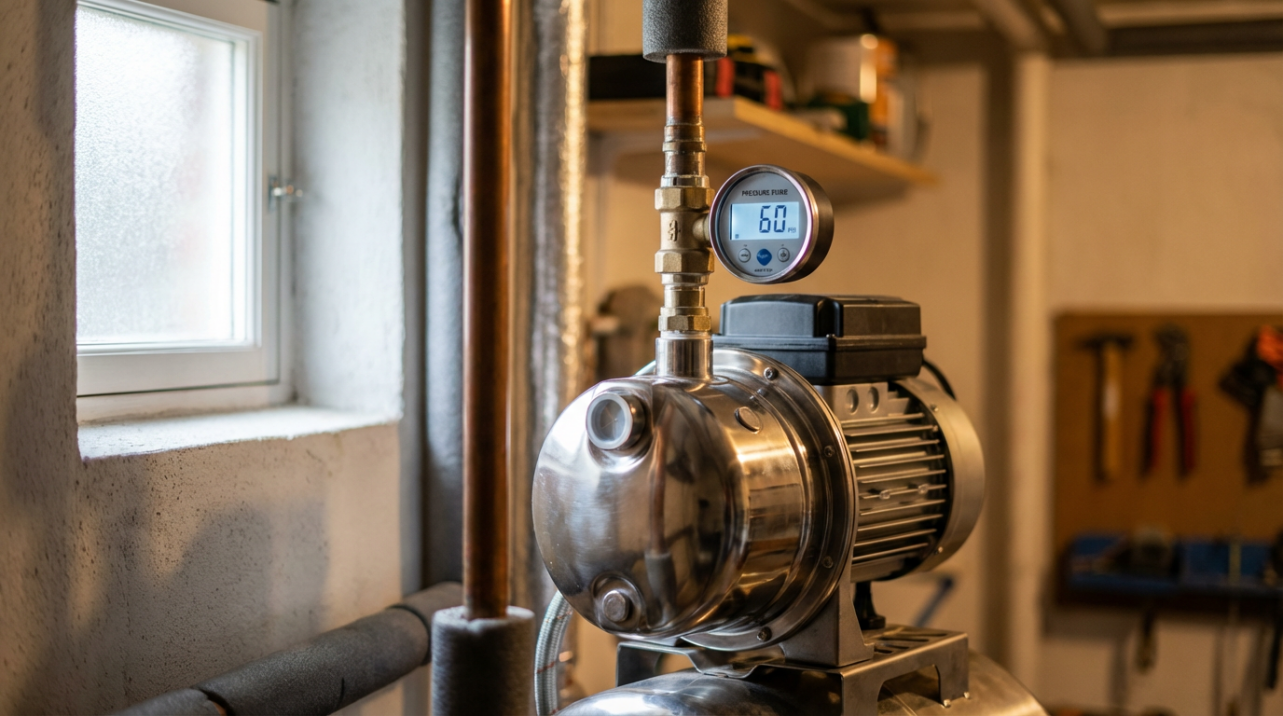
Summary: When your booster pump starts getting noisy, inconsistent, or high-maintenance, it’s quietly telling you something is wrong. Catching the warning signs early protects your showers, filtration systems, and long-term water wellness.
Why Your Booster Pump Matters for Healthy Water Pressure
For homes with low city pressure, multiple stories, or whole-house filtration, a booster pump is the “heart” that keeps clean water moving where you need it.
If that heart weakens, you’ll feel it at the shower, see it at the tap, and your filters and softeners will struggle to perform.
Experts like Armstrong Fluid Technology and Racoman note that a well-maintained booster pump not only stabilizes pressure, it also reduces energy use and protects the rest of your plumbing.

Clear Signs Your Booster Pump May Be Failing
You don’t need to be an engineer to spot early failure signs—just pay attention to how your water feels, sounds, and behaves.
Watch and listen for these common red flags highlighted by Callaghan Pump, Sameer Appliances, and Vissers:
- Inconsistent or dropping water pressure: showers go from strong to weak, faucets “surge,” or upper floors never quite get enough flow.
- New or louder noises: grinding, rattling, whining, or a harsh buzzing that wasn’t there before, often tied to worn bearings, misalignment, or cavitation.
- Frequent on–off cycling: the pump clicks on and off rapidly even with small water uses, stressing motors, switches, and pressure tanks.
- Visible leaks or corrosion: damp spots, rust, or mineral buildup on the pump body, around seals, or on nearby fittings.
- Overheating or “hot to the touch” casing: the motor feels unusually hot, gives off a burnt smell, or trips on thermal protection.
If you’re seeing a combination of these symptoms and they’re getting worse over weeks or months, your pump is likely in the late stages of wear.
Repair or Replace? How to Decide
Not every symptom means you need a brand-new booster pump tomorrow.
Industrial guidance from Vissers and 24hr Supply suggests repair makes sense when:
- Issues are localized (seals, bearings, pressure switch, or motor capacitor).
- The pump body is structurally sound, not cracked or heavily corroded.
- The unit is still in roughly the first half of its expected service life.
- Replacement parts are easy to source and reasonably priced.
Replacement is usually smarter when:
- You’re facing frequent breakdowns or repeat service calls within a year.
- The casing, impeller, or manifold shows serious corrosion or damage.
- The model is outdated, parts are hard to find, or efficiency is clearly poor compared with modern variable-speed options.
- Your household demand has grown (more bathrooms, added filtration) and the pump can’t keep up even after basic fixes.
A trusted pump specialist can help you compare the “true cost” of another repair versus the long-term savings of a modern, right-sized, high-efficiency booster.
Simple Maintenance Habits to Extend Pump Life
Preventive maintenance is the easiest way to avoid surprise failures and keep your hydration systems—like whole-house filters, under-sink RO, and fridge dispensers—working as designed.
Drawing on checklists from 24hr Supply, Callaghan Pump, and Elite Pumps, here’s a practical homeowner-friendly routine:
- Monthly “sensory check”: while the pump is running, listen for new noises, feel for unusual vibration, and glance at the pressure gauge for odd swings.
- Filter and strainer care: clean or replace pre-filters and strainers regularly so the pump isn’t forced to work against clogs, which can shorten motor life and hurt water quality.
- Leak and corrosion scan: look for drips, rust spots, or peeling paint on the housing and nearby piping; address small leaks before they become structural issues.
- Electrical sanity check (power off first): confirm that visible wiring and connections are clean, dry, and secure—no scorch marks, frayed insulation, or loose terminals.
- Annual professional visit: have a qualified technician inspect seals, bearings, alignment, pressure switches, and relief valves, and confirm the pump is sized and set correctly for your home.
Nuance: Some industrial guides recommend daily or weekly checks, but for most homes, a disciplined monthly visual inspection plus an annual professional service strikes a realistic balance.

When Your Water Wellness Deserves Expert Help
If you notice multiple warning signs, if the pump trips breakers or overheats, or if you rely on it to feed critical equipment like whole-house filtration, talk to a pump professional rather than “pushing through” with DIY guesses.
A short assessment can confirm whether a targeted repair will restore healthy, stable pressure—or whether it’s time to upgrade to a quieter, more efficient booster that protects both your plumbing and your everyday hydration routine.
References
- https://www.mass.gov/doc/guidelines-for-public-water-systems-chapter-7-pumping-facilities-0/download
- https://admisiones.unicah.edu/fulldisplay/HIo40c/5OK100/goulds__water-pump-repair__manual.pdf
- https://www.bsee.gov/sites/bsee.gov/files/tap-technical-assessment-program//aa393.pdf
- https://www.energy.gov/sites/prod/files/2014/05/f16/maintain_pumping_systemsts5.pdf
- http://dspace.mit.edu/bitstream/handle/1721.1/92062/896109093-MIT.pdf;jsessionid=B7E9C078341E562350CA3626D430600C?sequence=2

Share:
Understanding Valve Failure Indicators in Smart Home Water Systems
Three Early Signs of Wastewater Pipe Blockage to Watch For